
Shangri-La Cave
Location: Jackson County, Florida, United States
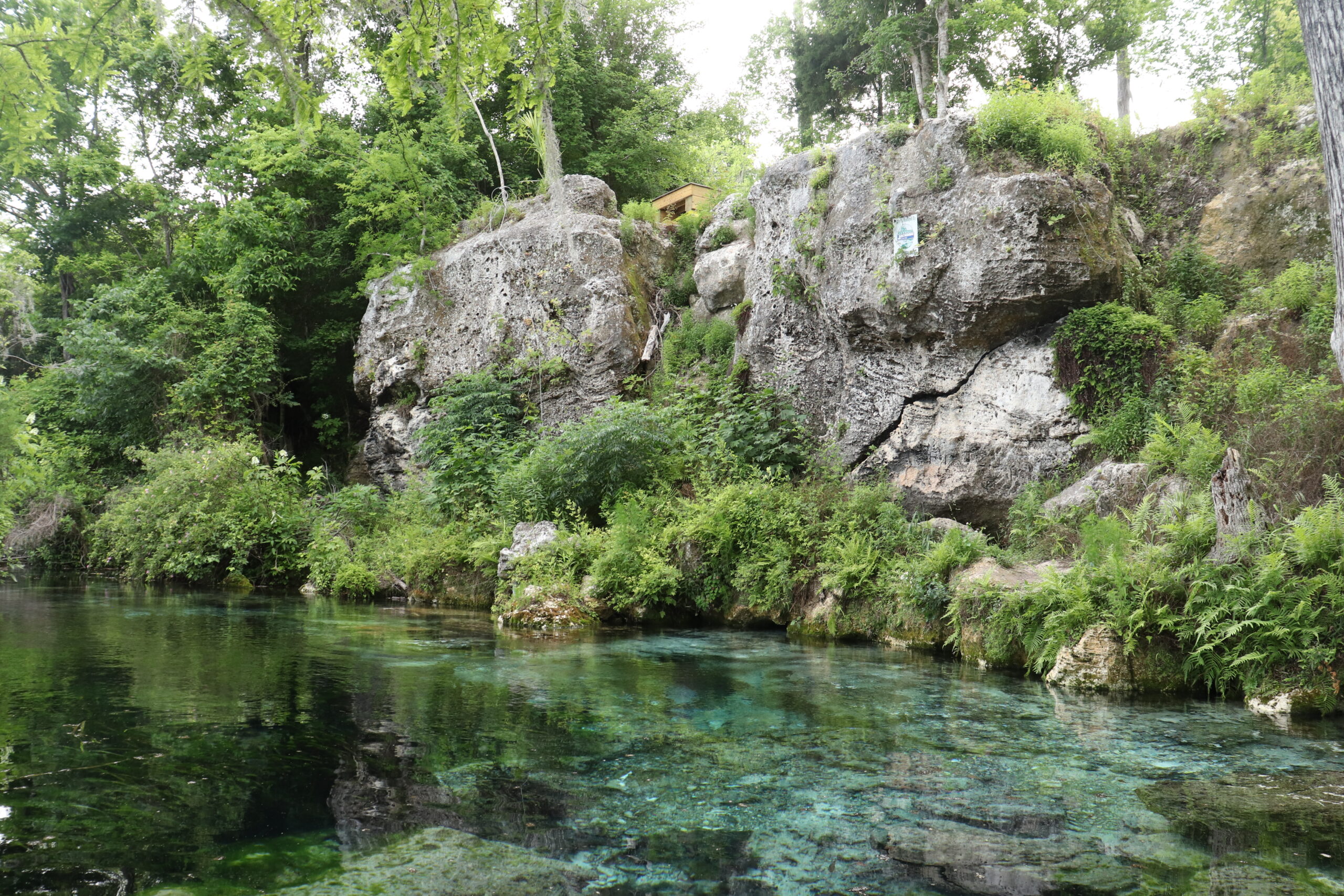
Although often thought of as a cavern due to the restrictive nature of its underwater entrance, the system extends beyond the light zone and qualifies as a true cave. In addition to the submerged entrance, Shangri-La also features openings above the waterline within the limestone bluffs.
The cave is notable for its restrictive access and its unusual connection between bluff openings and the submerged entrance.
FREE FLORIDA SPRINGS GUIDE
Want to discover more of Florida’s hidden waterways?
Download The 25 Most Notable Springs and Cave Systems in Florida and explore some of the state’s most remarkable spring basins, underwater cave systems, and hidden natural treasures.
✓ Featured springs throughout Florida
✓ Cave systems and exploration highlights
✓ Popular destinations and hidden gems
✓ Instant download
Shangri-la Spring can be reached by kayak, canoe, or paddleboard from Hunter Fish Camp boat launch in Marianna, Florida. Depending on water levels and current conditions, paddlers can access the spring by following Merritt’s Mill Pond almost all of the way to Jackson Blue Spring, the headspring. During warmer months, be attentive to motorized traffic on the pond. The route is generally suitable for recreational paddlers, though conditions may vary throughout the year.
As you approach the spring, watch for changes in water color, clarity, and vegetation that often indicate groundwater entering the system. The spring is located beneath a bluff on the west bank of the pond. It is easily identified by the tall bluff and the small island to the left of it. As of 2025, there is a boardwalk at the site, as well. In addition to the main spring opening, there are a few openings in the limestone above the water’s surface.
Paddlers may encounter limestone formations, submerged vents, native wildlife, and the clear blue water commonly associated with Florida’s spring systems. The spring provides a unique opportunity to observe the connection between Florida’s surface waterways and the hidden groundwater network flowing beneath the landscape.
Geological Context
The system is positioned within limestone bluffs characteristic of the Merritt’s Mill Pond basin.
In addition to the underwater entrance, openings exist above the waterline within the bluff face. These elevated openings connect to interior sections of the cave and reflect the vertical fracture development common to the region’s karst geology.
The presence of both submerged and dry openings makes Shangri-La structurally distinctive among pond-side cave systems.
Structure & Layout
The passage beyond the light zone requires negotiating significant restrictions. Access to the cave zone requires sidemount cylinders to be removed and pushed ahead of the diver. Beyond the initial restrictions, the cave continues into confined passage within the limestone.
Separate openings above the waterline in the bluffs provide additional access points. Breath-hold divers have entered through the dry bluff openings and exited via the submerged entrance, demonstrating connectivity between the two.
The geometry and restrictive nature of the system contribute to its frequent misclassification as only a cavern.
Access Characteristics
The cave is often mischaracterized as only a cavern because of its limited initial penetration distance and restrictive profile.
However, the presence of cave zone beyond the major constrictions establishes it as a true cave system.
Breath-hold divers have entered through the above-water openings and exited through the submerged entrance, demonstrating the connectivity of the bluff fractures. Such activity requires familiarity with the structure and should not be attempted without proper knowledge of the system.
Exploration History
Shangri-La was explored by Marius Frei in the late 2000s. His work established the presence of cave passage beyond the restrictive entry.
Initial penetration into the system occurred in 2008, though only minimal exploration was conducted at that time.
In 2016, the cave was fully explored and documented, clarifying the layout beyond the primary restrictions and establishing its surveyed extent.
Cave Data
Shangri-la Spring is a popular cavern dive beneath the bluffs of Merritt’s Mill Pond. The opening is easily penetrated in backmount configuration. The cavern extends about 70 feet in where it ends at a tight bottle off sidemount restriction. There are a couple of offshoots on either side of the main room. One leads into the upper level of the cave, and the other leads to an opening above in the bluffs.
Getting beyond the cavern zone requires both bottles to be pushed ahead through a low, tight area. You will need to keyhole yourself through the passage to get to the main area of the cave. Once in the cave, the passages do open up. There are 2 levels in the cave. The lower offers a couple of areas, including a larger room. The upper offers a couple of small tunnels, one of which heads back out to the cavern through a small bottle off restriction. This cave is definitely not for the faint of heart.
Current Status
Shangri-La remains one of the smaller but more configuration-dependent cave systems within Merritt’s Mill Pond.
- Bluff-side geology
- Dual openings (submerged and above-water)
- Major restrictions requiring sidemount cylinder removal
- Limited but documented cave zone
The Hidden Rivers of Florida documents the springs, rivers, sinkholes, caves, and groundwater systems that shape Florida’s landscape. Through exploration, photography, research, and firsthand observation, the project seeks to connect visitors with the hidden waterways flowing beneath the state.
Frequently Asked Questions
The spring is located in a limestone bluff about a quarter mile downstream from Jackson Blue Spring on Merritt’s Mill Pond in Marianna, Florida.
Yes, the cavern is small, but it is large enough to accommodate 2 divers comfortably.
Yes. Launch from Hunter Fish Camp boat launch and paddle upstream about 2 miles. You will find the spring on the west bank about a quarter mile from Jackson Blue Spring in a limestone bluff that is easily identifiable.
The opening is only 3 feet below the surface of the water. The cavern reaches a maximum depth of about 22 feet.
Continue Exploring Florida’s Hidden Waters
If you enjoyed the information about this springs, you’ll love the free guide:
The 25 Most Notable Springs and Cave Systems in Florida
From world-famous destinations like Wakulla, Jackson Blue Spring, and Peacock Springs to lesser-known hidden gems, this guide introduces some of Florida’s most fascinating natural wonders.
Download your free copy and continue exploring beyond the surface.
Get the Free Guide →Nearby Springs
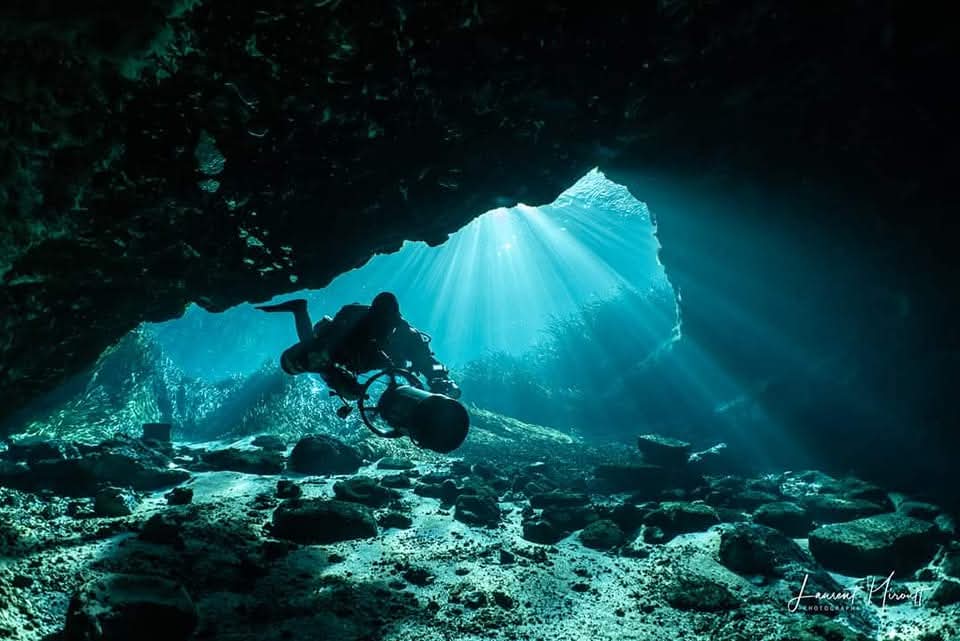
Photo Gallery
Coming soon