
Twin Cave
Location: Jackson County, Florida, United States
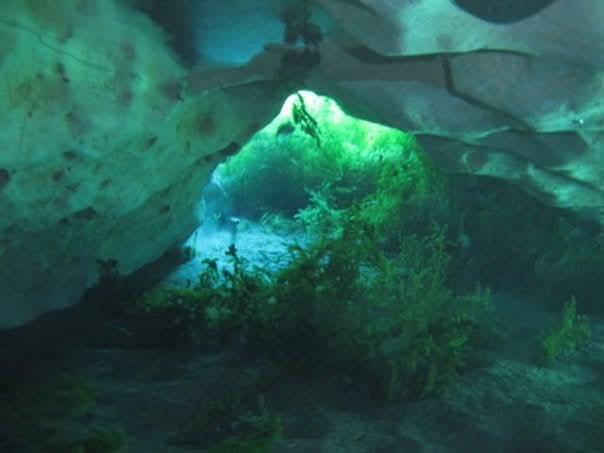
Twin Cave is a spring cave system located within Merritt’s Mill Pond in Jackson County near Marianna, Florida. The system is positioned not far from Hole in the Wall and forms part of the concentrated cluster of spring caves within the pond.
Although more modest in scale than Jackson Blue or Hole in the Wall, Twin Cave represents an important documented system within the Merritt’s Mill network.
FREE FLORIDA SPRINGS GUIDE
Want to discover more of Florida’s hidden waterways?
Download The 25 Most Notable Springs and Cave Systems in Florida and explore some of the state’s most remarkable spring basins, underwater cave systems, and hidden natural treasures.
✓ Featured springs throughout Florida
✓ Cave systems and exploration highlights
✓ Popular destinations and hidden gems
✓ Instant download
Twin Cave can be reached by kayak, canoe, or paddleboard from Hunter Fish Camp boat launch in Marianna, Florida. Depending on water levels and current conditions, paddlers can access the spring basin by following Merritt’s Mill Pond north for about 40 minutes. During warmer months, be attentive for motorized traffic on the pond. The route is generally suitable for recreational paddlers, though conditions may vary throughout the year.
The spring is in the floor of the pond and easily located by looking for the second dock nestled among cypress trees about 150 feet from the east bank. The dock is for public us, so you can tie up and climb onto it. Please be mindful of others, particularly cave divers, that may be using it.
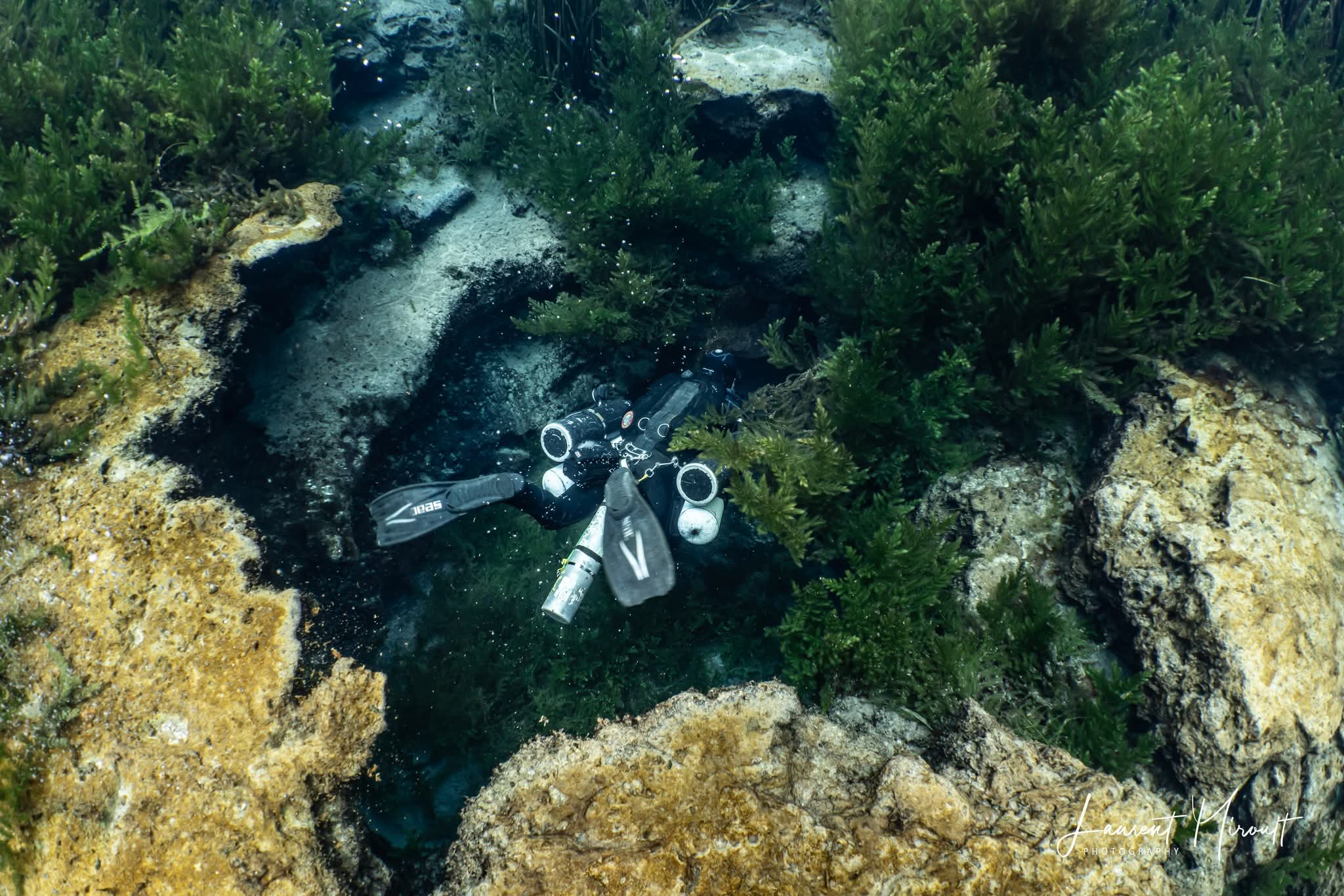
The spring opening is about 50 feet west of the dock. Look for a clearing in the vegetation. In that clearing, you’ll see a circular opening in the light-colored limestone. To the east of that opening is a smaller opening that gently slopes down into the spring.
Paddlers may encounter limestone formations, submerged vents, native wildlife, and the clear blue water commonly associated with Florida’s spring systems. The spring provides a unique opportunity to observe the connection between Florida’s surface waterways and the hidden groundwater network flowing beneath the landscape.
Geological Context
Twin Cave forms within the same limestone karst formation that characterizes the Merritt’s Mill Pond region. Groundwater discharge from the Floridan Aquifer feeds the system before entering the pond.
Like other springs in the pond, Twin Cave reflects active hydrology within a relatively stable limestone basin environment.
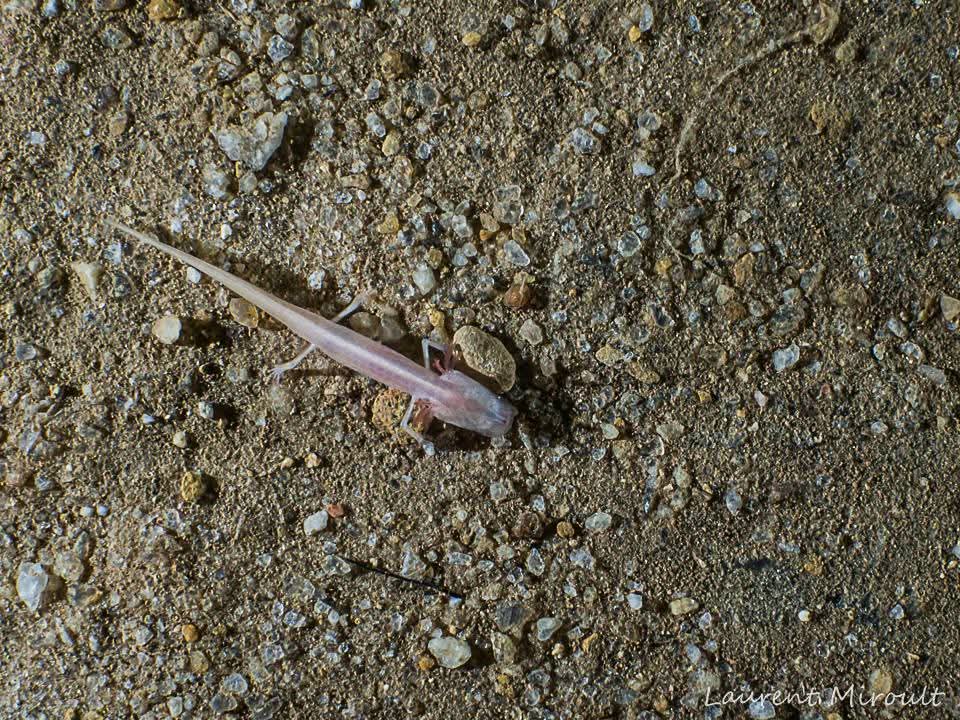
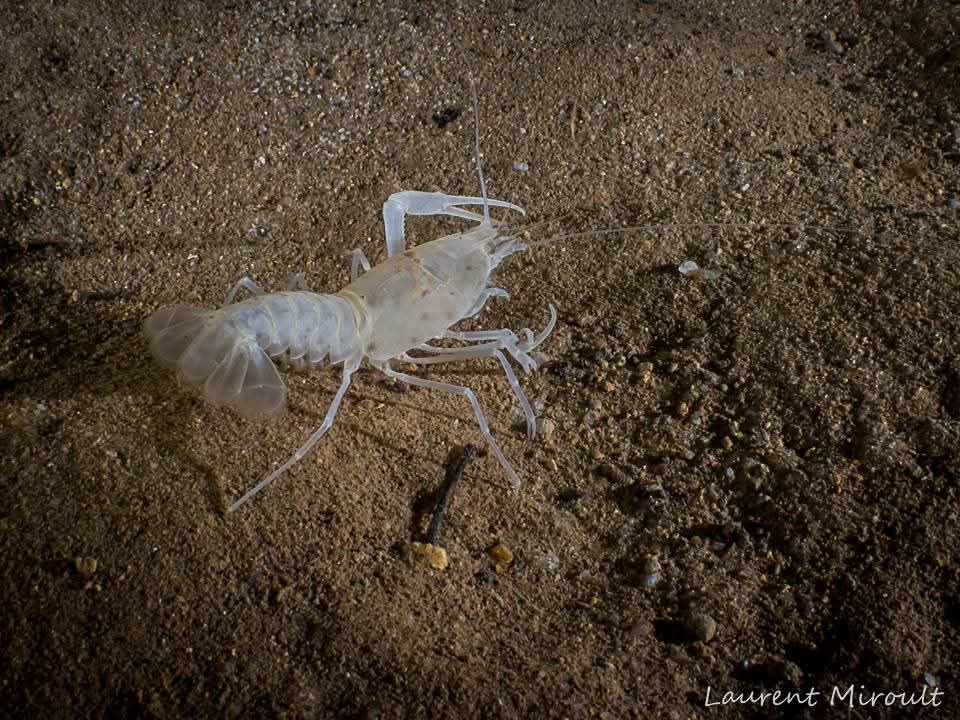
Like several cave systems in the Merritt’s Mill Pond region, Twin Caves supports species that have adapted to life in complete darkness. Among the most notable are the blind albino salamander, often referred to as the Georgia blind salamander, and a species of blind albino crayfish.
These animals are examples of troglobitic cave fauna, species that have evolved to live entirely within subterranean environments. In the absence of light, these organisms have lost pigmentation and functional eyesight, relying instead on highly developed sensory systems to navigate and locate food.
The salamanders and crayfish observed in Twin Caves are part of the fragile ecosystem that exists within Florida’s submerged spring caves. Similar species are also found in nearby cave systems such as Hole in the Wall Cave, highlighting the biological connections between caves within the Merritt’s Mill Pond region.
Encounters with these animals provide a rare glimpse into the specialized life that inhabits Florida’s underwater caves.
Structure & Layout
Twin Cave consists primarily of a main passage with several branching offshoots. The cave features moderate-sized passage sections interspersed with narrower areas.
While not characterized by extreme restrictions, portions of the cave require careful buoyancy control due to proximity to the floor and ceiling in certain areas.
The layout supports multiple directional changes and loops, creating a structurally varied system despite its relatively moderate total length.

Exploration & Survey History
In the early 2010s, renewed documentation efforts focused on exploring, resurveying, and updating the mapped extent of Twin Cave.
During this period, the known surveyed length was extended from approximately 5,507 feet to 8,254 feet (2,516 meters). An updated map was subsequently published in 2015 reflecting these expanded survey findings.
These efforts significantly improved documentation accuracy and expanded understanding of the system’s layout.
Twin Cave represents one of the more technically layered systems within Merritt’s Mill Pond, combining compact passages with meaningful documented extension. Its structure and development are best understood within the broader framework of regional cave systems outlined in the Guide to Cave Diving in the Florida Panhandle.
Portions of this cave system were explored and surveyed during cave dives conducted by Rob Neto while documenting Florida’s underwater cave systems for the book The Hidden Rivers of Florida.
Mapping & Documentation
Survey methodology follows established standards, contributing to the broader documentation of Merritt’s Mill Pond cave systems. Continued oversight and periodic verification help maintain mapping integrity and safe navigation.
Twin Cave and the surrounding Merritt’s Mill Pond systems are discussed in The Hidden Rivers of Florida, which documents the preparation, discipline, and measured expansion characteristic of Florida cave exploration.
Hydrological Characteristics
Twin Cave exhibits stable spring discharge typical of Merritt’s Mill Pond systems. Current strength is minimal compared to higher-flow systems within the pond.
Visibility conditions are generally stable, though sediment sensitivity remains a consideration in certain lower or narrower sections.
Twin Cave contributes to the dense concentration of spring cave systems that make Merritt’s Mill Pond one of the most structurally diverse freshwater cave environments in North Florida.
- Multiple defined entrance points
- Structured main corridor with branching passages
- Moderate depth profile
- Visibility sensitive to sediment movement
- Located within the broader Merritt’s Mill Pond cave cluster
Cave Data
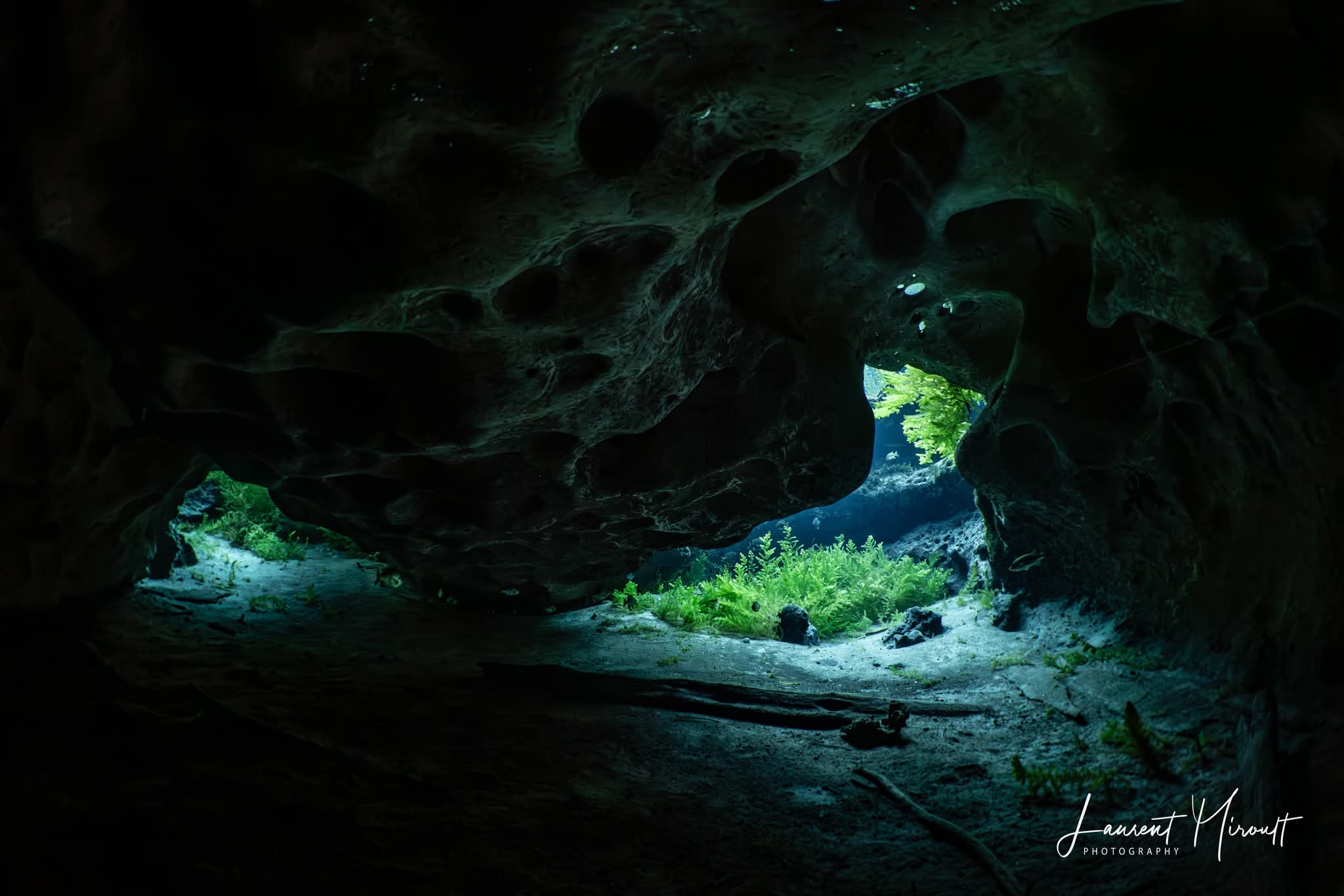
The opening can appear challenging to some. It is small and requires careful fin strokes to avoid stirring up the sediment that has gathered in the cavern. About 30 feet in, the ceiling rises, providing plenty of room to maneuver.
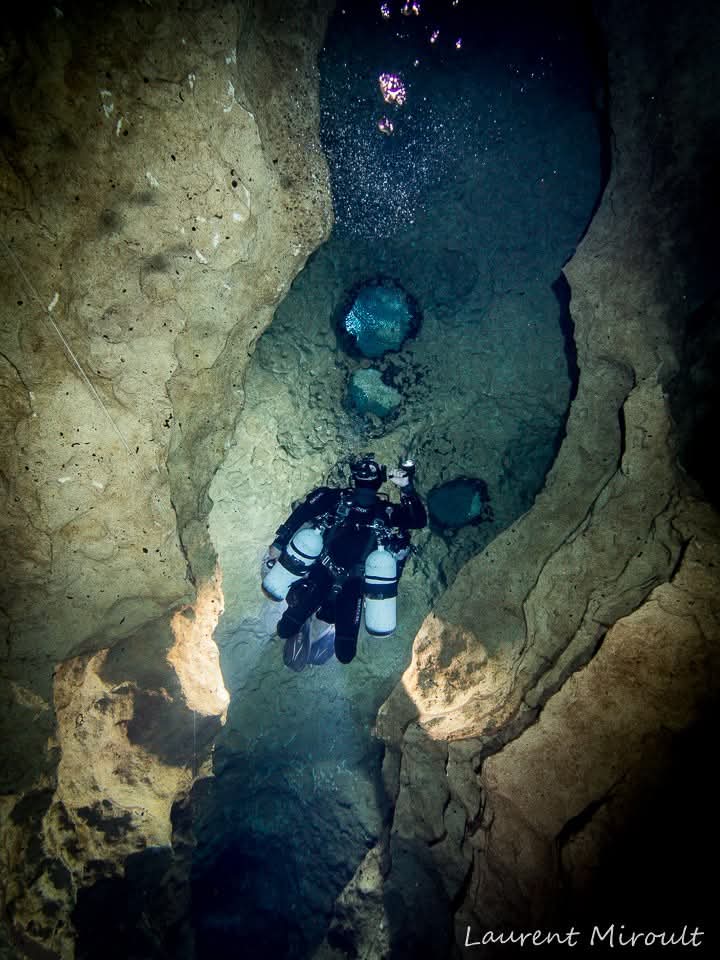
The gold line begins at the opening. It’s secured to the top left of the shoulder. Follow the line to the small chimney and descend to the level of the Subway Tunnel. Some think the Subway Tunnel is long and boring. There are plenty of things to keep you occupied as you make the long swim to the first fissure. See if you can find the pile of bones in an alcove in the right wall. Also, pay attention to the ceiling. It’s beautifully carved.
About 400 feet from the opening, you’ll pass by the jump to Skiles Passage. This tunnel is low and silty and requires careful movement to maintain visibility. There’s a fissure about 400 feet in that’s worth seeing, though.
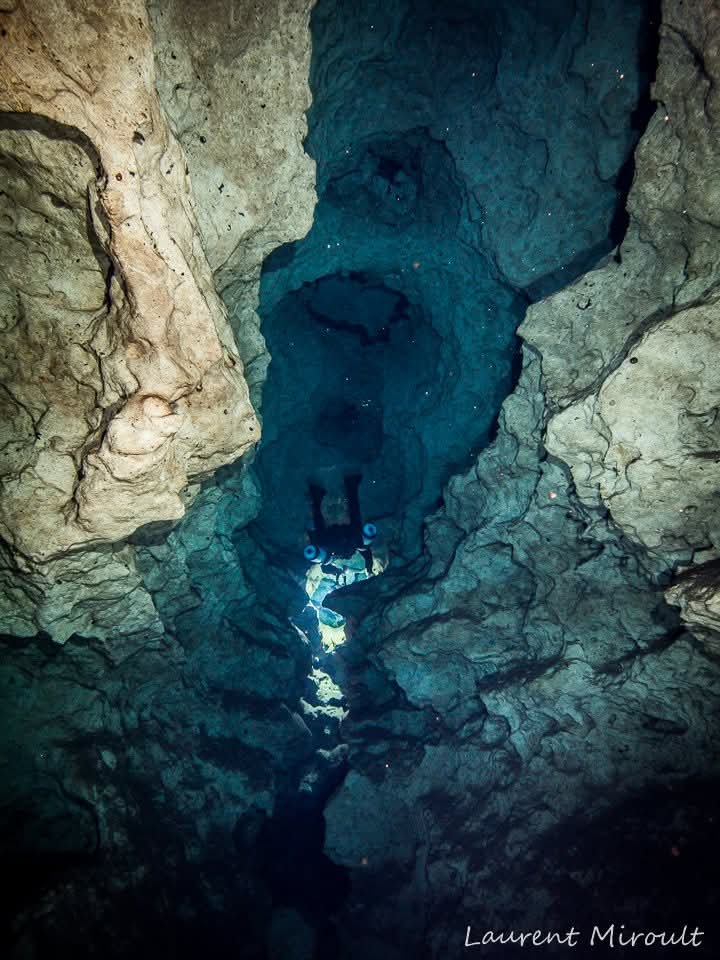
One thousand feet from the opening, you’ll arrive at the first fissure. This drops you from the level of the Subway Tunnel to the Catacombs, located at 100 feet of depth. Follow the gold line and you’ll eventually end up at the bottom of the second fissure where you can ascend back to the Subway Tunnel extension. The midway point is 1300 feet from the opening. With a decent breathing rate, the entire gold line circuit can be done breathing from an AL80 stage cylinder.
At the opposing arrows, located at 1300 feet, you can jump to the Training Room line to the right. Follow that to the Terminal Fissure, located about 1600 feet from the opening. This is one of the most beautiful and amazing areas of Twin Cave and well worth seeing.
Current Status
Twin Cave remains an active spring system within Merritt’s Mill Pond.
With over 8,000 feet of documented passage, it represents one of the more substantial systems in the pond outside of Jackson Blue and Hole in the Wall.
- water conditions in the cave
- boat access only
- variable depth profiles
- restrictive sidemount-only sections
This system is discussed in The Hidden Rivers of Florida because of its importance to cave exploration and ground water research.
Learn about the bookFrequently Asked Questions
The spring is located about 1.5 miles north of Hunter Fish Camp boat launch on Merritt’s Mill Pond. The opening is in the floor of the pond about 50 feet west of the second dock that is not connected to the bank.
Trained and certified cavern and cave divers can dive inside of the cave within the limits of their training. The cavern offers quite a bit to see, but it is low and silty, so care must be used when entering and exploring it. Beyond the cavern, the cave does get larger and offers cave divers plenty to see.
Yes, you can launch at the Hunter Fish Camp boat launch and head north on Merritt’s Mill Pond. Look for the second dock to the east that is not attached to land. The spring opening is located in the floor of the pond about 50 feet west of the dock.
The maximum depth of the cave is 105 feet. The average depth varies from 50 feet to 90 feet.
The cave is an independent system that is not connected to any other springs. However, there are some passages in the cave that are close in proximity to Hole in the Wall passages and it is believed that there is a hydrological connection between the 2 systems.
Continue Exploring Florida’s Hidden Waters
If you enjoyed the information about this springs, you’ll love the free guide:
The 25 Most Notable Springs and Cave Systems in Florida
From world-famous destinations like Wakulla, Jackson Blue Spring, and Peacock Springs to lesser-known hidden gems, this guide introduces some of Florida’s most fascinating natural wonders.
Download your free copy and continue exploring beyond the surface.
Get the Free Guide →Nearby Springs
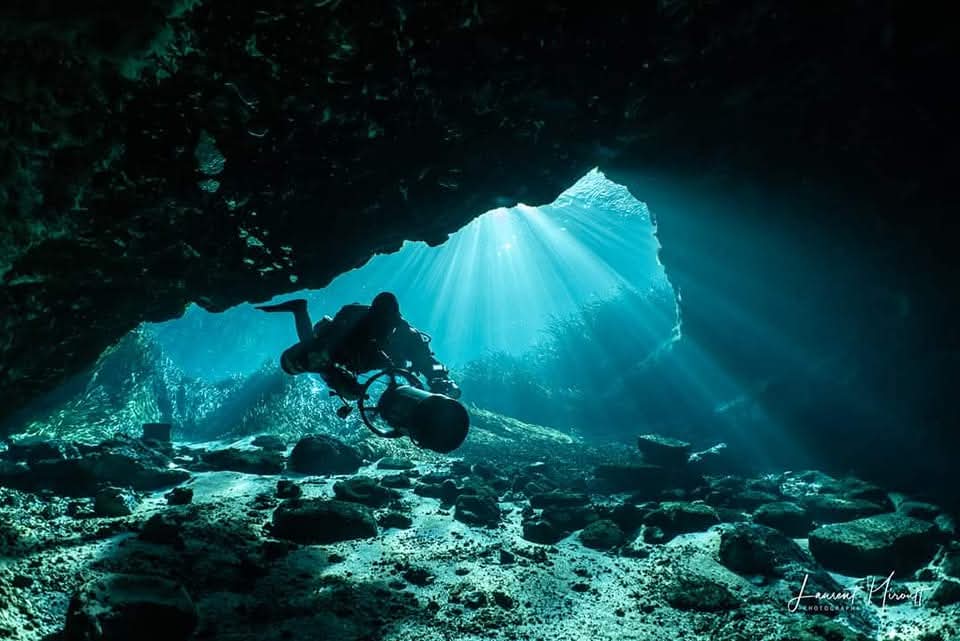
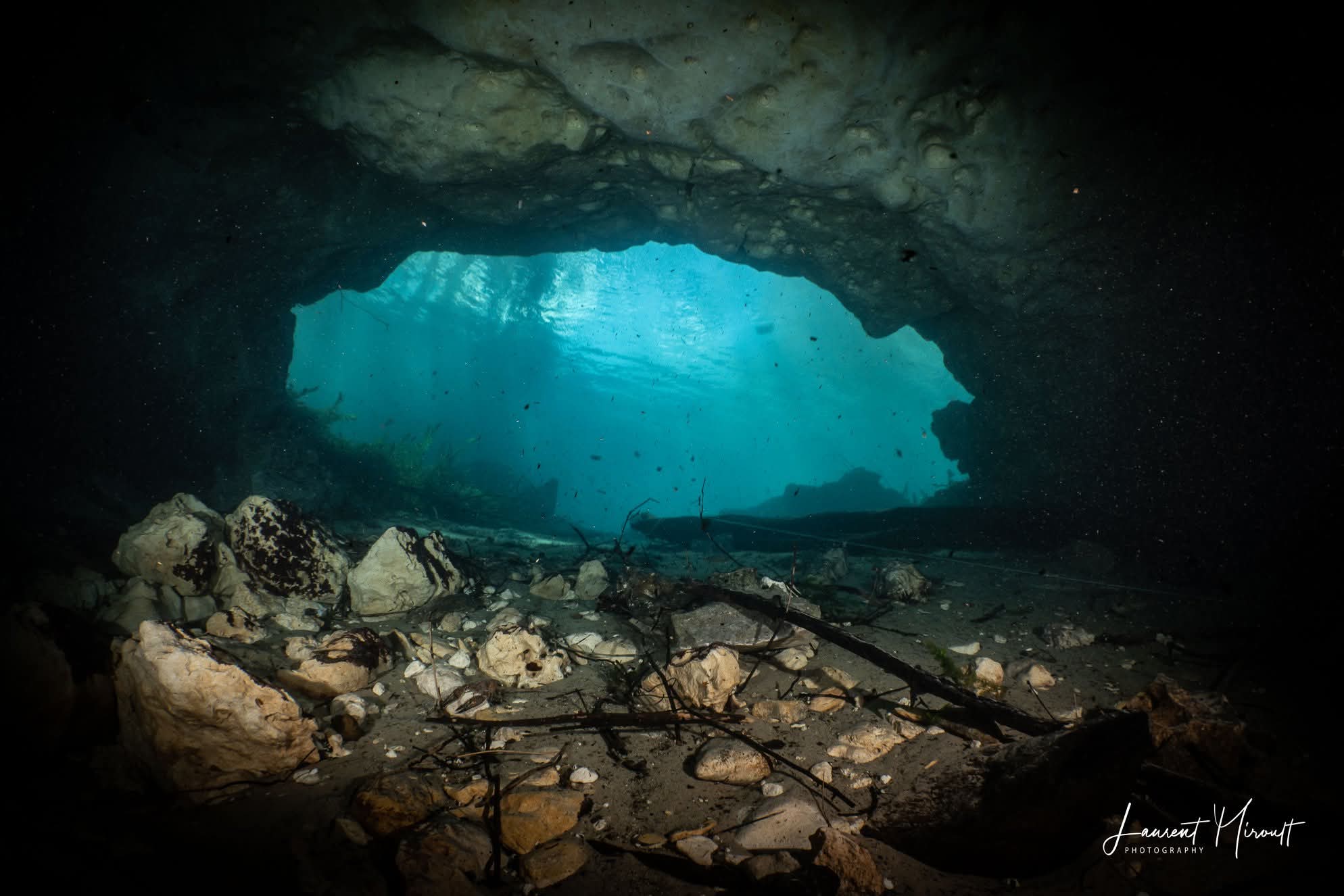
Photo Gallery
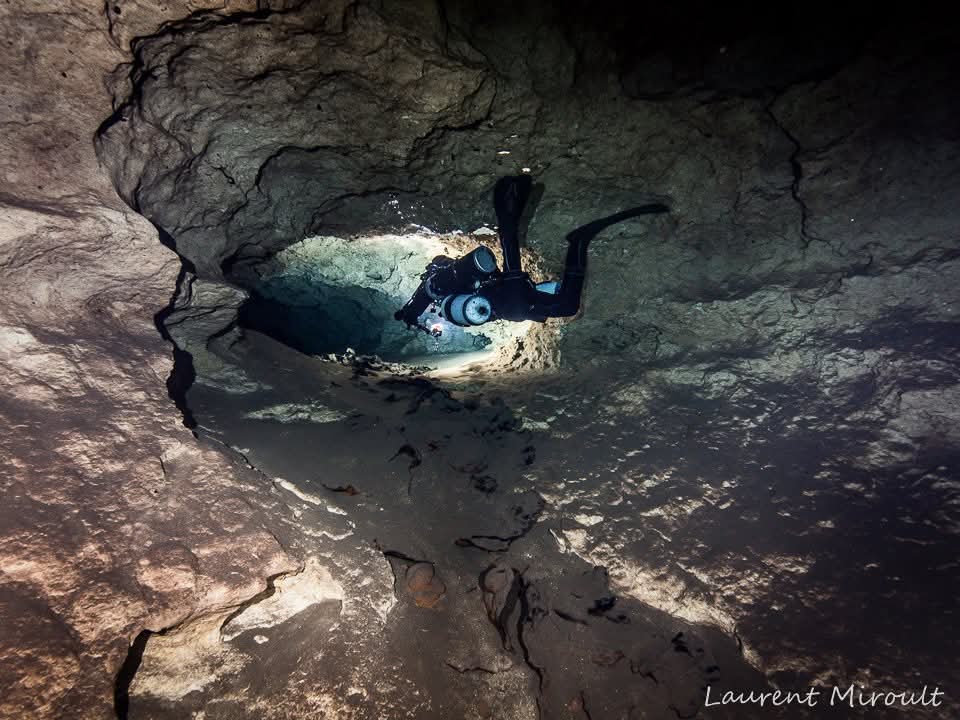
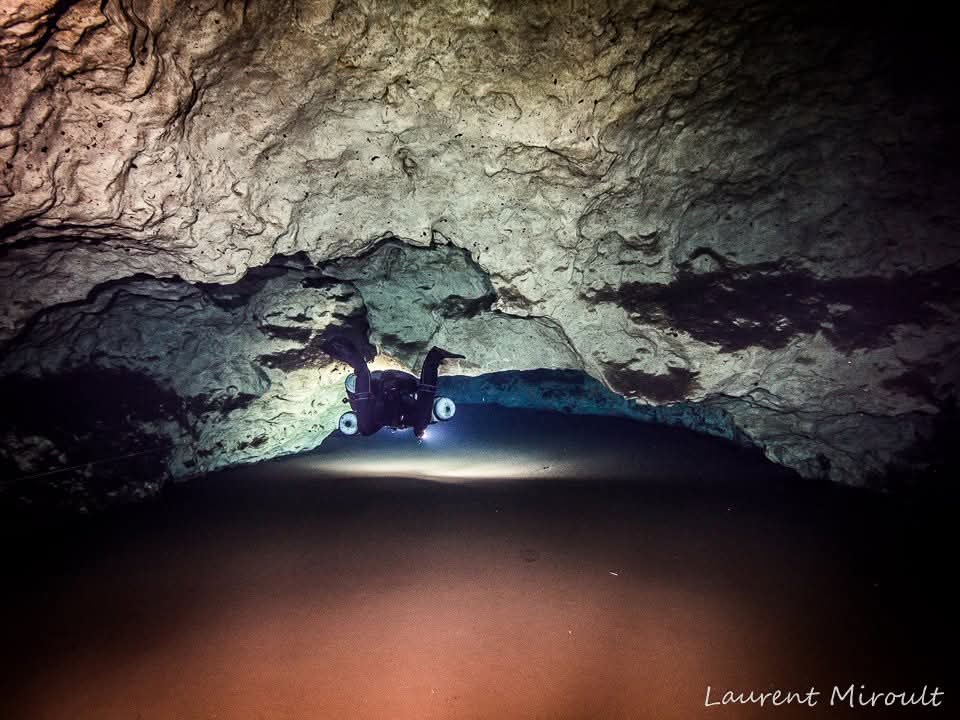
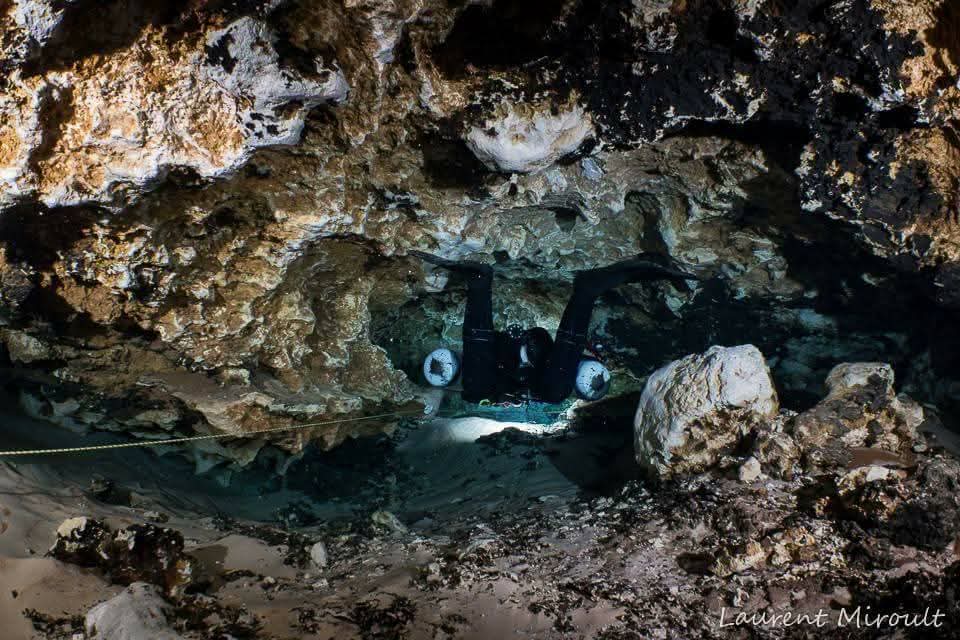
The following images were taken in Twin Cave by Laurent Miroult.
For more photos by Laurent Miroult, please visit cavediving.pictures