
Devil’s Hole
Location: Washington County, Florida, United States
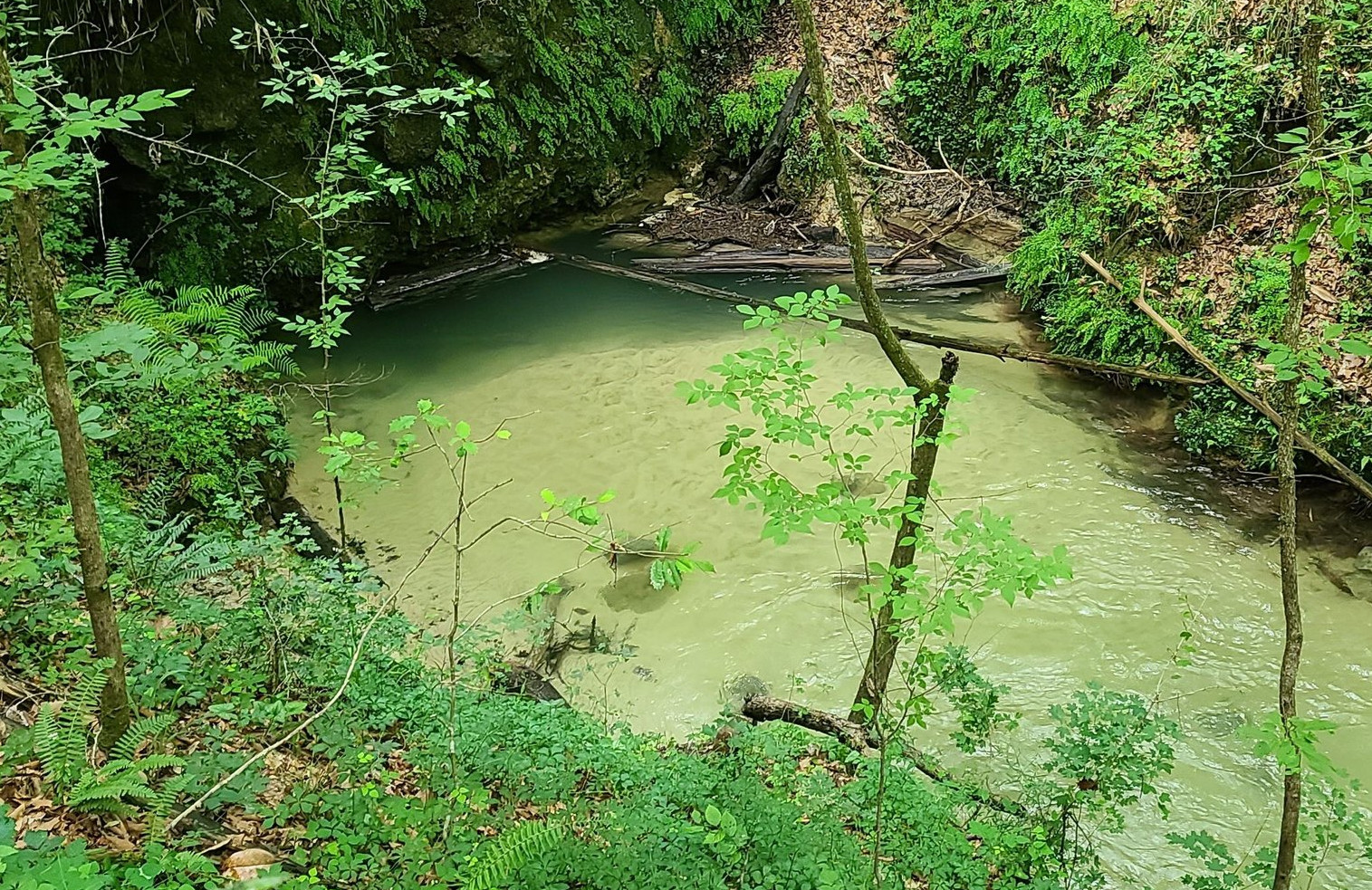
The site is situated deep in wooded terrain and is accessed via a dirt road with sandy sections that can be difficult to traverse without four-wheel drive.
There is a port-a-pot onsite, as well as a campsite.
From the surface, the water appears opaque and green. Approximately 15 feet below the surface, visibility improves significantly.
FREE FLORIDA SPRINGS GUIDE
Want to discover more of Florida’s hidden waterways?
Download The 25 Most Notable Springs and Cave Systems in Florida and explore some of the state’s most remarkable spring basins, underwater cave systems, and hidden natural treasures.
✓ Featured springs throughout Florida
✓ Cave systems and exploration highlights
✓ Popular destinations and hidden gems
✓ Instant download
Devil’s Hole is a sink located along the Florida Trail through Porter Pond Road about 7 miles north of highway 20. The road is sandy so a high clearance vehicle, preferably a 4×4, is recommended. The sink is not large enough to justify a vessel, however, Econfina Creek is near by and well worth visiting to see its many springs.
Geological Context
Devil’s Hole is formed within limestone typical of the Econfina Creek basin.
The sinkhole is bowl-shaped, with multiple fallen trees partially obstructing the downstream side of the system. These natural obstructions reduce access to the downstream passage and limit interior penetration in that direction.
The upstream opening is located at the bottom of the sinkhole against the limestone wall.
Structure & Layout
The upstream entrance is small and requires removal of one sidemount cylinder to pass through. Once beyond the entrance, the main passage extends approximately 220 feet before reaching an intersection. From this point, the cave divides into two low passages that loop back toward each other. An additional offshoot passage was identified and lined in the late 2000s, contributing to a total surveyed length of approximately 500 feet.
The cave remains compact in overall extent but structurally varied within its confined footprint.
Hydrological Characteristics
Devil’s Hole is considered a swallet and exhibits strong current through the sinkhole system.
The downstream side is particularly forceful and is partially blocked by fallen trees. Clearing these obstructions could significantly increase downstream flow velocity, potentially making return to the surface difficult.
Even on the upstream side, current can complicate entry and exit.
During one dive, a diver was forced rear-first into the entrance restriction by the outgoing current and required assistance to disengage from the opening.
The confined nature of the entrance and concentrated flow make current management critical within this system.
Exploration History
Survey efforts documented approximately 500 feet of passage, including the looping sections and an offshoot discovered and lined in the late 2000s.
The system’s modest length contrasts with the hydrological force present at the sinkhole.
Portions of this cave system were explored and surveyed during cave dives conducted by Rob Neto while documenting Florida’s underwater cave systems for the book The Hidden Rivers of Florida.
Cave Data
At first glance, the sinkhole doesn’t look like much. It’s small and green and uninviting. The visibility in the first 15 feet is minimal. However, below 15 feet of depth, the visibility breaks open wide and the beauty of the sinkhole becomes readily apparent.
Devil’s Hole sink is a spring and swallet. The current rushes out of the upstream side and into the downstream side with significant force. Fortunately, the downstream side is choked by multiple trees and impossible to get pushed into. You definitely don’t want to try to get into it. You won’t be able to get back out against the force of the current.
The upstream side is located at the right bottom of the sinkhole. It is a small bottle off restriction that’s been known to break a canister light during entry. Once you get inside the cave, expect to find old, tattered line that will need to be replaced. The beginning of the line will likely be flapping in the current and need to be secured to the wall. You will likely find additional line breaks ahead.
The cave is not very extensive, but it will take you a while to get to the first line intersection due to the strength of the current. The intersection is the beginning of a loop. The left side has an offshoot passage that I explored and line in the early 2010s.
Current Status
- Small, confined upstream entrance
- Strong and sustained current
- Looping low-profile passages
- Limited overall length
Entry and exit both require careful management of positioning due to the force of the current.
The system remains a small but hydrologically active cave within the Econfina Creek basin.
This system is discussed in The Hidden Rivers of Florida because of its importance to cave exploration and ground water research.
Learn about the bookFrequently Asked Questions
The spring is located along the Florida Trail through Porter Pond Road not far from the Econfina Creek. Once on Porter Pond Road, just follow the signs for about 7 miles.
Trained and certified cave divers can dive the cave in sidemount configuration. The opening requires pushing both scuba tanks ahead while fighting the strong current.
No, Devil’s Hole is a sinkhole located in the forest. It is not connected to the Econfina Creek by land.
The water has a greenish-blue tint and visibility is less then 5 feet. 15 feet below the surface, the visibility clears up significantly. The sinkhole is a swallet with a strong current emitting from the spring side and continuing into the siphon side, where it likely discharges into the Econfina Creek a few hundred feet away.
Yes, the spring is on property managed by the Northwest Florida Water Management District. There are picnic tables, a portable toilet, and a single primitive campsite that can be reserved.
Continue Exploring Florida’s Hidden Waters
If you enjoyed the information about this springs, you’ll love the free guide:
The 25 Most Notable Springs and Cave Systems in Florida
From world-famous destinations like Wakulla, Jackson Blue Spring, and Peacock Springs to lesser-known hidden gems, this guide introduces some of Florida’s most fascinating natural wonders.
Download your free copy and continue exploring beyond the surface.
Get the Free Guide →Nearby Springs
Photo Gallery
Coming soon