Gator Hole
Location: Jackson County, Florida, United States
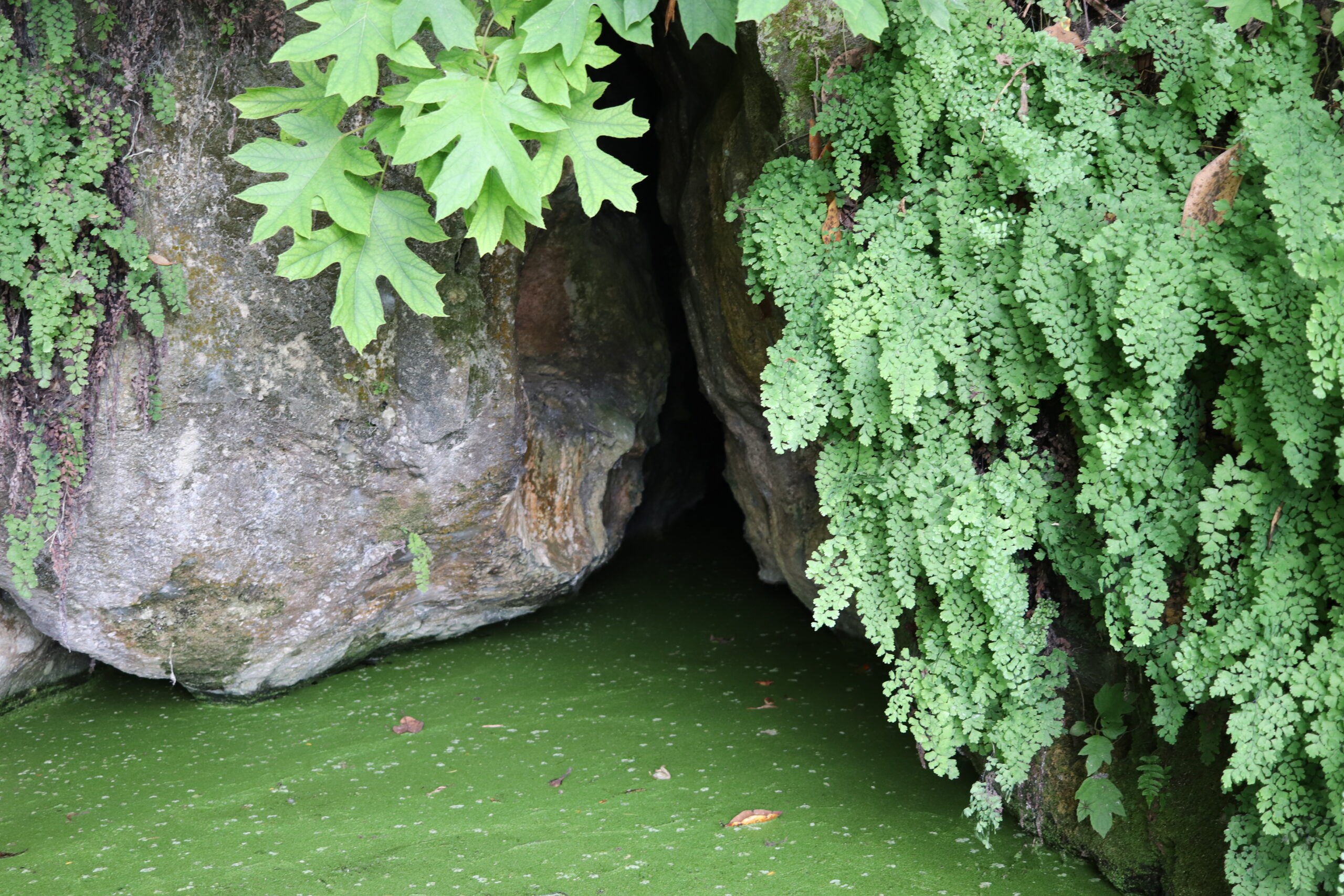
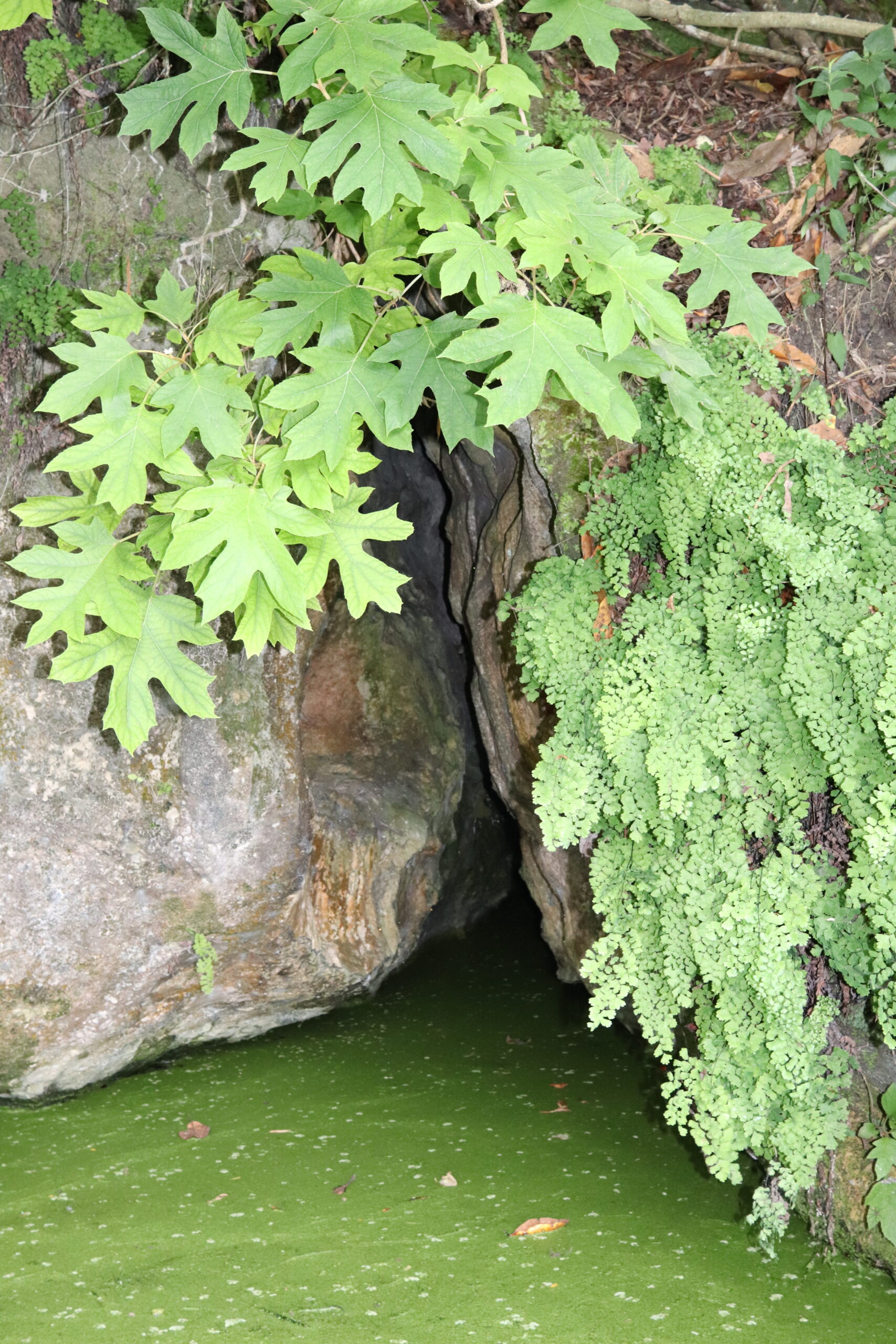
Gator Hole is the southernmost spring cave system on Merritt’s Mill Pond in Jackson County, Florida. The spring is located directly across from the Hunter Fish Camp Road boat launch.
The system is distinctive due to its partially exposed opening, with a portion of the entrance located above the waterline. Despite its modest length, Gator Hole is a restrictive and technically demanding cave system.
FREE FLORIDA SPRINGS GUIDE
Want to discover more of Florida’s hidden waterways?
Download The 25 Most Notable Springs and Cave Systems in Florida and explore some of the state’s most remarkable spring basins, underwater cave systems, and hidden natural treasures.
✓ Featured springs throughout Florida
✓ Cave systems and exploration highlights
✓ Popular destinations and hidden gems
✓ Instant download
Gator Hole can be reached by kayak, canoe, or paddleboard from the Hunter Fish Camp boat launch in Marianna, Florida. Paddle straight across the pond to the east bank and you’ll easily see the opening to the spring. During warmer days, be sure to check for motorized boat traffic in both directions before crossing.
As you approach the spring, watch for the small rocky bluff on the east bank. Paddlers may encounter limestone formations and native wildlife commonly associated with Florida’s spring systems. If you’re so inclined, the above surface area of the spring is large enough to fit a small kayak, canoe, or paddleboard inside. The spring provides a unique opportunity to observe the connection between Florida’s surface waterways and the hidden groundwater network flowing beneath the landscape.
Geological Context
Like other Merritt’s Mill Pond systems, Gator Hole forms within the region’s limestone karst geology and discharges groundwater from the Floridan Aquifer into the pond.
Part of the opening extends above the waterline, allowing snorkel entry into the initial cavern section under appropriate conditions. The cave transitions from air-filled cavern to fully submerged passage at a short limestone duck-under.
The spring maintains stable temperatures year-round, which can influence wildlife presence at the entrance.
Structure & Layout
The cave entrance is unique among Merritt’s Mill Pond cave systems. A portion of the opening is above the water surface, allowing snorkel access approximately 100 feet into the initial cavern area.
Beyond this point, a short submerged limestone section requires a duck-under to reach a secondary chamber. This duck-under also marks the beginning of the fully submerged cave system.
- Low
- Narrow
- Predominantly restrictive
- Best suited for sidemount configuration
Much of the passage remains tight throughout its length.
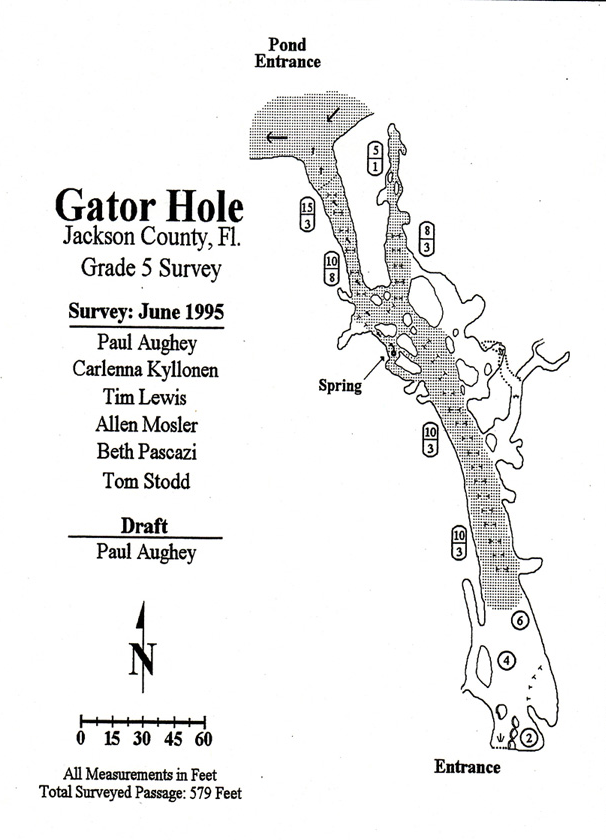
The surveyed and mapped passage totals just under 600 feet.
Due to the small cross-sectional profile of the cave, visibility can deteriorate significantly on exit, and zero-visibility conditions are common in portions of the return route.
Hydrological Characteristics
Flow within Gator Hole is moderate but concentrated through small passage.
Because of the confined interior dimensions, visibility can be quickly affected during exit.
During winter months, alligators have been observed near the spring opening, likely due to the relatively warmer spring water compared to the pond.
Access Characteristics
The snorkel-to-duck-under configuration makes Gator Hole structurally distinct from most Merritt’s Mill systems.
While surface access may appear straightforward, the transition into the submerged portion requires familiarity with the layout and proper cave diving configuration.
The above-water access should not be interpreted as reducing the technical nature of the underwater cave.
Exploration History
Gator Hole has been surveyed and mapped to just under 1,000 feet of passage.
While not one of the longer systems in Merritt’s Mill Pond, its restrictive nature and unique entrance configuration make it structurally distinct within the pond’s collection of caves.
Cave Data
Gator Hole is a low, silty cave that requires advanced sidemount techniques and experience. The opening to the cave is located about 100 feet from the opening seen from the surface of the pond. There are areas of the cave where you must keyhole yourself just right to make it through. This is easy enough on the way in, but will be challenging in diminished visibility on the way out.
Gator Hole holds true to its name and should be considered a warm weather dive. An alligator has been sighted in the area, usually during the winter months when the pond water is colder than the spring water. One particular gator likes to position itself right at the opening of the cave so it can enjoy the relatively warm water. While it might not be there when you begin the dive, it could be when you try to exit. You’ve been warned.
Current Status
- Southernmost pond location e
- Partially above-water opening
- Snorkel-access cavern
- Sidemount-only underwater passage
- Approximately 1,000 feet of surveyed cave
The Hidden Rivers of Florida documents the springs, rivers, sinkholes, caves, and groundwater systems that shape Florida’s landscape. Through exploration, photography, research, and firsthand observation, the project seeks to connect visitors with the hidden waterways flowing beneath the state.
Frequently Asked Questions
The spring is located almost directly across from the Hunter Fish Camp boat launch on Merritt’s Mill Pond in Marianna, Florida. It can easily be found by looking for the opening in the small limestone bluff on the east bank.
While the spring is underwater, the first section has both submerged and air-filled areas. You can snorkel about 100 feet in from the pond opening. You may even be able to fit a small kayak in there. At the end of this section, there is a duck under that would require being submerged to get into the next chamber that extends about another 100 feet. Use caution if you decide to try this because you will be in an overhead section for a few feet before being able to surface again. The use of a line/rope is recommended if it’s your first time attempting this.
Yes, it’s a short paddle across Merritt’s Mill Pond from the launch. During warmer months, check for motorized traffic before attempting to cross to the east bank.
Alligators have been spotted at Gator Hole on multiple occasions. One such report was by a cave diver who had scootered across the pond to dive the cave. When he arrived, he recognized the gator’s scutes and immediately withdrew. This was during the colder months and the gator was at the opening to the cave taking advantage of the relatively warm water coming from inside of it.
Continue Exploring Florida’s Hidden Waters
If you enjoyed the information about this springs, you’ll love the free guide:
The 25 Most Notable Springs and Cave Systems in Florida
From world-famous destinations like Wakulla, Jackson Blue Spring, and Peacock Springs to lesser-known hidden gems, this guide introduces some of Florida’s most fascinating natural wonders.
Download your free copy and continue exploring beyond the surface.
Get the Free Guide →Nearby Springs
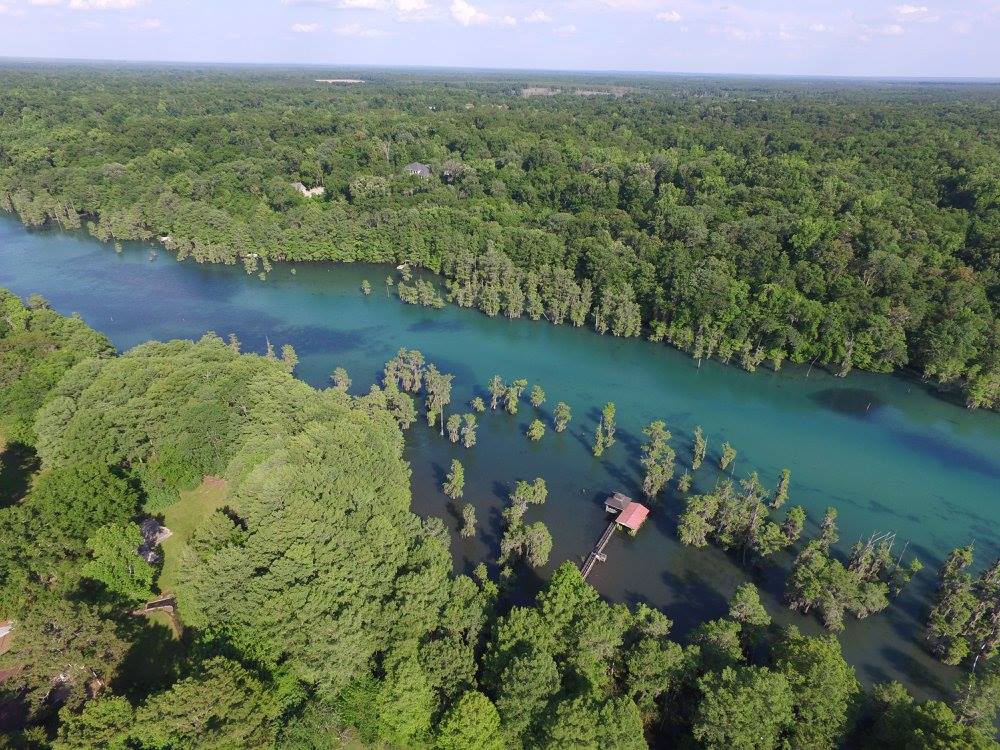
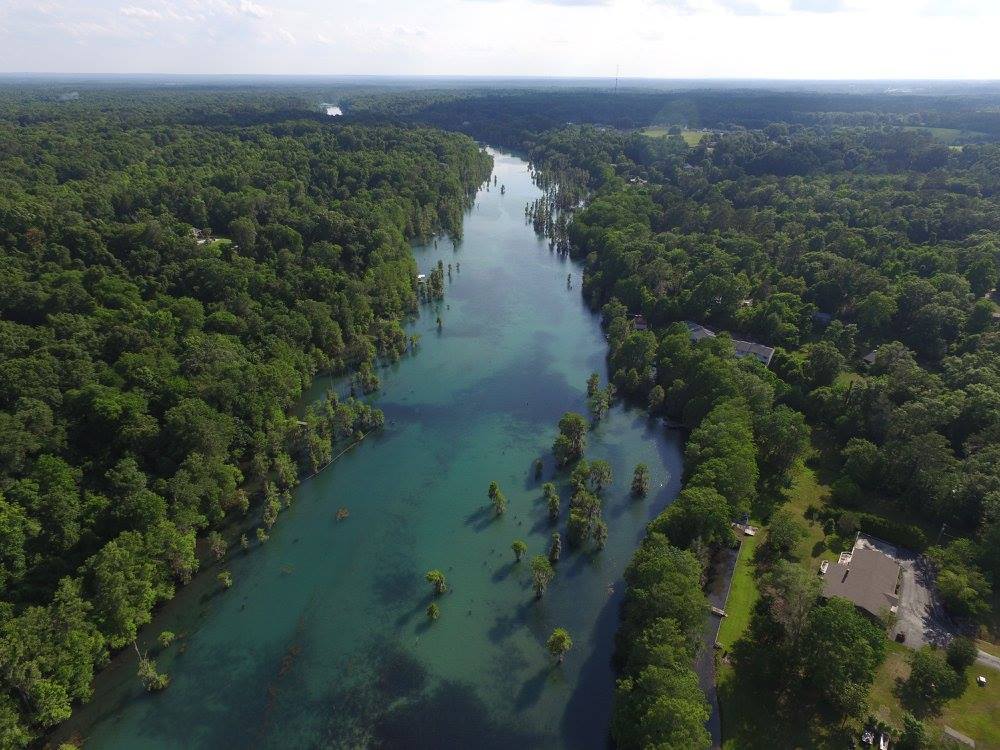
Photo Gallery