
Silver River Basin
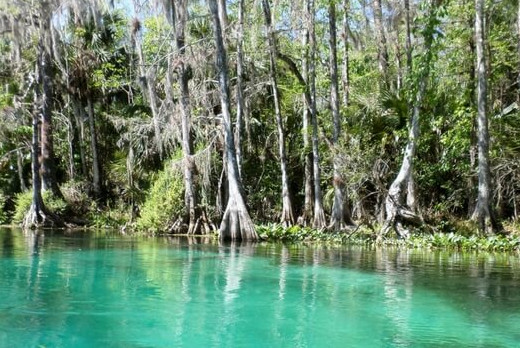
The Silver River Basin is one of Florida’s most famous spring-fed watersheds. Located in Marion County, the basin is centered around Silver Springs, a first-magnitude spring group that discharges millions of gallons of groundwater each day from the Floridan Aquifer.
Unlike many of North Florida’s cave-diving regions, the Silver River Basin is best known for its crystal-clear springs, glass-bottom boats, paddling opportunities, and abundant wildlife. The basin has attracted visitors for generations and remains one of the state’s most iconic natural destinations.
Major springs and spring systems within the basin include Silver Springs, Mammoth Spring, The Abyss, Garden of Eden Spring, and numerous other vents that collectively form the headwaters of the Silver River.
Geological Context
The Silver River Basin developed within the limestone formations of the Floridan Aquifer. Over thousands of years, groundwater dissolved portions of the limestone, creating conduits, spring vents, and underground pathways that continue to transport water beneath the landscape today.
The basin’s springs represent locations where groundwater emerges at the surface after traveling through the aquifer.
The Floridan Aquifer serves as the primary water source for the Silver River Basin. Rainfall entering recharge areas moves through underground limestone formations before emerging at Silver Springs and numerous associated vents.
The remarkable clarity of the basin’s springs is a result of this natural filtration process.
Major Springs of the Silver River Basin
Silver Springs is one of the largest and most famous spring groups in the world. The spring system consists of numerous individual vents that collectively form the headwaters of the Silver River.
Known for its crystal-clear water and historic glass-bottom boat tours, Silver Springs remains the centerpiece of the basin.
Mammoth Spring is the largest individual vent within the Silver Springs system and contributes a significant portion of the groundwater that forms the Silver River.
The Abyss is one of the most recognizable spring vents within Silver Springs. Its dark, deep opening has fascinated visitors aboard glass-bottom boats for generations and remains one of the park’s most famous underwater features.
Garden of Eden Spring is one of several major vents within the Silver Springs system. Like the other springs in the basin, it contributes clear groundwater to the Silver River and provides insight into the scale of the underlying aquifer.
The basin contains numerous additional springs and vents, including Devil’s Kitchen, Reception Hall Spring, Spring of the Stars, Fisherman’s Paradise, and several other named openings. Together, these vents create one of the most productive spring systems in Florida.
The Silver River
- Kayaking
- Canoeing
- Wildlife viewing
- Photography
- Turtles
- Alligators
- Fish
- Wading birds
- Manatees
- Monkeys
Historical Significance
Silver Springs has attracted people for thousands of years. Indigenous peoples utilized the springs long before European settlement, recognizing the importance of the area’s freshwater resources.
During the late nineteenth and twentieth centuries, Silver Springs became one of Florida’s most famous tourist attractions. The introduction of glass-bottom boat tours allowed visitors to view the underwater world of the springs, creating an attraction that continues today.
The springs have also served as filming locations for numerous movies, television shows, and documentaries, further establishing their place in Florida’s cultural history.
Hydrology
The Silver River Basin is sustained by groundwater emerging from the Floridan Aquifer. Water flowing from dozens of spring vents forms the Silver River and supports a diverse ecosystem throughout the watershed.
The basin demonstrates the close relationship between groundwater, surface water, and karst geology. Studies of Silver Springs have contributed significantly to understanding groundwater flow, spring discharge, and aquifer dynamics in Florida.
Ecological Importance
The Silver River Basin supports a wide range of aquatic and terrestrial habitats. The spring-fed waters provide stable temperatures and high water quality that benefit fish, turtles, aquatic vegetation, birds, and other wildlife.
The basin is also home to one of Florida’s most unusual wildlife populations: free-ranging rhesus macaques that inhabit portions of the Silver River corridor.
The health of these ecosystems depends on the continued protection of groundwater resources and spring flow.
Legacy
Few spring systems have influenced Florida tourism and conservation as profoundly as Silver Springs. For generations, the springs introduced visitors to Florida’s natural beauty through glass-bottom boats, wildlife encounters, and recreational opportunities.
Today, the basin remains one of the most recognizable examples of the connection between Florida’s groundwater systems and the springs that bring them to the surface.
Current Status
The Silver River Basin remains one of Florida’s most visited spring regions. Silver Springs State Park continues to attract visitors through glass-bottom boat tours, paddling opportunities, hiking trails, wildlife viewing, and educational programs.
Ongoing research and conservation efforts continue to improve understanding of groundwater flow, spring health, and ecosystem dynamics throughout the basin. These efforts help preserve one of Florida’s most iconic spring systems for future generations.
The Silver River Basin is a spring-fed watershed in Marion County centered around Silver Springs and the Silver River.
Silver Springs is the dominant spring system within the basin and consists of numerous individual spring vents, including Mammoth Spring.
Silver Springs is known for its crystal-clear water, glass-bottom boat tours, abundant wildlife, and long history as one of Florida’s most popular tourist attractions.
Yes. A population of free-ranging rhesus macaques inhabits portions of the Silver River corridor. The monkeys are descendants of animals introduced during the 1930s.
Yes. The Silver River is one of Florida’s premier paddling destinations and is popular with kayakers, canoeists, and paddleboarders.
Yes. The springs that feed the Silver River are supplied by groundwater emerging from the Floridan Aquifer.
Although groundwater reaches the springs through underground conduits within the aquifer, the basin is primarily known for its spring vents, river system, and recreational opportunities rather than cave-diving destinations.