
Eagle’s Nest
Location: Hernando County, Florida, United States
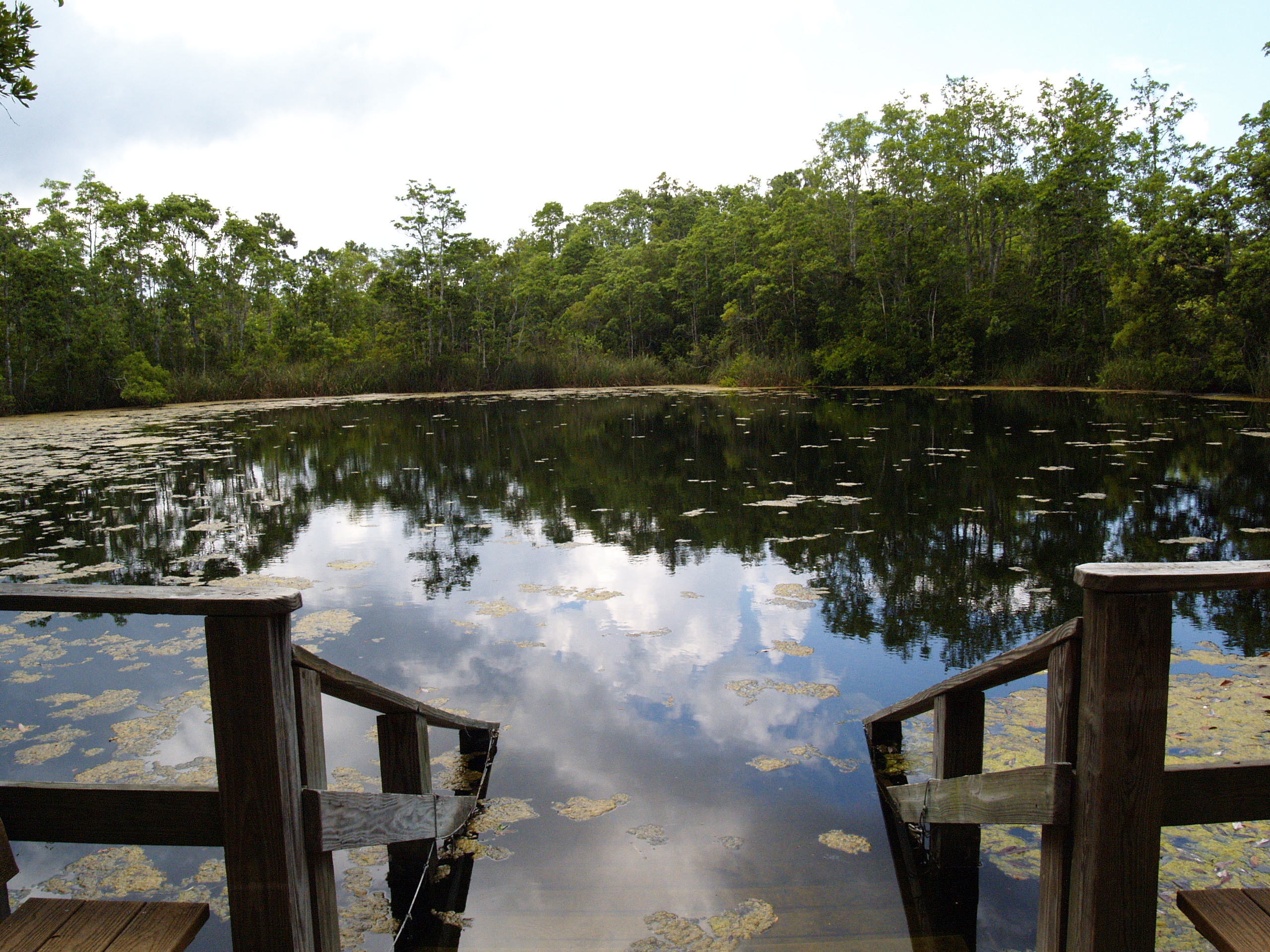
Eagle’s Nest is one of the most famous and technically demanding underwater cave systems in the world and is often referred to as the Mount Everest of cave diving. Located within the Withlacoochee River Basin of Central Florida, the system has earned an international reputation for its depth, complexity, and exploration history.
The Eagle’s Nest spring basin is located in the Chassahowitzka National Wildlife Refuge with the opening to the cave located in the center. The spring basin is shallow, reaching a depth of 30 feet at the top of the shaft to the cave. Beneath a relatively unassuming surface pool lies an extensive network of shafts, tunnels, and deep cave passages that descend far below the surrounding landscape.
For decades, Eagle’s Nest has attracted some of the most accomplished cave divers and explorers in the world. The system continues to play an important role in cave-diving exploration, survey work, and the study of Florida’s groundwater systems.
FREE FLORIDA SPRINGS GUIDE
Want to discover more of Florida’s hidden waterways?
Download The 25 Most Notable Springs and Cave Systems in Florida and explore some of the state’s most remarkable spring basins, underwater cave systems, and hidden natural treasures.
✓ Featured springs throughout Florida
✓ Cave systems and exploration highlights
✓ Popular destinations and hidden gems
✓ Instant download
Eagle’s Nest is not a paddling destination and is not accessible by kayak, canoe, or paddleboard. The spring is located within a wooded area in the Chassahowitzka Wildlife Management Area and is primarily visited by cave divers and individuals interested in Florida’s unique karst geology.
Visitors exploring the area can observe the spring basin and surrounding landscape, but the site’s significance lies beneath the surface within the extensive cave system hidden below.
Geological Context
Eagle’s Nest formed within the limestone of the Floridan Aquifer through the gradual dissolution of rock by groundwater over thousands of years.
The system differs from many of Florida’s river-basin cave systems in that it contains significant vertical development. Eagle’s Nest features deep shafts, large rooms, and complex passage networks extending to depths exceeding 300 feet.
These geological characteristics have helped make the system one of the most unique cave-diving destinations in North America.
Structure & Layout
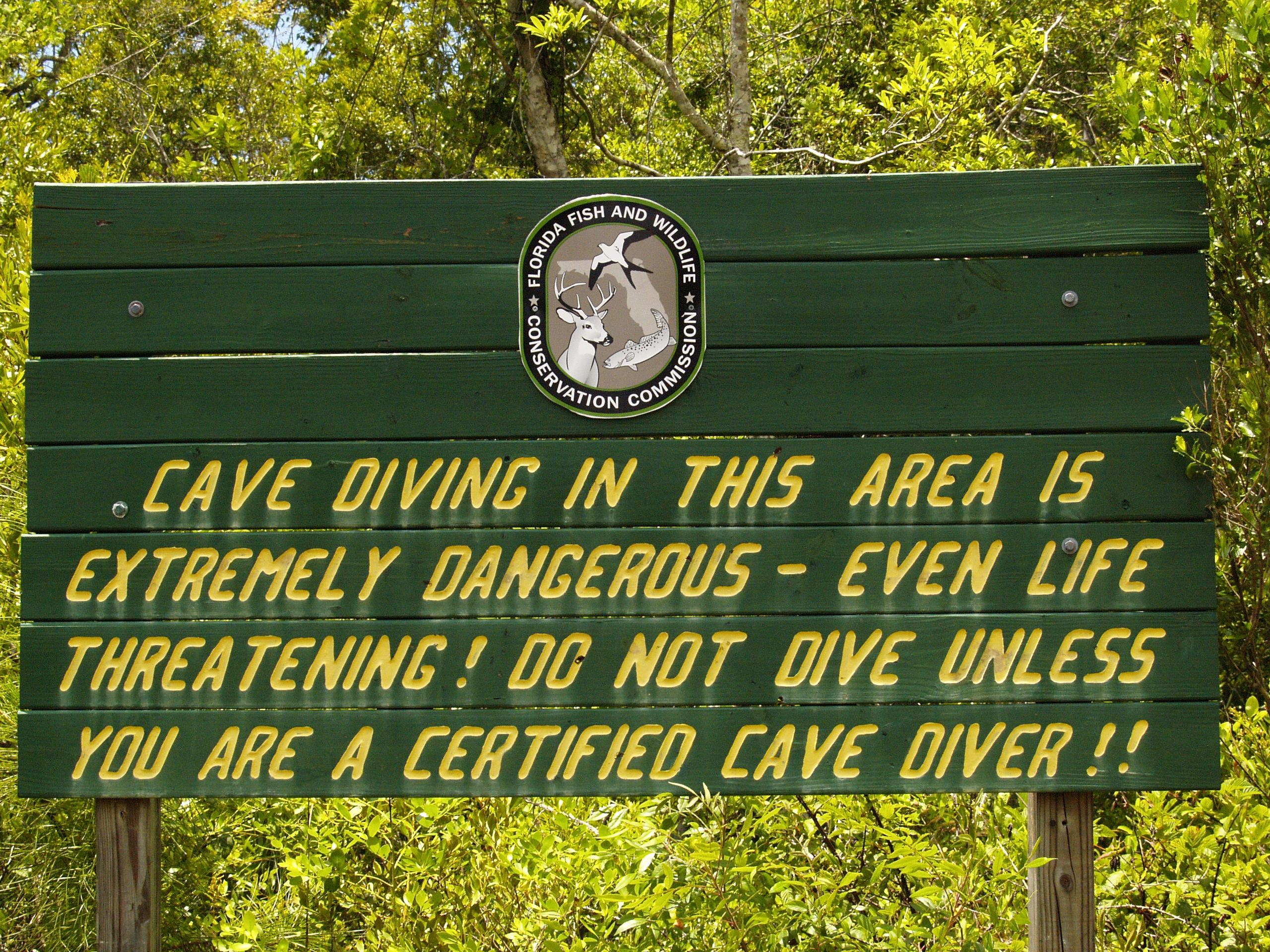
The entrance to Eagle’s Nest begins in a spring basin that gives little indication of the cave system hidden below. If not for the sign warning divers of the danger, visitors might not know a cave exists below the surface. A short descent leads divers to the primary opening and the beginning of the system’s extensive vertical development.
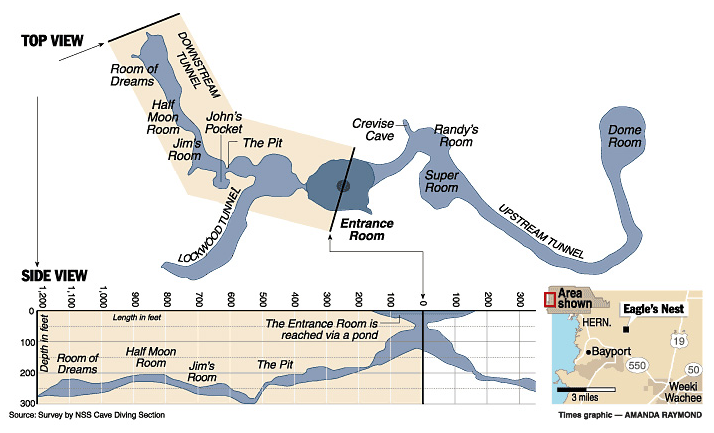
One of the most recognizable features within Eagle’s Nest is the Ballroom, a large chamber that serves as a staging area for cave divers entering the system. The room’s size and accessibility have made it one of the most photographed locations within the cave.
Beyond the Ballroom, the cave descends through a deep shaft that leads to increasingly complex passages and chambers. This section marks the transition from a relatively accessible environment to one requiring advanced cave-diving skills and equipment.
The Super Room is among the largest chambers within the system and represents one of Eagle’s Nest’s most impressive geological features. The room’s scale highlights the immense size of the cave system hidden beneath the surface.
Below the primary rooms and shafts lies an extensive network of deep cave passages that continue to challenge explorers. These passages have been the focus of exploration projects for decades and remain among the most technically demanding cave environments in Florida.
Hydrological Characteristics
Eagle’s Nest is connected to the Floridan Aquifer and forms part of the broader groundwater system underlying Central Florida.
Water moving through the cave system is filtered through limestone formations before emerging at the spring. The exceptional clarity of the water provides divers with remarkable visibility and has contributed to the site’s popularity among underwater photographers and explorers.
Although much remains unknown about the system’s full extent, Eagle’s Nest continues to provide valuable insight into the movement of groundwater beneath Florida’s karst landscape.
Exploration History
Eagle’s Nest has occupied a unique place in the history of cave diving. Since its discovery and early exploration, the system has attracted divers seeking to push the limits of underwater exploration and cave-diving technology.
Numerous exploration projects have expanded understanding of the cave’s layout while contributing to advances in survey methods, decompression procedures, mixed-gas diving, and deep cave exploration techniques. Many of the practices and technologies commonly used by technical cave divers today were refined through exploration efforts in systems such as Eagle’s Nest.
The cave continues to attract explorers and researchers seeking to better understand the geology and hydrology of the Floridan Aquifer.
Cave Data
Eagle’s Nest is widely regarded as one of the most advanced cave-diving environments in the world and is often referred to as the Mount Everest of cave diving. Its depth, vertical development, and complex passage network require extensive training, specialized equipment, and careful dive planning.
The cave is suitable only for properly trained and equipped cave divers. The system’s history serves as a reminder that even experienced divers must approach deep cave environments with caution, preparation, and respect for the challenges involved.
For qualified divers, Eagle’s Nest offers the opportunity to explore one of the most remarkable underwater cave systems on the planet.
Current Status
Eagle’s Nest remains one of the world’s premier cave-diving destinations and continues to attract experienced cave divers from around the globe.
The system has also been the subject of ongoing discussion within the diving community due to its depth, complexity, and history of accidents. Several highly publicized fatalities have occurred within the cave over the years, including a father-and-son accident on Christmas Day 2013 that drew national attention. Concerns surrounding accidents at the site contributed to a temporary closure in the early 2000s before access was eventually restored.
Despite its reputation, Eagle’s Nest remains open to qualified cave divers. While accidents within the system often receive considerable attention because of its notoriety, other Florida cave systems have experienced more fatalities over the course of their exploration histories. Supporters of continued access emphasize the importance of training, experience, proper equipment, and adherence to established cave-diving practices.
Today, Eagle’s Nest continues to serve as an important site for exploration, education, and groundwater research.
The Hidden Rivers of Florida documents the springs, rivers, sinkholes, caves, and groundwater systems that shape Florida’s landscape. Through exploration, photography, research, and firsthand observation, the project seeks to connect visitors with the hidden waterways flowing beneath the state.
Learn about the bookFrequently Asked Questions
Eagle’s Nest is known for its extreme depth, complex cave passages, and reputation as one of the world’s most challenging underwater cave systems. It has been nicknamed the Mount Everest of cave diving.
Eagle’s Nest is located in Hernando County, Florida, within the Withlacoochee River Basin.
Yes. Access is permitted for qualified cave divers who meet the site’s requirements and possess appropriate training and experience. This training and experience includes diving with hypoxic Trimix breathing gasses.
The Ballroom is a large chamber near the entrance of Eagle’s Nest and serves as one of the cave’s most recognizable features.
The Super Room is one of the largest chambers within Eagle’s Nest and highlights the immense scale of the cave system.
The cave’s depth, complexity, overhead environment, and demanding decompression requirements make it one of the most technically challenging cave-diving sites in the world.
Yes. The site was temporarily closed in the early 2000s following several highly publicized accidents before eventually reopening to qualified cave divers.
Yes. The cave system is part of the extensive groundwater network associated with the Floridan Aquifer.
Continue Exploring Florida’s Hidden Waters
If you enjoyed the information about this springs, you’ll love the free guide:
The 25 Most Notable Springs and Cave Systems in Florida
From world-famous destinations like Wakulla, Jackson Blue Spring, and Peacock Springs to lesser-known hidden gems, this guide introduces some of Florida’s most fascinating natural wonders.
Download your free copy and continue exploring beyond the surface.
Get the Free Guide →Nearby Springs
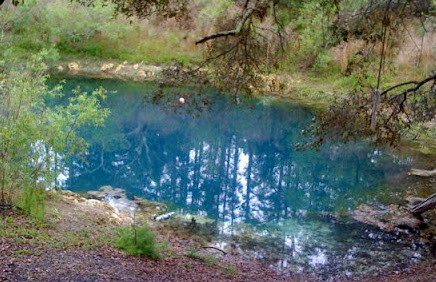
Photo Gallery
Coming soon