
Twin Dees Spring (Little Spring)
Location: Hernando County, Florida, United States
The Hidden Overflow of Weeki Wachee
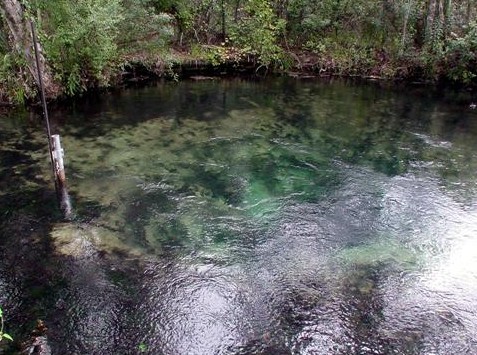
Tucked away behind locked gates within Weeki Wachee Springs State Park lies one of Florida’s least-known but most remarkable spring systems. Known as Twin Dees Spring or Little Spring, this small spring serves as a critical overflow outlet for the Weeki Wachee groundwater system.
At the surface, Twin Dees appears unassuming. It’s a small oval spring pool surrounded by swamp forest and sandhills. Beneath the water, however, lies one of Florida’s deepest and most technically challenging underwater cave systems. Reaching depths exceeding 400 feet and connecting to the main Weeki Wachee cave system, Twin Dees has become one of the most significant exploration sites in modern cave diving.
Because the spring is located on protected Southwest Florida Water Management District (SWFWMD) property, public access is prohibited, and exploration is limited to authorized scientific and exploration teams.
FREE FLORIDA SPRINGS GUIDE
Want to discover more of Florida’s hidden waterways?
Download The 25 Most Notable Springs and Cave Systems in Florida and explore some of the state’s most remarkable spring basins, underwater cave systems, and hidden natural treasures.
✓ Featured springs throughout Florida
✓ Cave systems and exploration highlights
✓ Popular destinations and hidden gems
✓ Instant download
Access to Twin Dees Spring is strictly prohibited. The spring is surrounded by fence and a locked gate. The state has issued permits during times when the current is manageable for diving, but no others are permitted near the spring basin.
Geological Context
Twin Dees Spring is part of the Weeki Wachee Springs groundwater system within Florida’s Nature Coast karst region. Groundwater flowing through the Floridan Aquifer moves through an extensive network of deep limestone conduits before discharging through Weeki Wachee Spring and several secondary outlets.
Twin Dees functions as one of these important overflow springs. During periods of high groundwater levels, it helps relieve pressure within the aquifer by providing an additional discharge point into the Weeki Wachee River.
Its connection to the main Weeki Wachee cave system demonstrates the enormous scale of the underground river flowing beneath Hernando County.
The Spring
Twin Dees Spring consists of an oval spring pool measuring approximately 75 feet north to south and 36 feet east to west. Two separate spring vents occupy the pool. The southern vent reaches approximately 13 feet deep and normally produces the majority of the spring’s discharge, creating a noticeable boil on the water surface. The northern vent has been observed flowing intermittently depending upon groundwater conditions.
Two spring runs leave the pool before joining together and flowing north into the Weeki Wachee River. The larger run exits from the north side of the spring, while a smaller channel leaves from the western side.
The surrounding landscape illustrates the diversity of Florida’s karst terrain. Upland sandhills border the spring to the east, while dense swamp forest extends westward toward the Weeki Wachee River.
Like many overflow springs, discharge varies considerably with aquifer levels. During periods of drought, the spring has stopped flowing entirely, leaving portions of the spring run dry before flow resumed as groundwater levels recovered.
The Cave System
Beneath the modest spring pool lies one of Florida’s deepest underwater cave systems. The entrance begins as a narrow vertical fissure where powerful groundwater flow normally prevents exploration. During average water conditions, the force of water exiting the cave makes entry virtually impossible.
When prolonged drought reduces aquifer pressure, explorers are able to descend a narrow entrance chimney nearly 40 feet before entering immense submerged chambers.
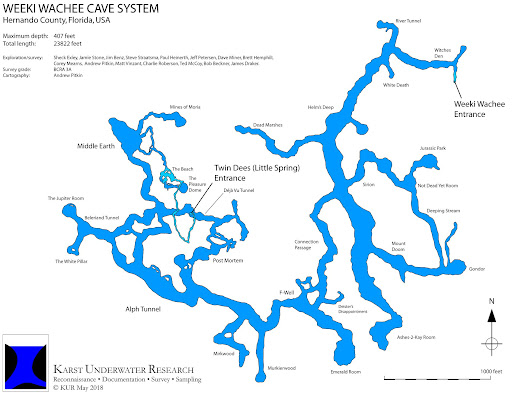
Far below the surface lie spectacular rooms such as Middle Earth and the Pleasure Dome, enormous voids whose scale contrasts dramatically with the tiny spring visible above.
The explored system reaches depths exceeding 400 feet, making Twin Dees one of Florida’s deepest known underwater cave systems.
Exploration History
Twin Dees Spring has challenged cave explorers for decades. Early exploration during the 1970s and 1980s by Paul Heinerth and Sheck Exley demonstrated the spring’s potential, but the powerful flow prevented significant penetration into the system.
In 1996, Jeff Petersen and Dave Miner of Karst Underwater Research (KUR) succeeded in pushing deeper into the cave during favorable conditions. Their exploration led to the discovery of an enormous underground chamber they named Middle Earth, along with a deep passage known as the Alph Tunnel. Despite these discoveries, exceptionally high flow once again prevented further exploration for many years.
Only during periods of unusually low aquifer levels in 2007, 2009, and 2012 were exploration teams able to make substantial progress. These rare opportunities allowed divers to extend the mapped cave to depths approaching 407 feet.
Beginning in 2011, Brett Hemphill and Andrew Pitkin resumed exploration of the Alph Tunnel, extending passage toward Weeki Wachee Spring. Over the following three years, teams explored thousands of feet of new cave, much of it deeper than 300 feet.
The 2014 Connection
On September 13, 2014, members of Karst Underwater Research completed one of the most significant discoveries in Florida cave diving history. After years of exploration, survey, and deep cave diving, Twin Dees Spring was successfully connected to the main Weeki Wachee Spring cave system. The connection created an interconnected underwater cave network exceeding 30,000 feet in surveyed passage and dramatically improved scientists’ understanding of groundwater flow beneath the Weeki Wachee basin. It also confirmed that the small overflow spring visible at the surface is directly connected to one of Florida’s largest first-magnitude spring systems.
Hydrological Characteristics
Twin Dees plays an important role in regulating discharge from the Floridan Aquifer. Unlike the main Weeki Wachee Spring, which flows continuously, Twin Dees responds more dramatically to fluctuations in groundwater levels. During periods of high aquifer pressure, it provides an additional outlet for groundwater moving through the system.
During severe droughts, however, reduced hydraulic pressure allows cave divers a rare opportunity to enter passages that are normally inaccessible because of the overwhelming current. These changing flow conditions have largely dictated the pace of exploration over the past several decades.
Cave Data
Diving is strictly prohibited except by state issued permit. Access to the spring is also strictly prohibited.
Conditions also limit accessibility. The current discharging from the spring opening is so strong that the cave is only accessible from Twin Dees during periods of severe drought.
Current Status
Twin Dees Spring is located on protected Southwest Florida Water Management District property within Weeki Wachee Springs State Park.
Public access is prohibited, and swimming, snorkeling, and recreational cave diving are not permitted.
The spring remains an important scientific resource for understanding groundwater movement within the Floridan Aquifer while protecting one of Florida’s most significant underwater cave systems.
The Hidden Rivers of Florida documents the springs, rivers, sinkholes, caves, and groundwater systems that shape Florida’s landscape. Through exploration, photography, research, and firsthand observation, the project seeks to connect visitors with the hidden waterways flowing beneath the state.
Frequently Asked Questions
Twin Dees Spring is located within Weeki Wachee Springs State Park in Hernando County, Florida, on protected Southwest Florida Water Management District property.
Twin Dees Spring has historically been referred to as Little Spring in many cave diving publications and exploration reports because of its smaller size in relation to Weeki Wachee Spring located only 0.5 a mile away.
The explored cave system reaches depths exceeding 400 feet, with exploration extending to approximately 407 feet.
The entrance fissure normally experiences extremely high water flow that makes safe exploration impossible. Significant exploration only occurred during periods of exceptional drought when groundwater discharge temporarily decreased.
Middle Earth is a massive underground chamber discovered in 1996 by Jeff Petersen and Dave Miner during exploration of the Twin Dees cave system.
Explorers from Karst Underwater Research connected Twin Dees Spring to the main Weeki Wachee cave system, creating an interconnected cave network exceeding 30,000 feet in surveyed passage.
No. The spring is located behind locked gates on protected property and is closed to public access.
Continue Exploring Florida’s Hidden Waters
If you enjoyed the information about this springs, you’ll love the free guide:
The 25 Most Notable Springs and Cave Systems in Florida
From world-famous destinations like Wakulla, Jackson Blue Spring, and Peacock Springs to lesser-known hidden gems, this guide introduces some of Florida’s most fascinating natural wonders.
Download your free copy and continue exploring beyond the surface.
Get the Free Guide →Nearby Springs
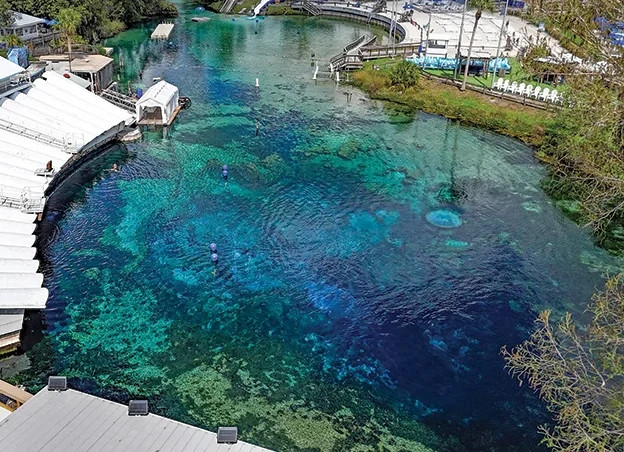
Photo Gallery
Coming soon