
Devil’s Hole Spring (Weed Eater Cave)
Location: Washington County, Florida, United States
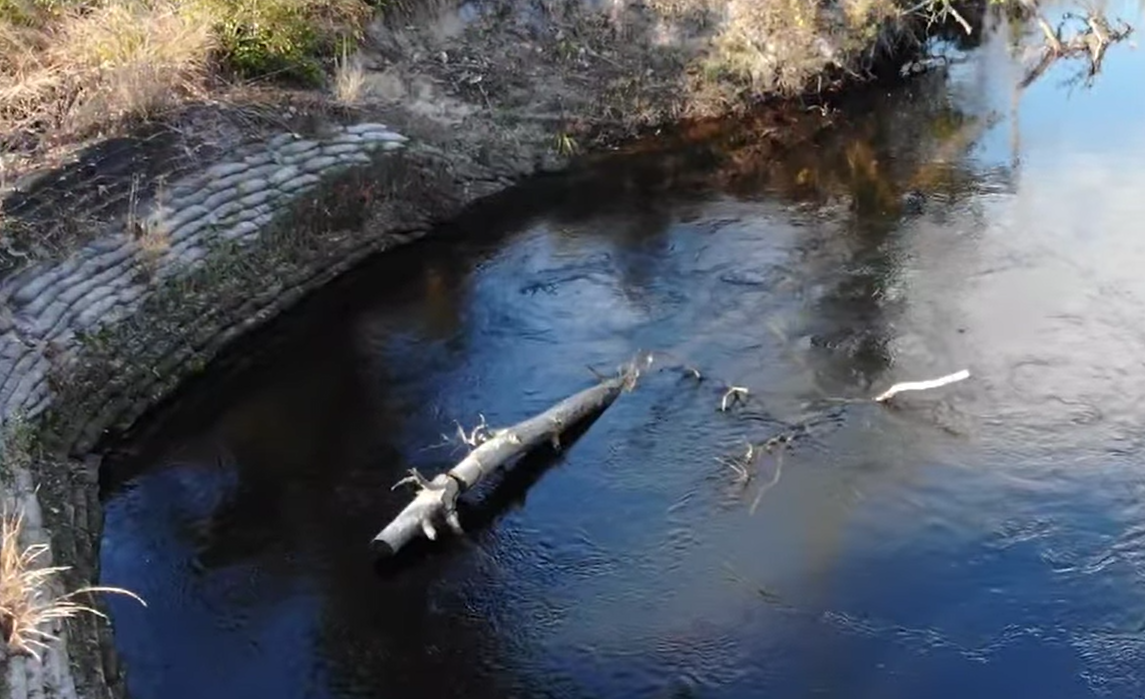
A Hidden Cave Spring along Econfina Creek
Tucked beneath a limestone ledge along the west bank of Econfina Creek, Devil’s Hole Spring is one of the watershed’s lesser-known but most intriguing spring vents. Located between Devil’s Hole Sink and Walsingham Bridge, the spring appears modest from the surface, yet it is believed to represent the downstream outlet of an underground cave system connected to Devil’s Hole Sink.
Although easily overlooked by most visitors paddling Econfina Creek, the spring has long been of interest to cave divers because of its strong flow, small entrance, and suspected hydrologic connection to Devil’s Hole. The cave’s challenging conditions have even earned it a unique nickname within the diving community.
FREE FLORIDA SPRINGS GUIDE
Want to discover more of Florida’s hidden waterways?
Download The 25 Most Notable Springs and Cave Systems in Florida and explore some of the state’s most remarkable spring basins, underwater cave systems, and hidden natural treasures.
✓ Featured springs throughout Florida
✓ Cave systems and exploration highlights
✓ Popular destinations and hidden gems
✓ Instant download
Devil’s Hole Spring is most easily reached by canoe or kayak along Econfina Creek. Launching from Seashell Recreation Area, also known as Seashell Beach, provides the shortest access to the spring, which lies beneath a limestone ledge along the west bank of the creek between Devil’s Hole Sink and Walsingham Bridge.
Because the spring emerges directly into Econfina Creek rather than forming a separate spring pool, many paddlers pass by without realizing a cave entrance lies just beneath the water’s surface. The surrounding section of creek is especially scenic, with crystal-clear water flowing beneath towering hardwoods and limestone bluffs. While exploring the area, visitors can also observe the prehistoric fossilized seashell deposits exposed along the creek bank that gave Seashell Beach its name.
Geological Context
Devil’s Hole Spring is part of the St. Andrew Bay Watershed, where dozens of springs discharge into Econfina Creek from the Floridan Aquifer. The spring emerges beneath a limestone ledge along the creek bank and is believed to be hydrologically connected to nearby Devil’s Hole Sink, located only a short distance upstream. Together, the two features illustrate the complex underground drainage system that characterizes the Econfina Creek basin.
Although the exact connection has not been fully documented, the strong discharge from Devil’s Hole Spring suggests that groundwater travels through submerged limestone conduits before emerging along the creek.
The Spring
The spring opening is located beneath a limestone ledge on the west bank of Econfina Creek, south of Devil’s Hole Sink and north of Walsingham Bridge. The entrance lies approximately 11 feet below the water’s surface, where a strong current emerges from a relatively small opening in the limestone.
Unlike many of the larger swimming springs along Econfina Creek, Devil’s Hole Spring is not a recreational spring basin. Instead, it appears as a spring vent concealed beneath the creek bank, making it easy to paddle past without realizing an underwater cave lies below.
The Cave System
A small underwater cave begins at the spring opening and carries a strong outflow current toward Econfina Creek. Although relatively short compared to many Florida cave systems, the cave presents unique challenges. The combination of strong flow and a confined entrance requires careful technique. The strong current also creates ongoing maintenance issues for the permanent guideline.
Because traditional cave line is frequently damaged by strong current, cave divers have adopted an unusual solution. The cave became known as “Weed Eater Cave” after replacing conventional guideline with durable weed eater trimmer line, which better withstands the demanding conditions inside the cave.
The spring is also known as “Seashell Spring,” a name derived from its proximity to Seashell Recreation Area.
Exploration History
While Devil’s Hole Spring has never received the attention of larger Panhandle cave systems, it has been explored by cave divers interested in understanding the groundwater connections within the Econfina Creek basin.
Its suspected relationship to Devil’s Hole Sink has made it an important site for exploring the hydrology of the St. Andrew Bay Watershed and the numerous cave systems concealed beneath its limestone landscape.
Hydrological Characteristics
Devil’s Hole Spring is believed to represent the downstream resurgence of groundwater flowing through Devil’s Hole Sink. The spring’s strong discharge supports the theory that water entering the nearby sinkhole travels through underground limestone conduits before reemerging beneath the limestone ledge along Econfina Creek.
Like many springs within the watershed, Devil’s Hole Spring contributes cool, clear groundwater that helps maintain the exceptional water quality of Econfina Creek.
Recreation
Although the spring itself is not developed for swimming, it is easily viewed while paddling Econfina Creek. The most convenient access is from Seashell Recreation Area, commonly known as Seashell Beach, where paddlers can launch canoes or kayaks to explore this scenic section of the creek.
Seashell Beach takes its name from the abundant prehistoric fossilized seashell deposits exposed within the limestone banks. These ancient marine fossils provide a reminder that much of Florida was once submerged beneath a shallow sea millions of years ago.
Visitors are reminded that removing fossil shells from the area is prohibited to help preserve this unique geological resource.
Cave Data
Although the entrance to Devil’s Hole Spring is only about 11 feet deep, the cave is far more challenging than its shallow depth suggests. A small opening beneath the limestone ledge carries a strong outflow current, making entry difficult despite the cave’s relatively short length.
The cave has become known among cave divers as Weed Eater Cave because traditional braided cave line deteriorates quickly under the demanding conditions inside the passage. Instead, divers maintain the permanent guideline using weed-whacker trimmer line, which has proven to be considerably more durable.
The cave is believed to be hydrologically connected to nearby Devil’s Hole Sink, serving as its downstream resurgence. Although less than 500 feet of cave passage has been explored, Devil’s Hole Spring provides an excellent example of the hidden groundwater conduits that feed Econfina Creek and illustrates how seemingly separate karst features can be linked beneath the surface.
As with all Florida underwater caves, Devil’s Hole Spring should only be entered by properly trained and equipped cave divers.
Current Status
Devil’s Hole Spring remains part of the protected Econfina Creek recreation corridor managed by the Northwest Florida Water Management District.
Visitors can observe the spring while paddling the creek, but the underwater cave should only be entered by properly trained cave divers using appropriate equipment.
As with all natural features within the watershed, visitors are encouraged to practice Leave No Trace principles and respect the area’s unique geological and ecological resources.
The Hidden Rivers of Florida documents the springs, rivers, sinkholes, caves, and groundwater systems that shape Florida’s landscape. Through exploration, photography, research, and firsthand observation, the project seeks to connect visitors with the hidden waterways flowing beneath the state.
Frequently Asked Questions
Devil’s Hole Spring is located along the west bank of Econfina Creek between Devil’s Hole Sink and Walsingham Bridge in Washington County, Florida.
It is widely believed that Devil’s Hole Spring represents the downstream resurgence of groundwater flowing from Devil’s Hole Sink through an underground cave system.
Traditional cave guideline deteriorates quickly within the cave due to strong current. Divers instead use durable weed eater trimmer line to maintain a continuous guideline, giving the cave its nickname.
The spring is located adjacent to Seashell Recreation Area, also known as Seashell Beach.
The spring is not developed as a swimming area, although it can be viewed while paddling Econfina Creek.
No. The prehistoric fossilized seashell deposits are protected, and collecting them is prohibited.
Continue Exploring Florida’s Hidden Waters
If you enjoyed the information about this springs, you’ll love the free guide:
The 25 Most Notable Springs and Cave Systems in Florida
From world-famous destinations like Wakulla, Jackson Blue Spring, and Peacock Springs to lesser-known hidden gems, this guide introduces some of Florida’s most fascinating natural wonders.
Download your free copy and continue exploring beyond the surface.
Get the Free Guide →Nearby Springs
Photo Gallery
Coming soon