Wes Skiles Peacock Springs State Park
Location: Suwannee County, Florida, Unites States
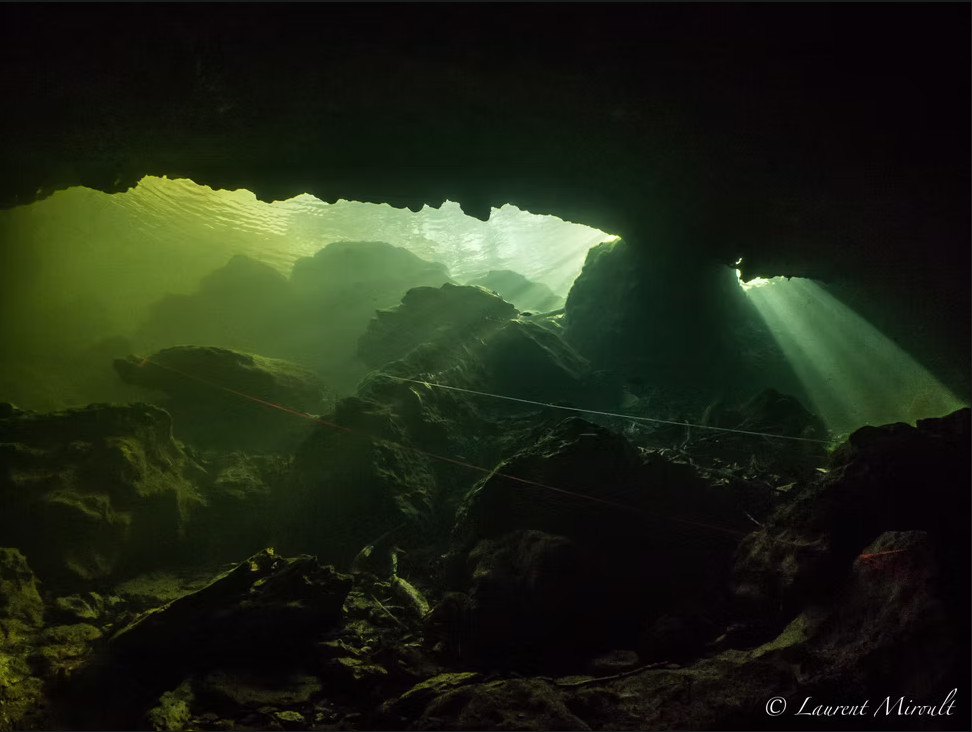
Wes Skiles Peacock Springs State Park contains one of the most famous and historically significant underwater cave systems in North America. Located within the Suwannee River Basin, the system consists of multiple spring and sink entrances connected through an extensive network of submerged limestone passage.
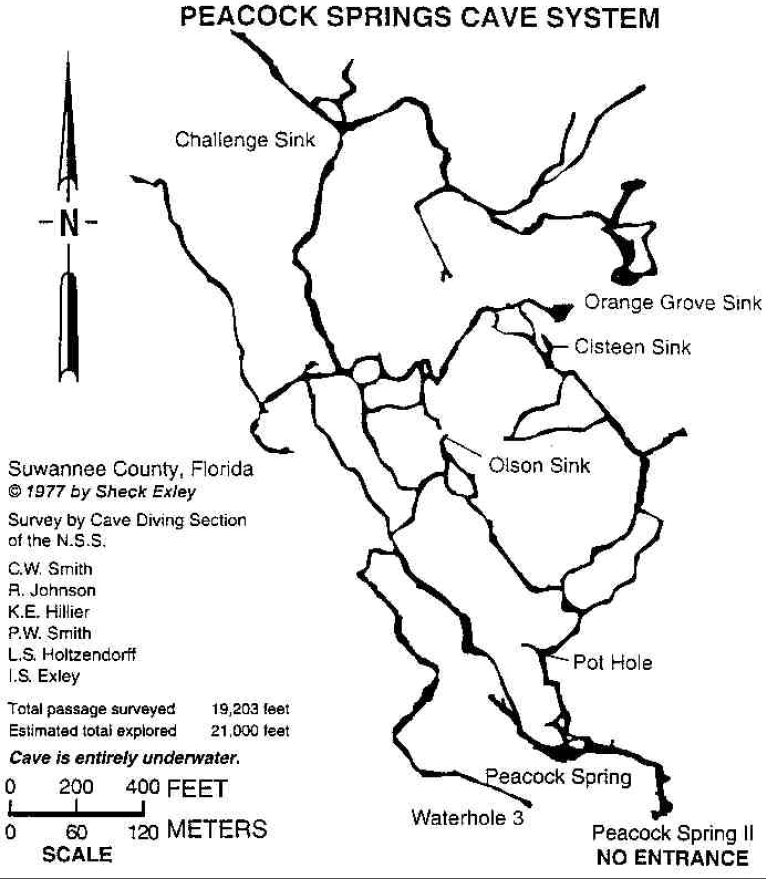
The park is best known for Peacock I, Orange Grove Sink, and the Grand Traverse, a cave dive that allows divers to enter at Orange Grove Sink and exit at Peacock I after traversing thousands of feet of underwater passage.
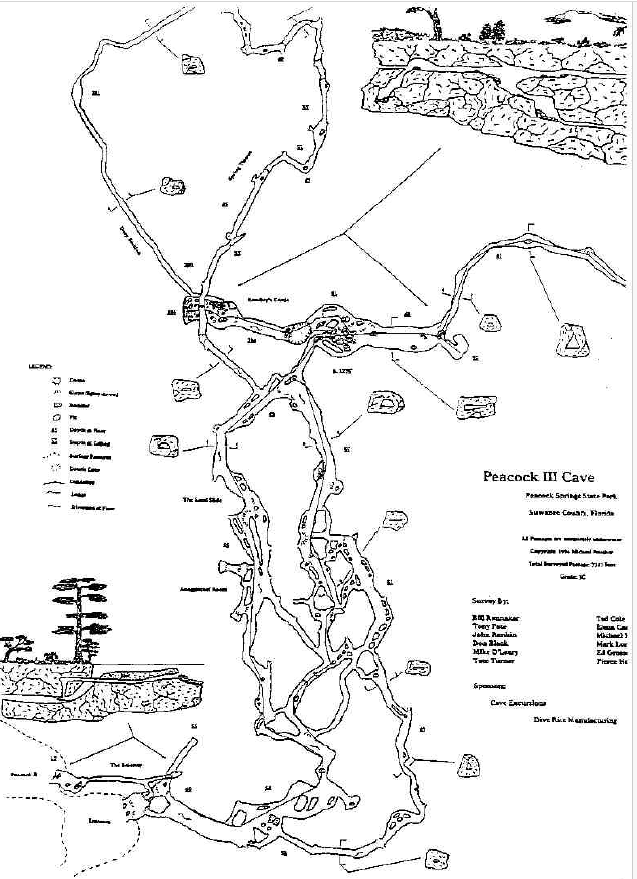
Additional openings include Peacock II, Peacock III, Olsen Sink, Challenge Sink, Pothole Sink, and Cisteen Sink. With the exception of Peacock III, these openings are part of the same interconnected cave system. Peacock II collapsed and is not accessible.
Peacock Springs has played an important role in cave-diving training, exploration, and survey work for decades and remains one of Florida’s most visited cave-diving destinations. Because access to the system is only available through the state park, solo diving is prohibited.
FREE FLORIDA SPRINGS GUIDE
Want to discover more of Florida’s hidden waterways?
Download The 25 Most Notable Springs and Cave Systems in Florida and explore some of the state’s most remarkable spring basins, underwater cave systems, and hidden natural treasures.
✓ Featured springs throughout Florida
✓ Cave systems and exploration highlights
✓ Popular destinations and hidden gems
✓ Instant download
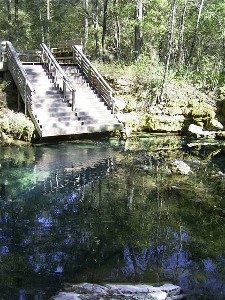
Unlike many Florida springs, Peacock Springs is not typically accessed by kayak, canoe, or paddleboard. The spring openings are located within a forested state park rather than along a navigable river corridor, making them primarily accessible by walking trails within the park.
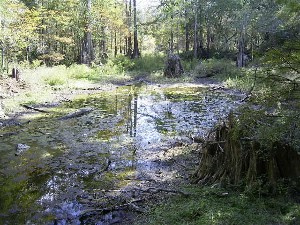
Visitors exploring the area on foot can observe sinkholes, spring vents, karst features, and the surface expressions of the extensive cave system hidden beneath the landscape through designated trails. These features provide a unique opportunity to see how Florida’s underground rivers interact with the surface environment.
Geological Context
Peacock Springs formed within the limestone of the Floridan Aquifer and serves as a major groundwater discharge point within the Suwannee River Basin.
The system developed through the dissolution of limestone over thousands of years, creating an extensive network of conduits, tunnels, and chambers beneath the surrounding forest. Multiple sinkholes and spring openings provide windows into the larger cave system and demonstrate the interconnected nature of groundwater movement throughout the region.
The relatively shallow depth and extensive passage development make Peacock Springs one of the most accessible cave systems for exploration and survey work in North Florida.
Structure & Layout
Peacock I
Peacock I serves as the primary spring entrance and one of the two authorized access points for cave divers. The entrance leads into a well-developed conduit system characterized by large passage dimensions, clear water, and extensive line routes.
Peacock I is also the downstream exit point for divers completing the Grand Traverse from Orange Grove Sink.
Orange Grove Sink
Orange Grove Sink is the second authorized cave-diving entrance within the system. The large sinkhole provides access to extensive passage that eventually connects with Peacock I through the main cave network.
The traverse between Orange Grove Sink and Peacock I is one of the most recognized cave dives in Florida.
Peacock II
Peacock II was historically connected to the main system but collapsed long before cave diving occurred there and is not accessible.
Peacock III
Peacock III is a separate siphon system that is not connected to the main Peacock cave network. Although located within the park, it represents an independent cave system with its own geological characteristics and hydrology.
Olsen Sink
Olsen Sink provides access to the main Peacock cave system and serves as one of several openings connected to the larger underground network. The entrance is not open for routine diver access but may serve as an emergency exit point.
Challenge Sink
Challenge Sink is connected to the main cave system and provides another window into the underground drainage network. The sinkhole is located across the street from the main park and not general accessible. Like Olsen Sink, it functions primarily as an emergency exit location rather than a standard access point.
Pothole Sink
Pothole Sink is one of several sink openings connected to the Peacock system. It is the smallest opening in the system. The opening illustrates the complex relationship between surface karst features and the underlying cave network.
Cisteen Sink
Cisteen Sink provides another connection to the main cave system and serves as an emergency exit point within the park’s cave-diving infrastructure.
The Grand Traverse
One of the most notable dives within the system is the Grand Traverse, which typically begins at Orange Grove Sink and exits at Peacock I. The traverse follows the main conduit through a substantial portion of the cave network, passing beneath Challenge Sink and Olsen Sink and remains one of Florida’s classic cave-diving routes.
Exploration History
Peacock Springs has been explored and surveyed for decades and has contributed significantly to the development of modern cave diving.
The system served as an important training ground for generations of cave divers and has been the site of numerous exploration projects, survey efforts, and underwater photography expeditions. Mapping efforts have documented extensive passage throughout the system, helping establish Peacock Springs as one of Florida’s premier cave-diving destinations.
Exploration Note: In the late 2000s, an exploration team connected Peacock Springs cave system to Bonnet Springs cave system, expanding the length of the cave as well as adding another access point to the cave.
Hydrological Characteristics
Peacock Springs functions as a groundwater discharge system connected to the Floridan Aquifer.
Water moving through the limestone conduits emerges through multiple openings within the park, creating a complex network of interconnected passages and spring vents. Flow conditions can vary depending on seasonal rainfall and regional groundwater levels.
The presence of numerous entrances and sink features provides valuable insight into the structure of the aquifer and the processes responsible for cave development throughout the Suwannee River Basin.
Cave Data
Wes Skiles Peacock Springs State Park is one of Florida’s premier cave-diving destinations and attracts divers from around the world. Peacock I and Orange Grove Sink serve as the primary access points to the system, while Olsen Sink, Challenge Sink, Pothole Sink, and Cisteen Sink function primarily as emergency exits.
The Grand Traverse between Orange Grove Sink and Peacock I is among the most recognized cave dives in North America. Due to the overhead environment and navigation requirements, cave diving within Peacock Springs should only be undertaken by properly trained and equipped cave divers. Because the openings to Peacock Springs are all located within the state park, solo and scooter diving are prohibited.
Open water divers are permitted to dive Orange Grove Sink, but they cannot take lights into the water with them.
Current Status
Wes Skiles Peacock Springs State Park remains one of the most visited and historically significant cave-diving destinations in North America.
The system continues to serve as a training, exploration, and survey site for cave divers from around the world. While Peacock I and Orange Grove Sink remain the primary access points for divers, other connected openings serve as emergency exits and provide additional insight into the structure of the cave system.
Peacock Springs remains an important part of Florida’s cave-diving heritage and continues to play a significant role in understanding the groundwater systems of the Suwannee River Basin.
Frequently Asked Questions
Wes Skiles Peacock Springs State Park is a cave diving destination in Suwannee County, Florida just outside of Luraville. The park contains an extensive underwater cave system with multiple spring and sink entrances connected through the Floridan Aquifer.
The park was renamed in honor of Wes Skiles, a pioneering cave diver, explorer, underwater photographer, filmmaker, and conservation advocate who made significant contributions to the cave-diving community.
The Grand Traverse is a cave dive that typically begins at Orange Grove Sink and exits at Peacock I. The route follows the main cave passage through a large portion of the Peacock Springs system and is considered one of Florida’s classic cave dives.
Most of the openings are connected to the main Peacock cave system, including Peacock I, Orange Grove Sink, Olsen Sink, Challenge Sink, Pothole Sink, and Cisteen Sink. Peacock III is a separate siphon system, while Peacock II collapsed and is not accessible.
No. Cave diving access is limited to Peacock I, Peacock III, and Orange Grove Sink. The other connected openings primarily serve as emergency exits and are not intended for routine diver entry.
The cave system contains several miles of surveyed underwater passage. Current length is more than 25,000 feet. Ongoing exploration and survey efforts have continued to improve understanding of the system’s extent and structure.
Peacock Springs is often considered one of Florida’s more accessible cave systems due to its relatively shallow depth and large passage dimensions. However, all cave dives require proper training, equipment, and certification.
No. Because access to the cave system is through a Florida State Park, solo diving is prohibited. Divers must comply with park regulations and cave diving safety standards.
No. Diver propulsion vehicles (DPVs) are prohibited within the state park cave system.
Yes. The park contains walking trails that provide access to several sinkholes, spring vents, and karst features. Visitors can observe the surface expressions of the cave system without entering the water.
Peacock III is a separate siphon system located within the park. Unlike the other openings, it is not connected to the main Peacock Springs cave network.
Peacock Springs is located within the Suwannee River Basin and is connected to the broader groundwater network of the Floridan Aquifer.
Continue Exploring Florida’s Hidden Waters
If you enjoyed the information about this springs, you’ll love the free guide:
The 25 Most Notable Springs and Cave Systems in Florida
From world-famous destinations like Wakulla, Jackson Blue Spring, and Peacock Springs to lesser-known hidden gems, this guide introduces some of Florida’s most fascinating natural wonders.
Download your free copy and continue exploring beyond the surface.
Get the Free Guide →Nearby Springs
Photo Gallery