
Indian Springs
Location: Wakulla County, Florida, United States
One of Florida’s Deepest and Most Historic Cave Systems
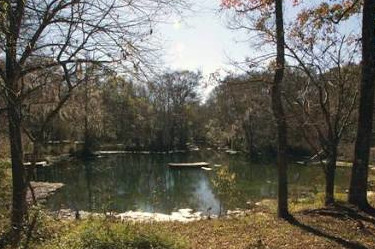
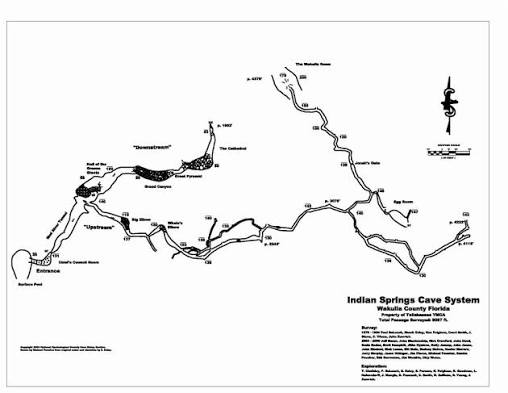
Hidden on private property in southern Wakulla County, Indian Springs is one of Florida’s most extraordinary underwater cave systems. Although the spring appears as a peaceful, circular pool surrounded by forest, beneath its surface lies a massive cave that extends for more than two miles and reaches depths approaching 300 feet.
Among cave divers, Indian Springs is known for its immense passages with names such as Hall of the Green Giants and Grand Canyon, extreme depth, and challenging restrictions. It is also remembered as the site of one of the most significant events in cave diving history: the 1991 collapse that claimed the life of renowned explorer Parker Turner. The incident fundamentally changed the way cave divers think about geological hazards and remains one of the most studied incidents in cave diving history.
Today, Indian Springs is closed to general access, preserving both its fragile environment and its remarkable history.
FREE FLORIDA SPRINGS GUIDE
Want to discover more of Florida’s hidden waterways?
Download The 25 Most Notable Springs and Cave Systems in Florida and explore some of the state’s most remarkable spring basins, underwater cave systems, and hidden natural treasures.
✓ Featured springs throughout Florida
✓ Cave systems and exploration highlights
✓ Popular destinations and hidden gems
✓ Instant download
Indian Springs is a sinkhole with no navigable waterway connecting it to another body of water. It was located on what was named Camp Indian Springs from 1975 to 2016. In 2016, it was sold and renamed to Camp Warrior. In 2020, it was sold once again and renamed Sherlock Springs, a nature retreat and educational facility.
It is currently located on private property and access is restricted to clients of the nature retreat.
Geological Context
Indian Springs lies within the Woodville Karst Plain, one of the world’s most extensively developed karst regions. Like nearby Wakulla Spring, Sally Ward Spring, and the Leon Sinks Cave System, Indian Springs is fed by the Floridan Aquifer through a vast network of submerged limestone conduits.
The spring discharges into a circular pool approximately 185 feet in diameter and 30 feet deep. Beneath the basin, the cave rapidly descends through large limestone passages before continuing into one of Florida’s deepest explored underwater cave systems.
The cave has been surveyed for more than two miles, with explored depths approaching 300 feet, making it one of the deepest major spring systems in Florida.
The Spring
Unlike the heavily visited springs within Wakulla Springs State Park, Indian Springs remains secluded on private property associated with Camp Indian Springs.
The spring pool is surrounded by hardwood forest and receives little public attention, despite concealing one of the state’s most significant cave systems.
Water emerging from the Floridan Aquifer contributes to the complex groundwater network that defines the Woodville Karst Plain, illustrating the remarkable hydrologic connections between springs, sinks, and disappearing streams throughout the region.
The Cave System
The entrance to Indian Springs begins beneath the center of the spring pool before descending into a network of large underwater passages. Although much of the cave consists of spacious conduits, several notable restrictions must be negotiated during deep penetrations. Among these, none is more well known than the Squash Restriction, a narrow section of passage that has become one of the most recognized locations in Florida cave diving.
Beyond the restriction, the cave continues through immense rooms and deep conduits. The scale of the cave is difficult to appreciate without experiencing it firsthand. Even powerful underwater lights are often unable to illuminate the full dimensions of the larger chambers.
Exploration History
Indian Springs became one of the premier exploration sites of the Woodville Karst Plain during the 1980s as cave divers pushed farther into its deep passages.
Its combination of enormous conduits, extreme depth, and unexplored territory attracted many of the world’s leading cave explorers. Survey teams gradually extended known passage while documenting one of Florida’s largest groundwater systems.
Like nearby Wakulla Spring and Leon Sinks, Indian Springs played an important role in advancing deep cave exploration and expanding scientific understanding of groundwater movement beneath the Woodville Karst Plain.
The 1991 Collapse
Indian Springs is forever linked to one of the most significant tragedies in cave diving history. On May 15, 1991, explorers Parker Turner and Bill Gavin were returning from a deep exploration and survey dive when they encountered a catastrophic collapse near the Squash Restriction. The collapse blocked the passage in front of them, trapping both divers inside the cave. Working together under impossible conditions, Turner and Gavin searched for a way out of the cave and back to safety. At one point, in zero visibility, they became separated. Turner was able to dig his way through the sand, leaving a safety line marking his route. Unfortunately, he didn’t make it to his staged decompression cylinder before breathing through all of the gas in the tanks on his back. This is a heartbreaking reminder of how unforgiving the underwater environment can become when unexpected events occur. Gavin found Turner’s safety line and was able to make it to his own staged decompression cylinder, passing beneath Turner’s lifeless body, along the way. Gavin never saw Turner due to the diminished visibility.
What makes the incident especially significant is that Parker Turner had not violated any of the accepted guidelines of cave diving. He was properly trained, properly equipped, diving within his team’s capabilities, using guidelines, and following accepted gas management procedures. The incident demonstrated that even when every established guideline is followed, natural geological events remain beyond human control.
The collapse profoundly affected the cave diving community and continues to influence cave diving education more than three decades later.
Why Did the Collapse Occur?
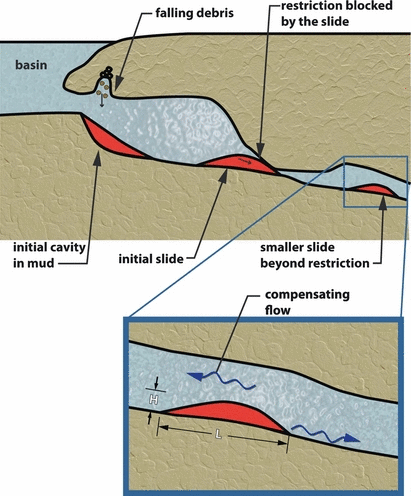
The exact cause of the collapse has never been proven with certainty, but one of the most widely discussed explanations was proposed by Dr. Doron Nof, an oceanography professor at Florida State University and an experienced cave diver.
Nof theorized that exhaust bubbles from divers accumulated within fractures in the cave ceiling. As the trapped air displaced water within these cracks, buoyant forces may have destabilized portions of the limestone ceiling. When the weakened rock finally failed, the collapse triggered an underwater avalanche of sediment cascading down the steep slope immediately inside the entrance.
This hypothesis also provides a possible explanation for the collapse that later occurred at Jackson Blue Spring, suggesting that similar geological processes may operate in deep limestone cave systems throughout Florida.
Although the exact mechanism remains debated, the Indian Springs incident highlighted that cave systems are dynamic geological environments rather than permanently stable structures.
I was fortunate to dive Indian Springs three times before access became fully restricted.
Passing through the Squash Restriction for the first time was unlike any other cave dive I had experienced. Knowing the history of the passage and the events that unfolded there years earlier made every movement deliberate.
Beyond the restriction, the cave opened into immense passages where darkness seemed to absorb even the strongest dive lights. It was impossible not to think about Parker Turner and Bill Gavin as I swam through the same sections of cave they had explored.
I later described those experiences in both The Hidden Rivers of Florida and Into the Darkness Beyond, reflecting on how the history of the cave changes the way one experiences every dive within it.
Cave Data
Indian Springs is located on private property with no navigable waterway. Diving was permitted up until 2016 with an approved guide. Since that time, ownership and management changed hands twice, and diving is no longer permitted. The property is now operated as a nature retreat and educational facility and renamed Sherlock Springs.
Current Status
Indian Springs was renamed Sherlock Springs in 2020. The new owners established a nature retreat and educational facility on the grounds surrounding the spring. Today, access is restricted to clients of the nature retreat.
This system is discussed in The Hidden Rivers of Florida because of its importance to cave exploration and ground water research.
Learn about the bookFrequently Asked Questions
Indian Springs is located in Wakulla County, Florida, approximately 13 miles south of Tallahassee on private property.
The explored cave system reaches depths approaching 300 feet (90 meters).
The spring pool measures approximately 185 feet in diameter and 30 feet deep.
The Squash Restriction is a narrow section of passage within the cave that separates portions of the deeper system. It became widely known following the 1991 collapse.
Indian Springs was the site of the 1991 cave collapse that claimed the life of Parker Turner during a deep exploration dive, an event that remains one of the most studied incidents in cave diving history.
No. The spring is located on private property, and access is strictly restricted.
The property was renamed to Camp Warrior in 2016 until 2018 when the state shut down the business. It was renamed to Sherlock Springs after the 2020 purchase.
Continue Exploring Florida’s Hidden Waters
If you enjoyed the information about this springs, you’ll love the free guide:
The 25 Most Notable Springs and Cave Systems in Florida
From world-famous destinations like Wakulla, Jackson Blue Spring, and Peacock Springs to lesser-known hidden gems, this guide introduces some of Florida’s most fascinating natural wonders.
Download your free copy and continue exploring beyond the surface.
Get the Free Guide →Nearby Springs
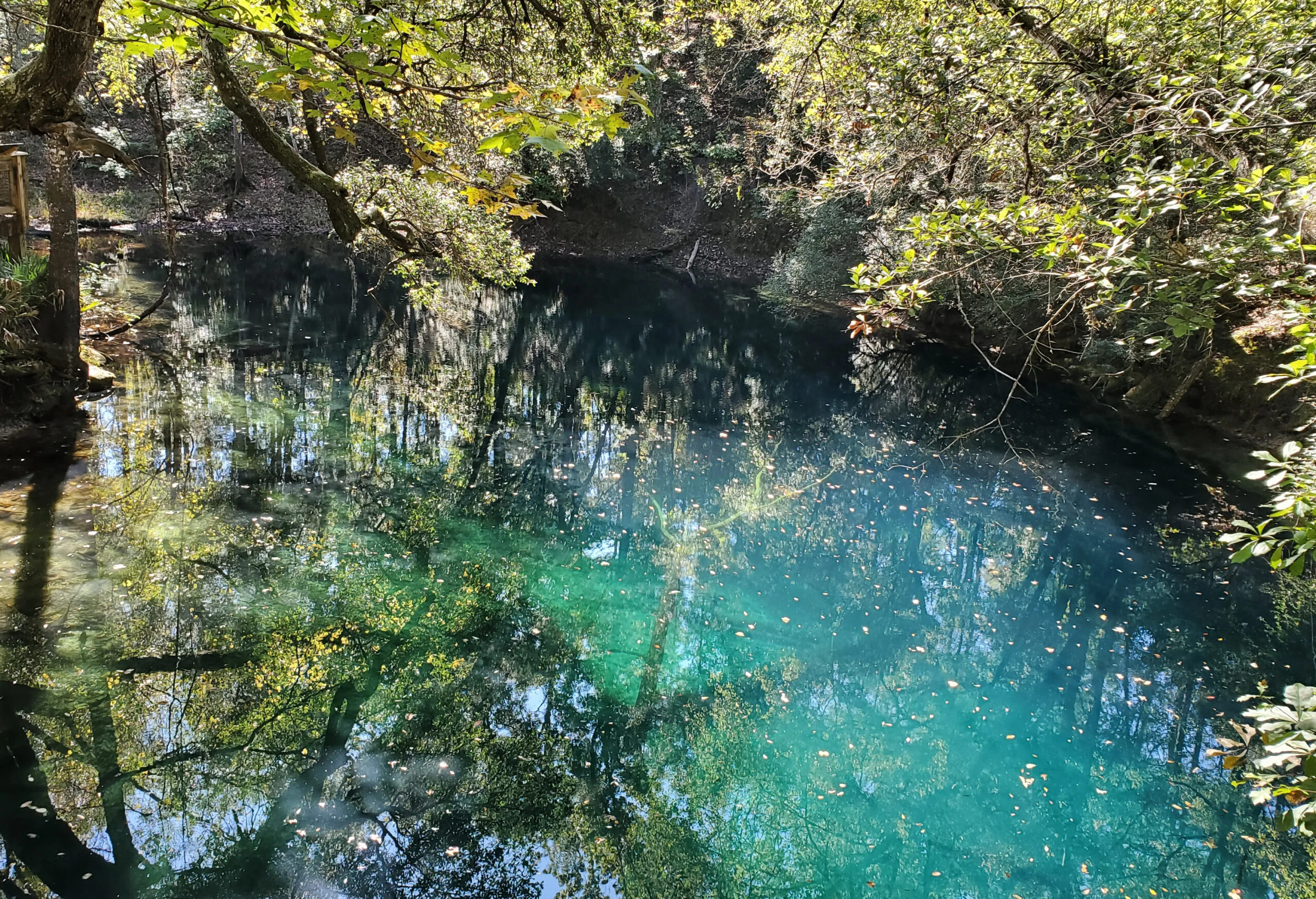
Photo Gallery
Coming soon