
Blue Spring (Volusia County)
Location: Volusia County, Florida, United States
Florida’s Premier Manatee Spring
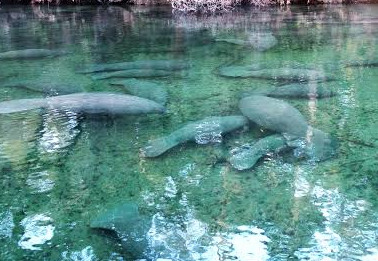
Blue Spring is one of Florida’s largest and most iconic freshwater springs. Located within Blue Spring State Park near Orange City, the first-magnitude spring is famous for its crystal-clear water, outstanding recreational opportunities, and its role as one of the state’s most important winter refuges for the West Indian manatee.
Each day, approximately 102 million gallons of water emerge from the Floridan Aquifer at a constant temperature of 73°F (23°C), creating an ideal environment for both wildlife and recreation. During the warmer months, visitors enjoy swimming, snorkeling, scuba diving, paddling, hiking, and camping. In winter, the spring transforms into a sanctuary where hundreds of manatees gather to escape colder temperatures in the St. Johns River.
As the largest spring on the St. Johns River, Blue Spring offers one of Florida’s premier spring experiences year-round.
FREE FLORIDA SPRINGS GUIDE
Want to discover more of Florida’s hidden waterways?
Download The 25 Most Notable Springs and Cave Systems in Florida and explore some of the state’s most remarkable spring basins, underwater cave systems, and hidden natural treasures.
✓ Featured springs throughout Florida
✓ Cave systems and exploration highlights
✓ Popular destinations and hidden gems
✓ Instant download
Blue Spring Run connects directly to the St. Johns River, providing excellent opportunities for canoeing and kayaking during the warmer months.
Paddlers can explore the spring run and continue onto the St. Johns River, where abundant wildlife, cypress-lined shorelines, and quiet backwaters create one of Central Florida’s premier paddling destinations.
When the spring run is closed for manatee protection during the winter months, all water-based activities within the run are suspended.
Geological Context
Blue Spring is a first-magnitude spring located within the Middle St. Johns River Basin. Groundwater from the Floridan Aquifer rises through a large limestone vent before flowing into a crystal-clear spring run that empties into the St. Johns River.
Discharging approximately 102 million gallons of water each day, the spring maintains a constant temperature of 73°F throughout the year. This stable temperature not only creates ideal recreational conditions but also provides critical winter habitat for one of Florida’s most beloved mammals, the West Indian manatee.
The spring’s exceptional flow and water clarity make it one of the defining natural features of the Middle St. Johns River Basin.
- Visit during the winter months to witness one of Florida’s largest gatherings of West Indian manatees.
- Check the park’s daily manatee count before planning a swimming or diving trip during cooler weather.
- Bring binoculars or a camera with a zoom lens for observing manatees from the boardwalk.
- Reserve campsites well in advance, especially during winter and holiday weekends.
- Combine your visit with nearby Gemini Springs or De Leon Springs to explore more of the Middle St. Johns River Basin.
The Spring
Blue Spring forms a broad spring pool before flowing through a scenic spring run into the St. Johns River. The clear, blue-green water provides excellent visibility, allowing visitors to observe fish, turtles, and submerged limestone features beneath the surface. During the warmer months, the spring is one of Central Florida’s most popular destinations for swimming, snorkeling, and scuba diving.
When colder weather arrives, however, the spring becomes a protected refuge for hundreds of West Indian manatees seeking the warmth of its constant 73 degree water.
Blue Spring State Park offers 51 campsites accommodating both tents and RVs up to 45 feet long.
Each campsite includes water and electrical hookups, providing comfortable accommodations for visitors wishing to spend several days exploring the park and surrounding region.
Reservations are recommended, particularly during weekends, holidays, and manatee season.
Hydrological Characteristics
Blue Spring discharges approximately 102 million gallons of groundwater into the St. Johns River each day, making it the largest spring along the river. Its tremendous flow helps maintain water quality, supports diverse aquatic habitats, and provides the warm-water refuge essential to the survival of Florida’s manatees during cold weather. The spring illustrates the critical relationship between the Floridan Aquifer and the St. Johns River ecosystem.
Blue Spring State Park features an accessible boardwalk that follows the spring run through a beautiful hardwood forest.
During the winter, this boardwalk becomes one of the best places in Florida to observe hundreds of West Indian manatees resting in the warm spring water.
Additional walking paths throughout the park provide opportunities to enjoy native vegetation, birdwatching, and views of the St. Johns River.
Recreation
Blue Spring State Park offers a wide variety of recreational opportunities throughout much of the year. Swimming and snorkeling are among the park’s most popular activities during the warmer months, while picnicking, wildlife viewing, and photography are enjoyed year-round.
The park also provides opportunities for canoeing, kayaking, hiking, and camping, making Blue Spring a favorite destination for both day trips and extended stays.
During manatee season, visitors can enjoy spectacular views of the animals from the park’s accessible boardwalk system.
Blue Spring is one of Florida’s premier freshwater diving destinations. Open water divers are permitted to explore the spring basin to a maximum depth of 60 feet and may not carry dive lights.
Certified cavern and cave divers are permitted to descend beyond 60 feet and may use dive lights while exploring the deeper portions of the spring.
Diving is prohibited whenever manatees are present in the spring. During the winter season, Blue Spring State Park publishes a daily manatee count, allowing visitors to monitor current conditions before planning a dive.
Blue Spring is the first location where I experienced nitrogen narcosis. My wife and I were about 60 feet deep when I became light-headed and dizzy. The current coming from deeper in the spring is very strong, and I blamed it for the feeling I had. I thought the current pushing me around caused the dizziness. it wasn’t until a year later while diving the Blue Hole in Belize and experiencing nitrogen narcosis again that I realized it wasn’t the current, but rather a combination of lack of experience, depth, and fighting the current that precipitated the nitrogen narcosis.
West Indian Manatee
Blue Spring State Park is internationally recognized for its importance to the West Indian manatee. Each winter, hundreds of manatees gather in the spring’s constant 73°F water, making Blue Spring one of Florida’s most significant manatee refuges.
In addition to manatees, visitors commonly observe turtles, fish, river otters, alligators, wading birds, osprey, bald eagles, and numerous songbirds throughout the park.
Current Status
Blue Spring State Park remains one of Florida’s premier spring parks and manatee viewing destinations. Swimming, snorkeling, scuba diving, paddling, and other water activities are permitted during the warmer months.
During winter manatee season, the spring run is closed to all water-based recreation to protect the manatees. Visitors may continue to enjoy the accessible boardwalks and observation areas while the park publishes a daily manatee count on its website.
Leashed dogs are welcome within the campground and along paved pathways but are not permitted in the spring or swimming areas.
The Hidden Rivers of Florida documents the springs, rivers, sinkholes, caves, and groundwater systems that shape Florida’s landscape. Through exploration, photography, research, and firsthand observation, the project seeks to connect visitors with the hidden waterways flowing beneath the state.
Frequently Asked Questions
Blue Spring is located within Blue Spring State Park, west of Orange City, Florida, along the St. Johns River.
Yes. Blue Spring discharges approximately 102 million gallons of water each day.
Blue Spring is best known as one of Florida’s most important winter refuges for the West Indian manatee and as the largest spring on the St. Johns River.
Yes. Diving is permitted during the warmer months. Open water divers are limited to 60 feet and may not carry dive lights, while certified cavern and cave divers may dive deeper and use lights.
No. When manatees occupy the spring, the spring run is closed to all water-based activities to protect the animals.
Blue Spring State Park publishes a daily manatee count during the winter season so visitors can check current conditions before arriving.
Yes. The park offers 51 campsites with water and electrical hookups for tents and RVs up to 45 feet long.
Yes. Leashed dogs are permitted in the campground and on paved pathways but are not allowed in the spring or swimming areas.
Continue Exploring Florida’s Hidden Waters
If you enjoyed the information about this springs, you’ll love the free guide:
The 25 Most Notable Springs and Cave Systems in Florida
From world-famous destinations like Wakulla, Jackson Blue Spring, and Peacock Springs to lesser-known hidden gems, this guide introduces some of Florida’s most fascinating natural wonders.
Download your free copy and continue exploring beyond the surface.
Get the Free Guide →Nearby Springs
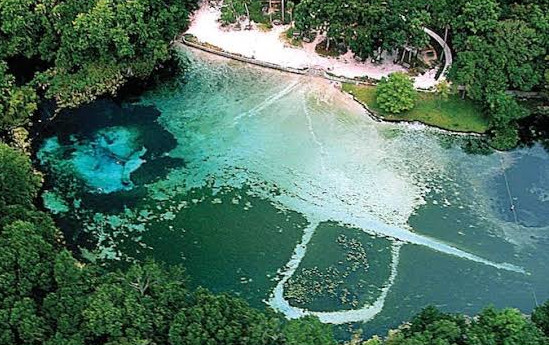
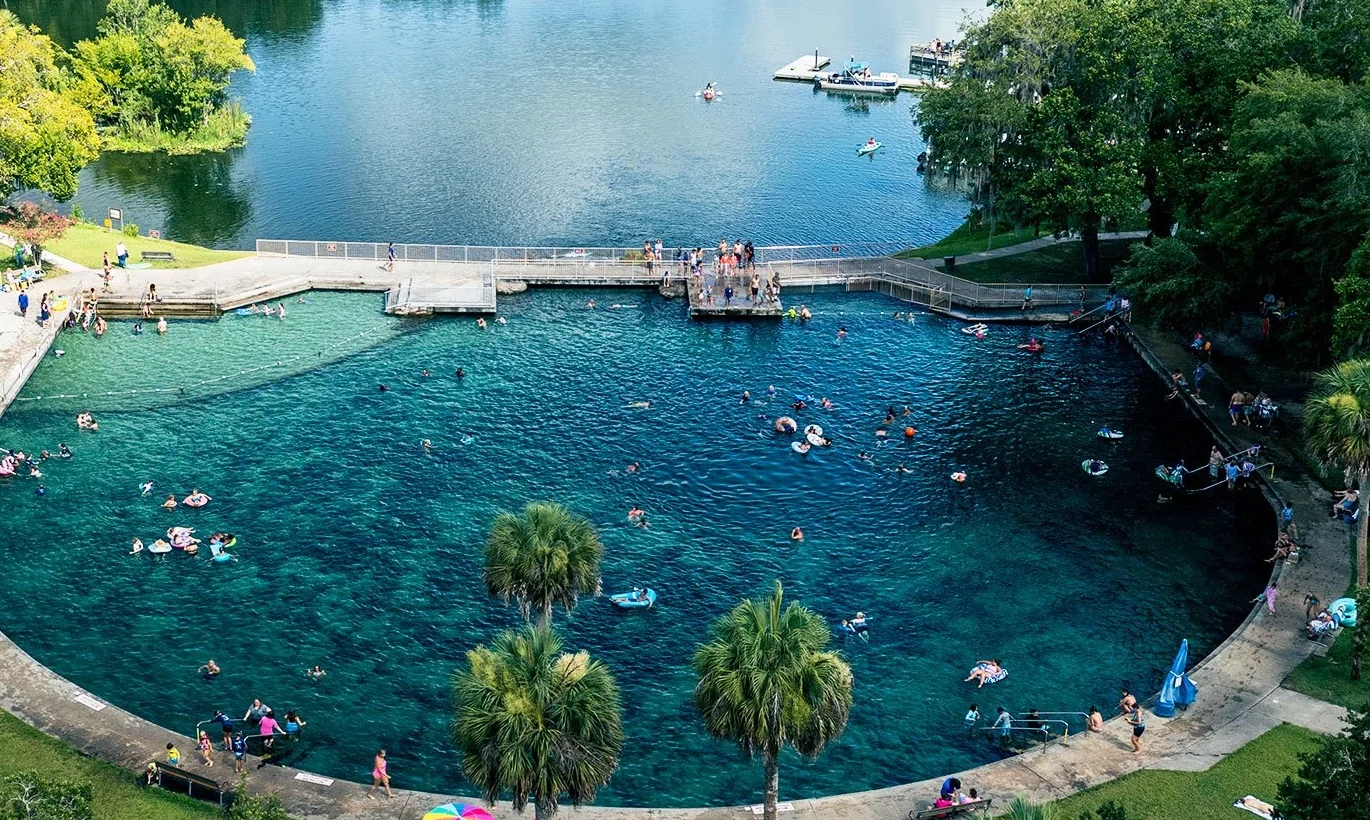
Photo Gallery
Coming soon