
Manatee Blue Spring
Location: Levi County, Florida, United States
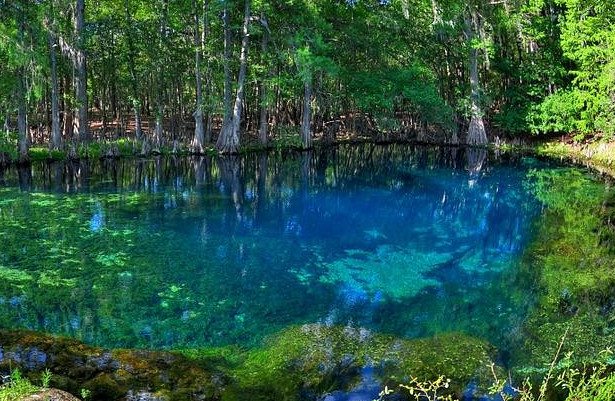
Manatee Spring is one of Florida’s largest first-magnitude springs and serves as one of the premier cave-diving destinations within the Suwannee River Basin. Located within Manatee Springs State Park near Chiefland, Florida, the spring is known for its crystal-clear water, extensive underwater cave system, and scenic spring run that flows into the Suwannee River.
The spring attracts swimmers, paddlers, wildlife enthusiasts, and cave divers from around the world. Beneath the headspring lies a vast network of underwater passages that provide a window into the Floridan Aquifer and the hidden groundwater systems flowing beneath North Florida.
Today, Manatee Spring remains one of the most visited springs in Florida and an important site for recreation, exploration, and scientific study.
FREE FLORIDA SPRINGS GUIDE
Want to discover more of Florida’s hidden waterways?
Download The 25 Most Notable Springs and Cave Systems in Florida and explore some of the state’s most remarkable spring basins, underwater cave systems, and hidden natural treasures.
✓ Featured springs throughout Florida
✓ Cave systems and exploration highlights
✓ Popular destinations and hidden gems
✓ Instant download
Kayakers, canoeists, and paddleboarders can explore the scenic spring run connecting Manatee Spring to the Suwannee River. The clear water and abundant wildlife make the area one of the most popular paddling destinations in North Florida.
To protect swimmers using the headspring, buoys are positioned within the spring run to prevent paddlers from entering the immediate spring basin. Visitors can still enjoy excellent views of the spring run while observing fish, turtles, birds, and other wildlife.
Geological Context
Manatee Spring formed within the limestone of the Floridan Aquifer through the gradual dissolution of rock by groundwater over thousands of years.
The spring serves as a major groundwater discharge point and is connected to an extensive network of submerged conduits beneath the surrounding landscape. Water emerging from the spring forms a clear spring run before entering the Suwannee River.
The cave system beneath Manatee Spring illustrates the powerful role groundwater plays in shaping Florida’s karst landscape.
Structure & Layout
The main spring basin serves as the primary entrance to the cave system and the source of the spring’s crystal-clear water. The basin is also a popular swimming area and provides visitors with a glimpse into the groundwater flowing from the Floridan Aquifer.
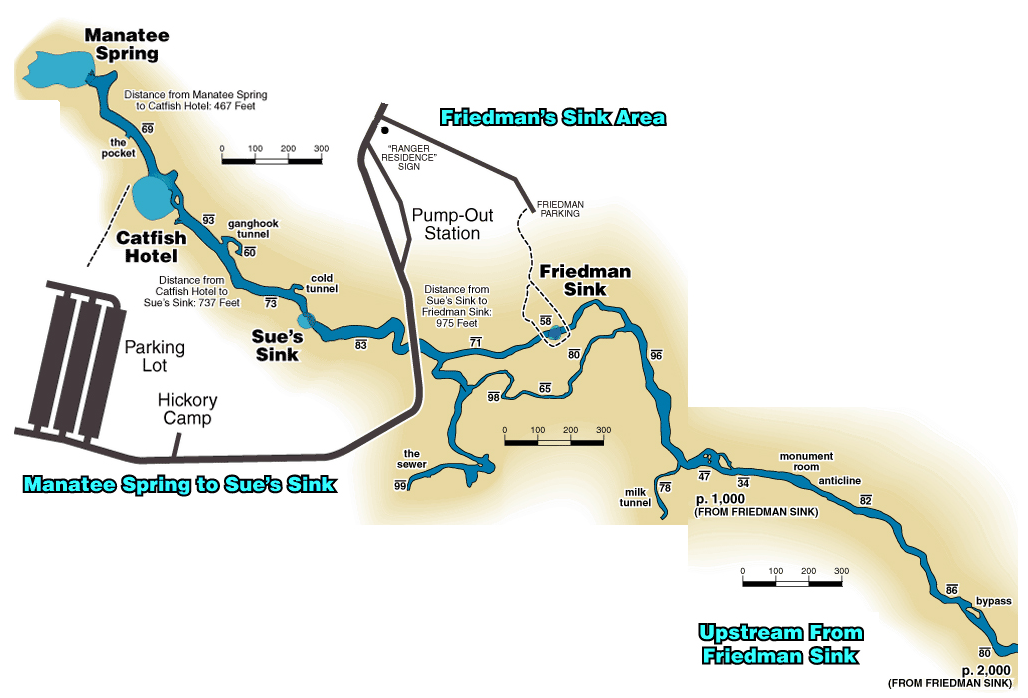
Located within the cave system upstream of the headspring, Catfish Hotel Sink provides an additional entrance and exit point for cave divers. The opening serves as an important access location and is frequently incorporated into cave-diving routes through the system.
Due to the strong current flowing from the Catfish Hotel Sink to the headspring, divers should not attempt to begin a dive at Catfish Hotel Sink and swim toward the headspring without first being familiar with the route. If divers are unable to reach the headspring and must turn the dive, they may be forced to swim against the full force of the current for the entire return trip.
For this reason, many divers first experience the route from the headspring to Catfish Hotel Sink before planning more advanced traverses.
Friedman’s Sink is another opening connected to the Manatee Spring cave system. The sink provides additional access to portions of the cave network and demonstrates the extensive nature of the groundwater conduits beneath the region.
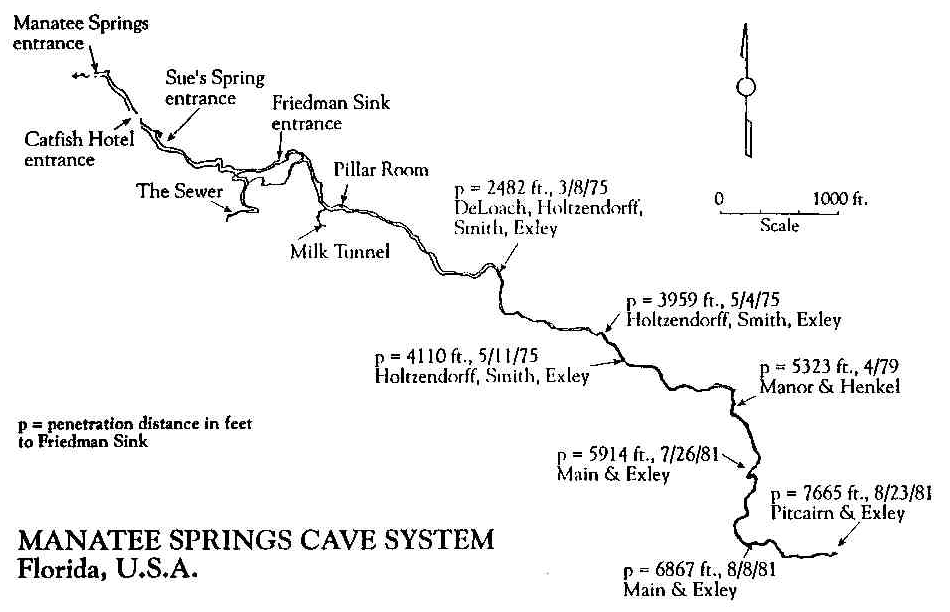
Beyond the various entrances lies an extensive network of underwater passages that have been explored and surveyed for many miles. Large conduits, side passages, and flow tunnels characterize much of the system, making Manatee Spring one of Florida’s most significant cave-diving destinations.
Exploration History
Manatee Spring has long been a focal point for cave exploration within North Florida.
Exploration and survey efforts have documented extensive sections of underwater passage while improving understanding of groundwater movement between the spring and surrounding recharge features. The system has also served as an important training and exploration site for generations of cave divers.
Today, ongoing survey work continues to refine understanding of the cave’s structure and hydrology.
Hydrological Characteristics
Manatee Spring functions as a major discharge point for groundwater flowing through the Floridan Aquifer.
The spring releases large volumes of clear water that form the spring run before entering the Suwannee River. Strong flow is present throughout portions of the cave system and plays a significant role in both cave navigation and dive planning.
The spring provides valuable insight into groundwater movement within the broader Suwannee River Basin.
Cave Data
Manatee Spring is one of Florida’s premier cave-diving destinations, offering extensive underwater passages, multiple entrances, and strong spring flow.
Because the site is located within a Florida State Park, solo diving and the use of scooters are prohibited. Divers should also be aware of the significant current present within portions of the cave system and plan dives accordingly.
Special consideration should be given to dives involving Catfish Hotel Sink. Divers unfamiliar with the route should first experience the system from the headspring to Catfish Hotel Sink before attempting dives in the opposite direction.
For qualified cave divers, Manatee Spring provides access to one of the most impressive cave systems within the Withlacoochee River Basin.Current Status
Manatee Spring remains one of Florida’s most popular springs and cave-diving destinations. The site attracts swimmers, paddlers, wildlife enthusiasts, photographers, and cave divers throughout the year.
As part of the Florida State Park system, specific regulations apply to cave diving activities. Solo diving and the use of diver propulsion vehicles (scooters) are prohibited within the cave system.
These regulations help maintain safe access while protecting one of Florida’s most important spring resources.
The Hidden Rivers of Florida documents the springs, rivers, sinkholes, caves, and groundwater systems that shape Florida’s landscape. Through exploration, photography, research, and firsthand observation, the project seeks to connect visitors with the hidden waterways flowing beneath the state.
Frequently Asked Questions
Manatee Spring is located in Levy County, Florida, within Manatee Springs State Park.
Yes. The spring discharges into the Suwannee River through a short spring run.
Catfish Hotel Sink is a secondary entrance connected to the Manatee Spring cave system and is commonly used by cave divers.
Friedman’s Sink is another opening connected to the Manatee Spring cave system that provides access to portions of the underground network.
No. Buoys are positioned within the spring run to prevent paddlers from entering the headspring area and to maintain a safe environment for swimmers.
No. Diver propulsion vehicles are prohibited because the spring is located within a Florida State Park.
No. Solo diving is prohibited within the state park cave system.
If a diver cannot reach the headspring and must turn the dive, they may be forced to swim against strong spring flow for the entire return route, significantly increasing effort and gas consumption.
Yes. The spring and cave system are part of the Floridan Aquifer and provide an important window into Florida’s groundwater systems.
Continue Exploring Florida’s Hidden Waters
If you enjoyed the information about this springs, you’ll love the free guide:
The 25 Most Notable Springs and Cave Systems in Florida
From world-famous destinations like Wakulla, Jackson Blue Spring, and Peacock Springs to lesser-known hidden gems, this guide introduces some of Florida’s most fascinating natural wonders.
Download your free copy and continue exploring beyond the surface.
Get the Free Guide →Nearby Springs
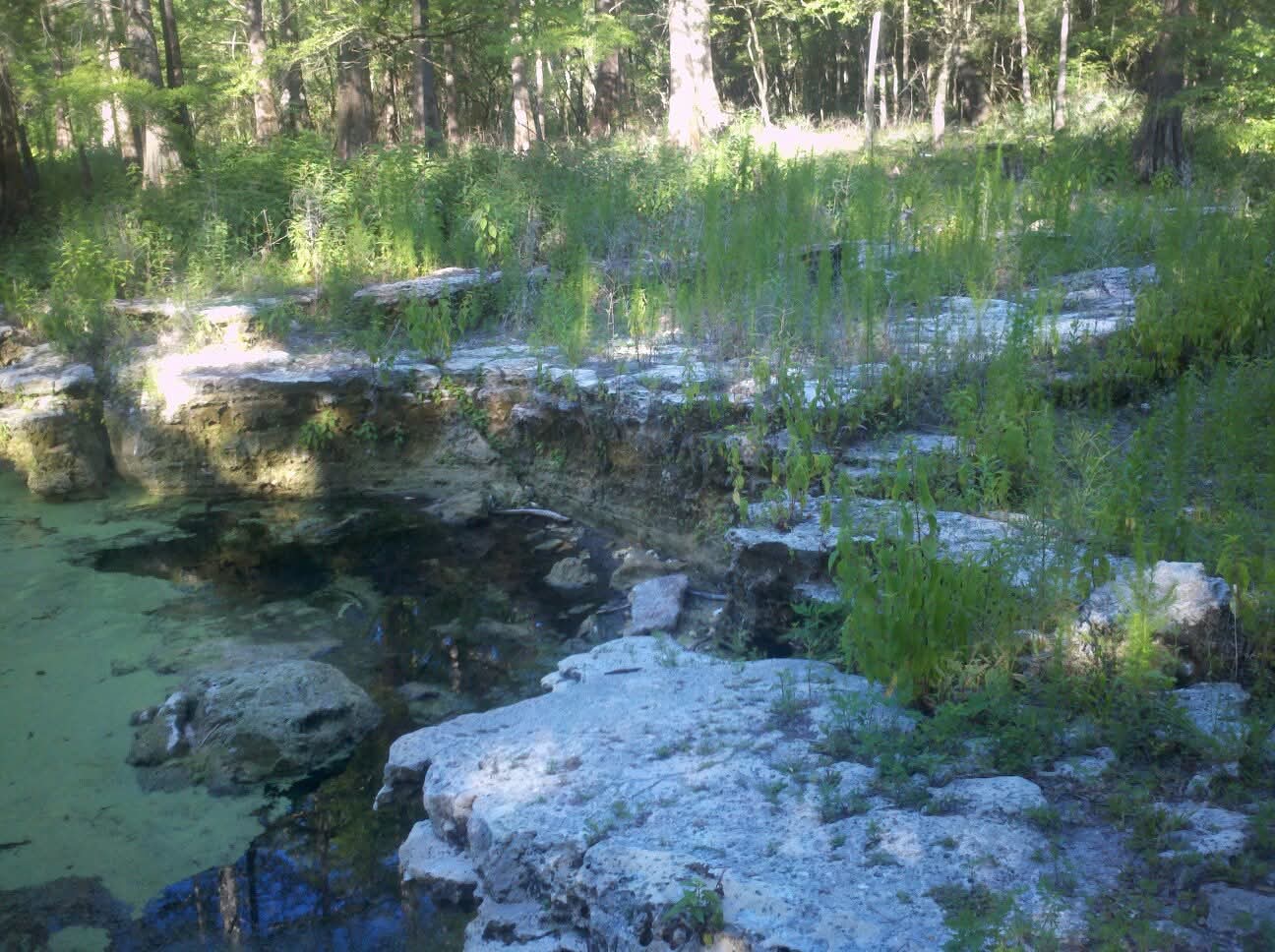
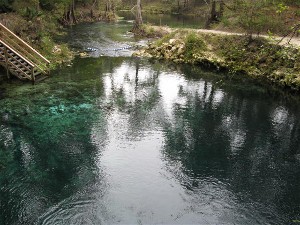
Photo Gallery
Coming soon