Lafayette Blue Springs
Location: Lafayette County, Florida, United States
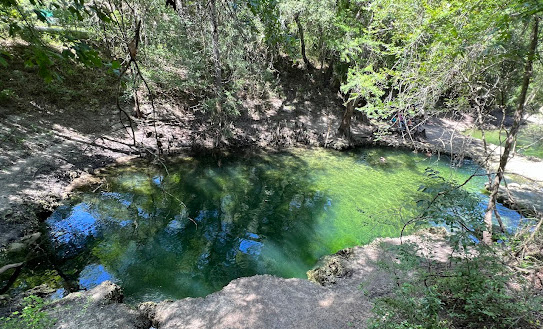
Located in Lafayette Blue Springs State Park near Mayo, the spring is the surface expression of the Green Sink cave system, an extensive network of underwater passages explored and surveyed by cave divers. Unlike many Florida springs where the cave system is a secondary feature, the relationship between the spring, surrounding sinkholes, and Green Sink is central to understanding Lafayette Blue Springs. More than 12,000 feet of underwater passage have been surveyed, including large rooms and passages extending west and southwest from the main spring.
The spring is also an excellent example of the connection between Florida’s surface karst landscape and the Floridan Aquifer. Sinkholes along the Green Sink Trail provide visible windows into the same geological processes that create the underground cave system.
FREE FLORIDA SPRINGS GUIDE
Want to discover more of Florida’s hidden waterways?
Download The 25 Most Notable Springs and Cave Systems in Florida and explore some of the state’s most remarkable spring basins, underwater cave systems, and hidden natural treasures.
✓ Featured springs throughout Florida
✓ Cave systems and exploration highlights
✓ Popular destinations and hidden gems
✓ Instant download
Lafayette Blue Springs is an excellent destination for paddlers looking to combine clear spring water with a stretch of the Suwannee River. The spring run flows from Lafayette Blue Spring to the Suwannee River, creating a short but scenic connection between the spring and one of Florida’s major wilderness waterways.
Canoes and kayaks can be used to explore the spring run and continue onto the Suwannee River. The area around the spring offers views of exposed limestone, cypress trees, and the karst landscape that surrounds the spring. Paddlers may also encounter turtles, fish, wading birds, and other wildlife along the river.
Lafayette Blue is particularly interesting for paddlers because the landscape visible from the water provides clues to what lies beneath it. The spring is connected to the extensive Green Sink cave system, while nearby sinkholes are part of the same karst environment. Paddling the surface waters provides a different perspective on the underground system documented by cave divers.
The spring is also part of the Suwannee River Wilderness Trail, making it possible to incorporate Lafayette Blue into longer paddling trips along the river. Conditions on the Suwannee can vary with rainfall and river levels, so paddlers should consider current conditions and plan accordingly.
For those who want to explore the area without entering the cave system, paddling offers an excellent way to experience the relationship between spring, sinkhole, cave, and river that defines this part of North Florida.
The Spring
Lafayette Blue Spring is a first-magnitude spring, meaning it produces at least 100 cubic feet of water per second, or approximately 64.6 million gallons per day. Its flow varies considerably, with Florida State Parks reporting daily discharge ranging from approximately 14 million gallons to as much as 168 million gallons. The spring water remains around 72°F year-round.
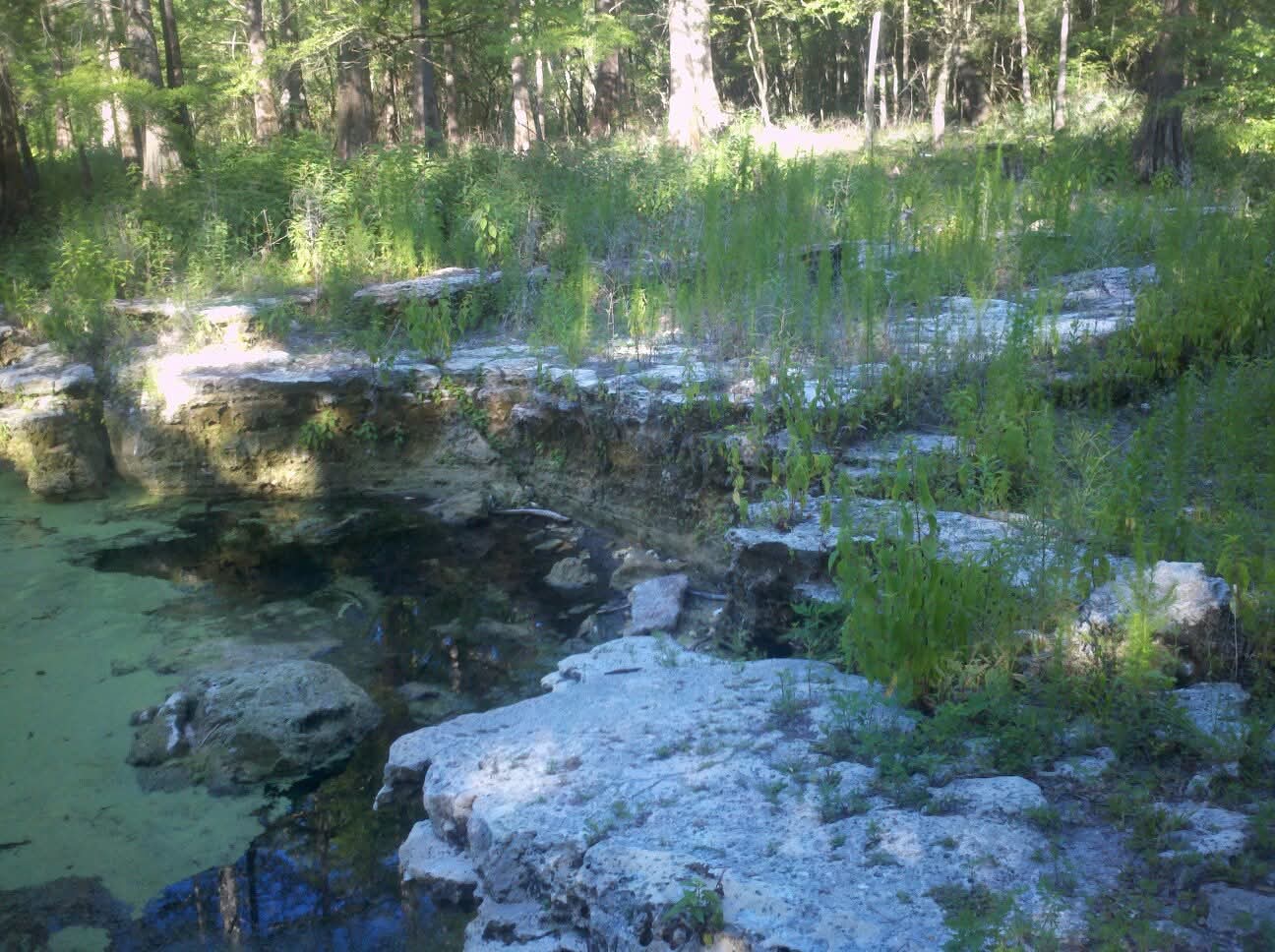
The spring emerges within a distinctive limestone landscape. A natural limestone bridge crosses the spring run, separating the main spring basin from the short run that carries the water toward the Suwannee River. The result is an unusual combination of clear spring water, exposed limestone, sinkholes, shaded hardwood forest, and the nearby Suwannee River.
Lafayette Blue Spring is designated an Outstanding Florida Spring and contributes directly to the Suwannee River.
The Green Sink Cave System
The feature that makes Lafayette Blue especially significant to cave divers is the Green Sink cave system.
More than 12,000 feet of underwater cave passage have been surveyed in the system. The passages extend primarily west and southwest from Lafayette Blue Spring and include relatively large passages and rooms. Portions of the system average approximately 20 feet wide and 10 feet high, with some rooms reaching roughly 100 feet across and 30 feet high. The cave system demonstrates how closely Florida’s surface sinkholes and springs can be connected to the underground aquifer.
Several sinkholes around the park, including Green Sink, Egg Sink, and Snake Sink, are hydraulically connected to the spring. During periods of normal and high flow, water can be observed moving through some of these sinks toward Lafayette Blue. This makes the park particularly valuable for understanding karst hydrology. Visitors don’t have to enter the cave to see evidence of the underground system; the sinkholes and spring itself provide visible evidence of the connection between the surface and the aquifer.
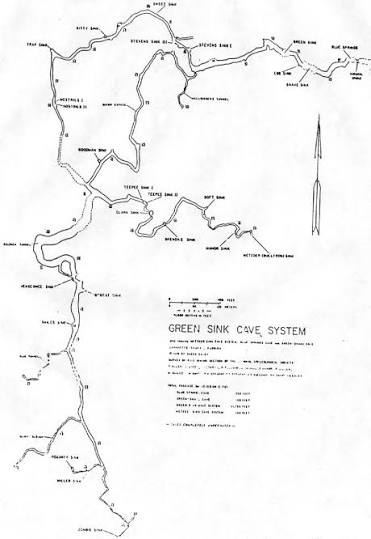
The Green Sink cave system is one of the many examples of Florida’s hidden landscape that helped inspire The Hidden Rivers of Florida: Discoveries.
The website documents the springs, cave systems, geology, maps, and exploration of these places. The book goes further, telling the story of the exploration behind Florida’s hidden rivers and the experiences that come from traveling into the state’s underwater cave systems.
Want to go beyond the maps and explore the story behind Florida’s underwater caves?
Discover → The Hidden Rivers of Florida: DiscoveriesAmazon | Audible
Buy Direct – Signed Copies Available
Free Shipping in the US | Bundle discounts available
A Surface Landscape Shaped by the Cave
One of the most interesting aspects of Lafayette Blue Springs is that the cave system is not completely hidden. The Green Sink Trail, a short nature trail of less than half a mile, passes through the karst landscape surrounding the spring. Along the trail are several sinkholes surrounded by cypress and upland forest. These include Green Sink, Egg Sink, and Snake Sink. These features are more than scenic depressions in the landscape. They are part of the same karst system that allows water to move through the limestone and eventually emerge at Lafayette Blue Spring.
Water-monitoring stations around the sinks also provide evidence of the importance of the area to groundwater protection and spring-water quality.
Lafayette Blue Springs State Park contains another significant spring feature – Allen Millpond Spring. Allen Millpond is associated with a second-magnitude spring and a spring run that eventually reaches the Suwannee River. The area was once the site of a working mill, and remnants of the historic mill can still be seen in the water where the spring run meets the river.
The combination of Lafayette Blue Spring and Allen Millpond gives the park both a strong natural history story and a connection to the area’s early settlement and use of the Suwannee River.
Hydrological Characteristics
Lafayette Blue Spring is part of the Suwannee River Basin and is directly connected to the Suwannee River by its spring run. The surrounding landscape illustrates an important characteristic of North Florida: water can move through both surface channels and underground limestone conduits. Rainfall entering the aquifer can travel through fractures, cavities, and caves before eventually emerging from springs.
At Lafayette Blue, the relationship is particularly easy to visualize. Sinkholes occur within the park, groundwater emerges at the spring, and the resulting spring run travels only a few hundred feet before reaching the Suwannee River. The extensive Green Sink cave system provides a physical pathway through part of that underground landscape.
Recreation
Lafayette Blue Springs State Park offers considerably more than cave diving. The spring’s 72-degree water is available for swimming and snorkeling, with fish, turtles, and limestone formations visible in the clear water.
The Suwannee River provides opportunities for:
- Canoeing
- Kayaking
- Fishing
- Wildlife viewing
- Paddling the Suwannee River Wilderness Trail
The park also has hiking opportunities, including the Green Sink Trail, which provides an accessible introduction to the area’s karst geology.
Visitors can picnic beneath the surrounding hardwoods, and the park has cabins overlooking the Suwannee River as well as primitive camping.
Wildlife
The combination of spring, river, forest, and sinkhole environments supports a diverse collection of wildlife. Visitors may encounter deer, wild turkey, birds, turtles, otters, and other wildlife. Sturgeon can also be seen in the Suwannee River during the warmer months. Within the cave environment, specialized aquatic species include amphipods, isopods, cave crayfish, and catfish.
The difference between the surface and subterranean environments is particularly striking. The forest and river support a familiar North Florida ecosystem, while the dark cave passages provide habitat for organisms adapted to life underground.
History
The Suwannee River has been an important transportation and resource corridor for thousands of years. Native peoples, Spanish explorers, and later settlers used the river for travel and trade. Evidence of historic use remains around Lafayette Blue Springs, including the former mill site at Allen Millpond and remnants associated with the historic Bellamy Road, which crossed the Suwannee River in this region. The state park itself was opened in 2005, preserving the spring, cave system, sinkholes, river frontage, and surrounding natural communities.
Cave Data
Lafayette Blue Springs is a cave diving destination, but diving in the park is regulated. Certified cave divers may explore designated portions of the Blue Springs and Green Sink systems. Divers must register at the north entrance ranger station before beginning a dive at the south entrance, show proof of certification, and dive in teams of at least two. Open-water diving is prohibited.
The park also prohibits the use of diver propulsion vehicles within the park. Dives must remain within the limits of the diver’s certification and must be completed at least one hour before sunset.
The extensive surveyed passage makes Green Sink an important part of Florida’s cave-exploration history. Its relatively large passages and rooms also demonstrate how dramatically the underground landscape can differ from the narrow passages associated with many Florida caves.
Current Status
Lafayette Blue Springs remains a public spring and recreation area within Lafayette Blue Springs State Park, with swimming, paddling, fishing, hiking, wildlife viewing, camping, and cave diving among the activities available. The park continues to protect the spring, spring run, Suwannee River frontage, surrounding karst landscape, and the extensive Green Sink cave system.
The Green Sink cave system remains an important feature of the park. More than 12,000 feet of underwater passage have been surveyed, and cave diving is permitted for properly certified divers in designated areas. Divers must register, provide proof of certification, dive in teams of at least two, and remain within the limits of their certification. Open-water diving and solo diving are prohibited, and the use of DPVs is not permitted within the park. Florida State Parks
The spring remains open for swimming and snorkeling, with water temperatures around 72°F. The Suwannee River provides access for paddlers, and the park continues to serve as a river camp along the Suwannee River Wilderness Trail.
Lafayette Blue Springs State Park is currently open 8 a.m. until sunset, 365 days a year. The park has a day-use area, boat ramp, canoe and kayak launch, picnic facilities, cabins, and camping facilities. Visitors should check current park conditions before traveling, particularly during periods of heavy rain when flooding along the Suwannee River can affect the park.
Frequently Asked Questions
Yes. Lafayette Blue Spring is one of Florida’s first-magnitude springs. Its flow varies significantly, with reported discharge ranging from approximately 14 million to 168 million gallons per day.
The spring is associated with the Green Sink cave system, an extensive underwater cave network with more than 12,000 feet of surveyed passage.
Yes, but only certified cave divers may enter the designated cave areas, and the park has specific registration, team, certification, equipment, and operating requirements. Open-water diving is prohibited.
Yes. Swimming and snorkeling are permitted in the spring, although there is no lifeguard.
The spring remains approximately 72°F year-round.
Yes. Lafayette Blue Spring flows through its spring run for several hundred feet before joining the Suwannee River.
A natural limestone formation crosses the spring run and separates the main spring area from the short run flowing toward the Suwannee River. It is one of the park’s most distinctive geological features.
Yes. The park provides access to the Suwannee River, and Lafayette Blue Springs is part of the Suwannee River Wilderness Trail.
Continue Exploring Florida’s Hidden Waters
If you enjoyed the information about this springs, you’ll love the free guide:
The 25 Most Notable Springs and Cave Systems in Florida
From world-famous destinations like Wakulla, Jackson Blue Spring, and Peacock Springs to lesser-known hidden gems, this guide introduces some of Florida’s most fascinating natural wonders.
Download your free copy and continue exploring beyond the surface.
Get the Free Guide →