
Diepolder Cave System
Location: Hernando County, Florida, United States
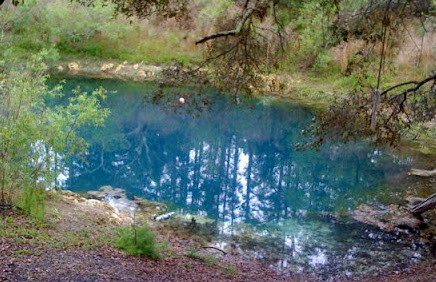
The Diepolder Cave System consists of two deep sinkhole entrances known as Diepolder II and Diepolder III. Located in Hernando County, the system is among the deepest underwater cave systems in Florida and played a pivotal role in the development of mixed gas cave diving.
Although relatively little passage has been explored compared to many of Florida’s horizontal cave systems, Diepolder became internationally recognized for pioneering deep exploration techniques. The site was the location of Florida’s first mixed gas cave dive and later became an important proving ground for deep cave exploration before ultimately being closed to diving in the late 2010s.
FREE FLORIDA SPRINGS GUIDE
Want to discover more of Florida’s hidden waterways?
Download The 25 Most Notable Springs and Cave Systems in Florida and explore some of the state’s most remarkable spring basins, underwater cave systems, and hidden natural treasures.
✓ Featured springs throughout Florida
✓ Cave systems and exploration highlights
✓ Popular destinations and hidden gems
✓ Instant download
Diepolder II and III are deep sinkholes located on private property. Access to the public is restricted.
Geological Context
Unlike many of North Florida’s flowing spring systems, Diepolder II and III are deep vertical solution sinks formed within the Ocala Limestone. Both entrances descend through large shafts before transitioning into submerged cave passage.
These deep pits provide access to one of Florida’s most unusual cave systems, where exploration focused on extreme depth rather than long horizontal penetrations.
Because of their depth and limited access, the Diepolder sinks have always been considered advanced exploration sites suitable only for highly experienced cave divers.
Discovery
The Diepolder Cave System was discovered by Will Walters, who identified the sinkholes from the air.
Recognizing their potential, early cave divers began investigating the submerged pits, eventually revealing one of the deepest cave systems known in Florida.
Exploration History
Hidden among the rolling terrain of Hernando County lies one of Florida’s most historically significant cave systems. While the names Diepolder II and Diepolder III may not be familiar to the average visitor, they are legendary within the cave diving community.
Unlike the long horizontal caves of North Florida, the Diepolder Cave System is defined by vertical shafts that plunge hundreds of feet into the Floridan Aquifer before giving way to submerged passage. These extraordinary depths made Diepolder the proving ground for some of the most ambitious cave dives ever attempted in Florida and helped shape the evolution of modern mixed gas cave diving.
Although access to both sinks is now restricted, the Diepolder Cave System remains one of the most important landmarks in the history of underwater exploration.
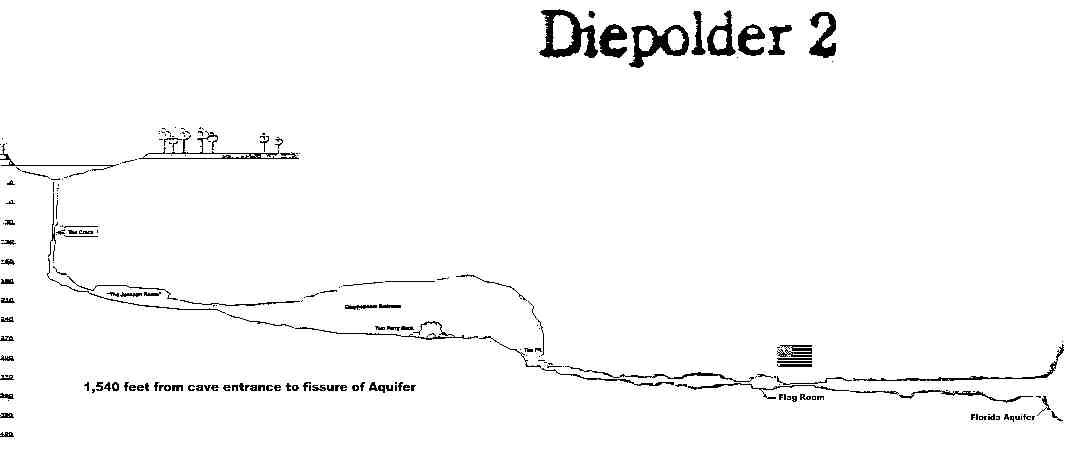
In 1979, Dale Sweet made history by descending to approximately 360 feet in Diepolder II while breathing a mixed gas breathing mixture. The dive marked the first known exploration of a Florida underwater cave using mixed gas, a milestone that fundamentally changed the future of deep cave diving.
Before leaving the cave, Sweet placed a small American flag at depth. Written on the back was a message intended only for those explorers who would someday reach the same point.
The location eventually became known among cave divers as the Flag Room, and the hidden message became part of Florida cave diving folklore.
Only a year later, Sheck Exley completed the same dive while breathing compressed air. Today, such a dive would be considered extraordinarily hazardous because of the effects of nitrogen narcosis, oxygen toxicity, and the immense decompression obligations associated with deep air diving. During the late 1970s and early 1980s, however, many of the techniques now considered standard had yet to be developed.
As mixed gas diving slowly gained acceptance, Bill Gavin and Lamar English returned in 1987 to repeat the exploration using mixed gas, demonstrating the direction technical cave diving was beginning to take.
Despite the remarkable deep dives of the 1970s and 1980s, surprisingly little was known about the cave beyond the Flag Room. There were no accurate maps, and much of the system remained undocumented.
On March 23, 1991, a dedicated exploration effort was organized to systematically document the cave beyond the deep pit.
- Sheck Exley
- Dale Sweet
- Bill Main
- Bill Gavin
- Steve Stratsma
- Vaughn Maxwell
The work of these explorers, along with numerous others who helped document the system over the following years, helped transform Diepolder from a collection of legendary deep dives into a better understood cave system.
For many years, qualified cave divers could access Diepolder through a formal guide program that helped protect the caves while allowing responsible exploration.
That program came to an end during the late 2010s following controversy surrounding access to the property.
Today, diving is no longer permitted in either Diepolder II or Diepolder III, bringing an end to nearly four decades of organized exploration.
Although inaccessible, the system continues to occupy a unique place in cave diving history.
Few cave systems have had as much influence on technical cave diving as Diepolder. The exploration conducted here helped establish many of the procedures that would later become standard practice for deep mixed gas cave diving. Although access has ended, the names associated with Diepolder, including Dale Sweet, Sheck Exley, Bill Gavin, Lamar English, Steve Stratsma, Bill Main, Vaughn Maxwell, and many others, remain closely linked to one of the most important chapters in Florida cave diving history.
Diepolder Cave System
The Diepolder Cave System consists primarily of two openings.
Diepolder II is the deeper of the two sinks, reaching a maximum depth of approximately 365 feet (111 meters).
Its exceptional depth placed it among the deepest known caves in Florida and presented challenges unlike those found in the state’s more familiar spring caves.
Located nearby, Diepolder III reaches approximately 300 feet (91 meters).
Although slightly shallower than Diepolder II, it remains one of Florida’s deepest underwater caves and has contributed significantly to exploration of the overall system.
Unlike many Florida cave systems known for miles of surveyed passage, Diepolder became famous because of its extreme depth and the technical challenges it presented.
Why Diepolder Matters
The caves witnessed:
- Florida’s first mixed gas cave dive.
- The transition from deep air exploration to modern mixed gas techniques.
- Some of the deepest cave dives of their era.
- Decades of exploration by many of cave diving’s most respected pioneers.
- 1979 – Dale Sweet completes Florida’s first mixed gas cave dive.
- 1980 – Sheck Exley repeats the dive on compressed air.
- 1987 – Bill Gavin and Lamar English return using mixed gas.
- 1991 – Diepolder Project begins systematic exploration and mapping.
- Late 2010s – Guide program ends and the caves close to diving.
Cave Data
- Diepolder II – 365 feet (112.5 meters)
- Diepolder III – 300 feet (90 meters)
For decades, Diepolder represented one of Florida’s ultimate technical diving challenges. Its exceptional depth required advanced decompression procedures, specialized equipment, and meticulous planning. Many important developments in deep cave diving were refined through exploration of the Diepolder system.
A formal guide system operated for many years, allowing qualified divers to access the caves under established procedures. However, following controversy surrounding the site, the guide program ended in the late 2010s. Today, diving is no longer permitted in either Diepolder II or Diepolder III.
Current Status
Both Diepolder II and Diepolder III are closed to diving.
Although no longer accessible, the system remains one of the most historically significant cave diving sites in Florida due to its role in pioneering deep mixed-gas exploration and advancing modern cave diving techniques.
The Hidden Rivers of Florida documents the springs, rivers, sinkholes, caves, and groundwater systems that shape Florida’s landscape. Through exploration, photography, research, and firsthand observation, the project seeks to connect visitors with the hidden waterways flowing beneath the state.
Frequently Asked Questions
The Diepolder Cave System consists of two extremely deep cave entrances known as Diepolder II and Diepolder III located in Hernando County, Florida.
The sinkholes were discovered from the air by Will Walters.
Diepolder II was the site of Florida’s first mixed-gas cave dive when Dale Sweet reached approximately 360 feet in 1979.
Approximately 365 feet (112.5 meters).
Approximately 300 feet (9 meters).
No. Diving is no longer permitted in either sink.
Continue Exploring Florida’s Hidden Waters
If you enjoyed the information about this springs, you’ll love the free guide:
The 25 Most Notable Springs and Cave Systems in Florida
From world-famous destinations like Wakulla, Jackson Blue Spring, and Peacock Springs to lesser-known hidden gems, this guide introduces some of Florida’s most fascinating natural wonders.
Download your free copy and continue exploring beyond the surface.
Get the Free Guide →Nearby Springs
Photo Gallery
Coming soon