
Seven Sisters Springs
Location: Citrus County, Florida, United States
Overview
Known for its clear water, limestone formations, and shallow spring runs, the site is one of the most recognizable destinations within the Chassahowitzka Springs system. Unlike springs with direct road access, Seven Sisters is reached by water. Visitors typically launch a kayak, canoe, or paddleboard near the Chassahowitzka Main Spring and travel a short distance upstream before entering the narrow channel leading to the springs.
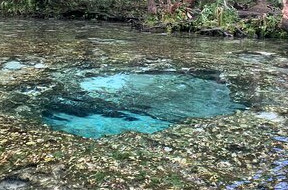
The name refers to a cluster of circular openings in the limestone. Groundwater rises through these openings, forming small pools and shallow passages that are visible beneath the clear surface. The surrounding vegetation and narrow waterways give the site a more secluded character than the broader main river.
Seven Sisters Springs is part of the larger Chassahowitzka River spring system, which includes the Main Spring and numerous smaller springs and groundwater outlets. Together, these features sustain a short, spring-fed river that flows through coastal wetlands before reaching the Gulf of Mexico.
Although Seven Sisters is popular for paddling, swimming, and snorkeling, its shallow limestone openings are part of a natural groundwater system. The springs are best appreciated as a sensitive karst environment rather than as an extensive cave diving destination.
FREE FLORIDA SPRINGS GUIDE
Want to discover more of Florida’s hidden waterways?
Download The 25 Most Notable Springs and Cave Systems in Florida and explore some of the state’s most remarkable spring basins, underwater cave systems, and hidden natural treasures.
✓ Featured springs throughout Florida
✓ Cave systems and exploration highlights
✓ Popular destinations and hidden gems
✓ Instant download
Paddling is the principal way visitors reach Seven Sisters Springs. Kayaks, canoes, and paddleboards allow access to the narrow waterways that connect the springs with the main river. The trip from the Chassahowitzka River launch area is relatively short, but the shallow channel can present challenges. Water levels vary, and sandbars or shallow limestone areas may make passage difficult at certain times. Paddlers should avoid damaging vegetation or disturbing the bottom when navigating these sections.
Once at the springs, visitors can observe the openings from the surface, float in the clear water, and enjoy the surrounding natural landscape. Swimming and snorkeling may be possible where conditions and local rules permit, but the site is not a developed swimming facility with lifeguards or conventional shore access. The narrow spring run can become congested during busy periods. Paddlers should leave room for others to pass, avoid blocking the channel, and take care around swimmers.
The springs are part of a sensitive natural system. Anchoring on vegetation, trampling submerged plants, stirring up sediment, or climbing on fragile limestone can affect the habitat and reduce water clarity.
Before visiting, check current conditions, access rules, and any restrictions affecting the Chassahowitzka River and its springs.
Geological Context
Seven Sisters Springs lies within the karst landscape of Florida’s Nature Coast. Much of the underlying terrain consists of limestone, a rock that gradually dissolves when exposed to slightly acidic groundwater. Rainwater absorbs carbon dioxide from the atmosphere and soil as it infiltrates the ground. Over long periods, this water dissolves limestone along fractures and other weaknesses in the rock, gradually enlarging openings into channels, cavities, and underground conduits. Where these pathways intersect the land surface or the bottom of a river, groundwater can emerge as a spring. At Seven Sisters, several openings discharge into a shallow tributary and spring run connected to the Chassahowitzka River. The exposed limestone and clear water make the effects of dissolution visible. Small solution holes and shallow underwater passages occur around the spring vents, while sand and aquatic vegetation occupy portions of the surrounding run.
The area’s geology is part of a much larger system. Groundwater travels through the Floridan aquifer before emerging at springs throughout the region. The number and location of visible spring openings reflect the pathways through which groundwater reaches the surface.
The Springs
Seven Sisters Springs is not a single large spring pool. It is a cluster of spring vents distributed along a small, shallow waterway. The openings are commonly described as two groups: one closer to the main river and another farther back along the spring run. Individual openings vary in size and shape, and the surrounding limestone creates small depressions and shallow underwater passages. Water clarity can be excellent, allowing visitors to see the limestone bottom and the contours of the openings. Sunlight, water levels, and the amount of suspended material influence how clearly these features can be seen.
The spring run is narrow and shallow in places. Sandbars, limestone, and aquatic vegetation can affect passage, particularly when water levels are low. These conditions are part of the natural character of the site, but they also mean that visitors need to navigate carefully and avoid damaging the bottom or surrounding vegetation.
The individual vents are part of the broader Chassahowitzka spring network. Their proximity to one another does not, by itself, establish that every opening connects to the same underground conduit.
Seven Sisters Springs is one part of the larger Chassahowitzka River system. Exploring the surrounding springs helps reveal how groundwater, limestone, wetlands, and coastal waterways fit together across Florida’s Nature Coast.
For a broader look at Florida’s springs, cave systems, and the people who explore them, read The Hidden Rivers of Florida: Discoveries.
Amazon | Audible
Available on Kindle Unlimited!
Buy Direct – Signed Copies Available
Free Shipping in the US | Bundle discounts available
Structure & Hydrology
Seven Sisters Springs receives groundwater from the Floridan aquifer through openings in the underlying limestone. The discharged water collects in the spring run and moves into the Chassahowitzka River. The Chassahowitzka spring system is influenced by both groundwater conditions and its proximity to the Gulf. Rainfall across the springshed affects aquifer levels and can influence spring discharge. Tidal conditions also affect water levels and movement in portions of the river system.
The Southwest Florida Water Management District identifies the Chassahowitzka springshed as an extensive area covering parts of southern Citrus County and northern Hernando County. Rainfall within this area helps replenish the groundwater that supplies the springs.
Conditions at individual spring openings can differ. Some springs in the wider Chassahowitzka system discharge predominantly fresh water, while others are influenced by more mineralized or brackish groundwater. The river also transitions toward brackish conditions as it approaches the Gulf. Seven Sisters is part of this connected surface water and groundwater environment. Its small openings are local expressions of a much larger aquifer system.
Cave Features & Exploration
The limestone openings at Seven Sisters include shallow solution holes and short underwater passages. These features illustrate how groundwater dissolves and shapes the rock beneath Florida’s rivers and springs. However, the presence of an underwater opening does not necessarily mean that it leads to an extensive cave system. The publicly visible features at Seven Sisters are best described as shallow spring vents and limestone passages unless more detailed survey information establishes otherwise.
The site is distinct from major technical cave diving systems elsewhere in Florida. Its appeal lies primarily in the visible spring formations, clear water, and the experience of traveling through a narrow spring run.
As with other springs, entering underwater openings can be hazardous. Depth, visibility, overhead restrictions, and changing conditions may not be obvious from the surface. Visitors should not enter submerged passages without the appropriate training, equipment, and reliable information about the specific feature.
Wildlife & Natural Habitat
Seven Sisters Springs lies within a landscape of spring-fed waterways, wetlands, and coastal vegetation. The surrounding habitat supports fish, turtles, aquatic invertebrates, and other wildlife associated with Florida’s freshwater environments. Vegetation along the spring run provides shelter and feeding areas for aquatic animals. The surrounding river and wetlands also support birds and other wildlife, while the broader Chassahowitzka system transitions toward an estuarine environment closer to the Gulf.
The area’s ecology depends on more than the visible spring openings. Groundwater quality, spring discharge, aquatic vegetation, and the condition of the surrounding wetlands all influence habitat quality. Recreational activity can affect this environment when visitors damage vegetation or disturb bottom sediments. Responsible access helps protect the clear water and natural features that make Seven Sisters Springs distinctive.
- Plan to reach the springs by kayak, canoe, or paddleboard.
- Check launch access, water levels, and local rules before visiting.
- Expect shallow passages and possible sandbars along the spring run.
- Navigate carefully to avoid damaging submerged vegetation or stirring up sediment.
- Give other paddlers and swimmers room in narrow sections.
- Respect private property and stay within permitted access areas.
- Do not assume that every underwater opening is safe to enter.
- Pack out all trash and avoid disturbing wildlife.
- Check current river conditions before setting out.
Conservation
Seven Sisters Springs is part of the Chassahowitzka River spring system, which the Southwest Florida Water Management District identifies as an important spring resource and a priority for conservation and restoration. The broader system faces several challenges, including elevated nutrient levels, changes in spring flow, shifting salinity, and losses of desirable submerged aquatic vegetation. These issues can affect water quality and the habitats supported by the river.
The health of Seven Sisters also depends on groundwater conditions throughout the Chassahowitzka springshed. Activities far from the spring openings can influence the water entering the aquifer, including land development, fertilizer use, wastewater disposal, and stormwater runoff.
Recreational pressure is another consideration. Repeated contact with shallow bottoms can disturb sediments and aquatic plants, particularly in narrow spring runs where visitors have limited room to maneuver. Protecting Seven Sisters requires a combination of groundwater protection, water quality monitoring, habitat conservation, and responsible recreation. The spring openings may occupy a small area, but they are part of a much larger natural system.
History & Regional Significance
Seven Sisters Springs is part of the longstanding natural and recreational landscape of the Chassahowitzka River. The river’s springs have attracted visitors interested in clear water, fishing, paddling, and the region’s coastal wetlands. Unlike large spring parks developed around vehicle access and extensive visitor facilities, Seven Sisters is reached through the river network. Its location has helped preserve the experience of approaching the springs through a narrow, natural waterway.
The springs are also an example of how small groundwater outlets contribute to the character of Florida’s larger spring-fed rivers. Their individual discharge may be less conspicuous than that of a major headspring, but together with other vents they help sustain the Chassahowitzka system. The site’s continued appeal depends on maintaining the water quality, vegetation, and natural conditions that make it recognizable.
Current Status
Seven Sisters Springs remains a popular paddling destination within the Chassahowitzka River system. Visitors generally reach the site by launching at the Chassahowitzka River access area and traveling upstream by kayak, canoe, or paddleboard. The spring run is shallow in places, and navigability can change with water levels and other conditions. The area does not have direct road access to the spring openings, so visitors should plan for a water-based trip.
As part of the wider Chassahowitzka system, Seven Sisters is affected by ongoing concerns about nutrient enrichment, spring flow, salinity, aquatic vegetation, and recreational impacts. Before traveling, check current access arrangements and any local restrictions. Visitors should respect private property, avoid damaging vegetation, and leave the spring openings and surrounding waterways as undisturbed as possible.
Frequently Asked Questions
Seven Sisters Springs is in Citrus County, Florida, along the upper Chassahowitzka River on Florida’s Nature Coast.
The springs are reached by water. Many visitors launch a kayak, canoe, or paddleboard near the Chassahowitzka Main Spring and paddle upstream to the side channel leading to Seven Sisters.
The name refers to a group of circular spring openings in the limestone. The area is commonly described as having two clusters of vents along the spring run. The name should not be taken as a definitive count of every groundwater outlet in the area.
Visitors commonly swim and snorkel in the area when conditions and local rules permit. The springs are not a developed swimming facility, and shallow limestone, changing water levels, and other water users require care.
Yes. Kayaking is one of the most common ways to visit. The route includes shallow and narrow sections, so water levels and navigation conditions can affect the trip.
Yes. Seven Sisters is upstream of the Chassahowitzka Main Spring and is part of the larger Chassahowitzka Springs system.
The area contains shallow limestone openings and short underwater passages. These should not automatically be classified as an extensive cave diving system. Visitors should not enter overhead passages without appropriate training and reliable site specific information.
The spring openings are generally associated with freshwater discharge, but water chemistry can vary across the broader Chassahowitzka system, where some springs are influenced by brackish groundwater and tidal conditions.
The springs are part of the groundwater network that sustains the Chassahowitzka River. They also provide habitat and a place to observe Florida’s karst geology in a natural river setting.
Continue Exploring Florida’s Hidden Waters
If you enjoyed the information about this springs, you’ll love the free guide:
The 25 Most Notable Springs and Cave Systems in Florida
From world-famous destinations like Wakulla, Jackson Blue Spring, and Peacock Springs to lesser-known hidden gems, this guide introduces some of Florida’s most fascinating natural wonders.
Download your free copy and continue exploring beyond the surface.
Get the Free Guide →Nearby Springs
Photo Gallery
Coming Soon