
Ponce de Leon Springs
Location: Holmes County, Florida, United States
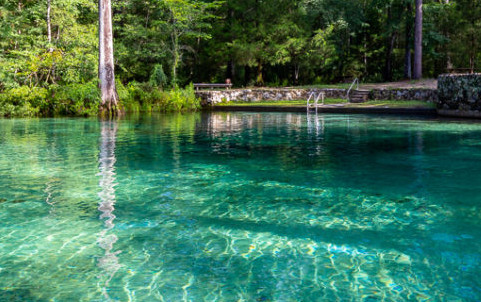
Located within Ponce de Leon Springs State Park in the heart of the Florida Panhandle, Ponce de Leon Springs has been attracting visitors for generations with its crystal-clear water, constant 68-degree temperature, and family-friendly swimming area. Surrounded by towering hardwoods and shaded picnic areas, the spring provides a refreshing escape during Florida’s hot summers while offering opportunities for hiking, snorkeling, and wildlife viewing.
Unlike many of Florida’s more remote springs, Ponce de Leon Springs is designed with recreation in mind. Accessible walkways, entry ladders, a swimming platform, and an ADA chair lift make it one of the most welcoming spring parks in the region.
FREE FLORIDA SPRINGS GUIDE
Want to discover more of Florida’s hidden waterways?
Download The 25 Most Notable Springs and Cave Systems in Florida and explore some of the state’s most remarkable spring basins, underwater cave systems, and hidden natural treasures.
✓ Featured springs throughout Florida
✓ Cave systems and exploration highlights
✓ Popular destinations and hidden gems
✓ Instant download
Paddling opportunities within Ponce de Leon Springs State Park are limited by the size of the spring run.
For safety reasons, only inflatable kayaks and canoes are permitted inside the park. Hard-shell boats are prohibited because the narrow spring run and confined swimming area create potential conflicts with swimmers.
Hard-shell canoes and kayaks may be launched outside the park boundaries, however, paddlers quickly encounter extremely shallow water and several natural barriers that prevent navigation all the way to the spring basin.
Visitors wishing to paddle should plan accordingly and recognize that Ponce de Leon Springs is primarily a swimming destination rather than a paddling destination.
Geological Context
Ponce de Leon Springs is a second-magnitude spring that discharges approximately 14 million gallons of groundwater each day from the Floridan Aquifer.
The spring emerges through multiple limestone vents that feed a clear spring pool before flowing into Sandy Creek, a tributary within the Choctawhatchee River watershed. The constant discharge maintains a year-round water temperature of approximately 68°F (20°C), creating ideal conditions for both aquatic life and recreation.
The surrounding limestone and sandhill landscape reflects the karst geology common throughout much of the Florida Panhandle.
- Arrive early during the summer, as the park can become busy on weekends and holidays.
- Bring a mask and snorkel to fully appreciate the spring’s remarkable water clarity.
- Walk both hiking trails to experience the spring run and surrounding hardwood forest.
- Wear water shoes if exploring around the limestone near the spring vents.
- If bringing a pet, remember that dogs are not permitted on the swimming beach or sunbathing areas.
The Spring
The main spring pool is renowned for its exceptional water clarity and inviting turquoise water. Most of the swimming area averages approximately three feet in depth, making it ideal for families with children and casual swimmers. Near the primary spring vents, however, depths increase to approximately 25 feet, revealing the powerful openings where groundwater enters the basin.
The clear water allows visitors to observe fish, submerged limestone, and the spring vents from the surface, making snorkeling especially popular.
Because of its consistent temperature, the spring remains refreshing throughout the year.
The Spring Run
The spring run leads away from the basin along a narrow, shallow path. There are small, man-made falls along the way, with one beneath a foot bridge that crosses from the main park to the trails and Sandy Creek. These obstacles make it so kayaks and canoes cannot move between the spring pool and the run.
The run is shallow and picturesque. It is more suited to hiking than kayaking, especially during periods of drought. The run eventually empties into Sandy Creek, a tributary of the Choctawhatchee River.
Recreation
Ponce de Leon Springs State Park offers a variety of recreational opportunities suitable for visitors of all ages. Swimming and snorkeling are the park’s most popular activities, with easy access provided by entry ladders and an accessible chair lift. A jumping platform offers another way to enjoy the cool spring water.
Picnic facilities, open green space, and shaded seating areas make the park a popular destination for family gatherings and day trips. Well-maintained paved walkways provide easy access throughout much of the park, allowing visitors to enjoy the spring regardless of mobility level.
Two nature trails allow visitors to explore the surrounding forest beyond the spring basin.
- Sandy Creek Trail
This scenic trail follows portions of Sandy Creek through hardwood forests and provides opportunities to observe native plants, birds, and other wildlife associated with the spring-fed ecosystem.
- Spring Run Trail
The Spring Run Trail follows the clear water flowing away from the spring before joining Sandy Creek, offering peaceful views of one of the park’s most scenic natural features.
Together, the trails provide an excellent opportunity to experience both the spring and the surrounding landscape.
Hydrological Characteristics
The approximately 14 million gallons of water emerging from Ponce de Leon Springs each day contribute significantly to the flow of Sandy Creek.
The spring’s constant discharge helps maintain cool water temperatures, supports aquatic ecosystems, and demonstrates the importance of the Floridan Aquifer to northwest Florida’s freshwater resources.
Like many Panhandle springs, protecting the spring’s recharge area is essential to preserving both water quality and flow.
Diving Ponce de Leon Springs is strictly prohibited by the state. Although Ponce de Leon Springs emerge from groundwater flowing through the Floridan Aquifer, it does not contain a cave system suitable for cave diving.
The spring vents are small groundwater discharge openings that do not provide access to navigable underwater passages. As a result, Ponce de Leon Springs are appreciated primarily for their recreational, ecological, and scenic value rather than as cave diving destinations.
Current Status
Ponce de Leon Springs State Park remains one of the Florida Panhandle’s premier freshwater recreation destinations. The park is open for swimming, snorkeling, hiking, picnicking, and wildlife viewing.
Pets are welcome but must remain on a handheld leash no longer than six feet at all times. To protect visitors and the natural resources, pets are not permitted on the beach or within designated sunbathing areas.
The Hidden Rivers of Florida documents the springs, rivers, sinkholes, caves, and groundwater systems that shape Florida’s landscape. Through exploration, photography, research, and firsthand observation, the project seeks to connect visitors with the hidden waterways flowing beneath the state.
Frequently Asked Questions
Ponce de Leon Springs is located within Ponce de Leon Springs State Park in Holmes County, Florida.
Yes. Swimming is one of the park’s most popular activities.
Most of the swimming area averages approximately three feet deep, while the area around the main spring vents reaches depths of approximately 25 feet.
Ponce de Leon Springs is a second-magnitude spring that discharges approximately 14 million gallons of water each day.
Yes. The exceptional water clarity makes snorkeling a popular activity.
Only inflatable kayaks and canoes are permitted within the park. Hard-shell boats must be launched outside the park, but shallow water and natural barriers prevent reaching the spring basin.
Yes. Pets are permitted on a handheld leash no longer than six feet but are prohibited from the beach and designated sunbathing areas.
Continue Exploring Florida’s Hidden Waters
If you enjoyed the information about this springs, you’ll love the free guide:
The 25 Most Notable Springs and Cave Systems in Florida
From world-famous destinations like Wakulla, Jackson Blue Spring, and Peacock Springs to lesser-known hidden gems, this guide introduces some of Florida’s most fascinating natural wonders.
Download your free copy and continue exploring beyond the surface.
Get the Free Guide →Nearby Springs
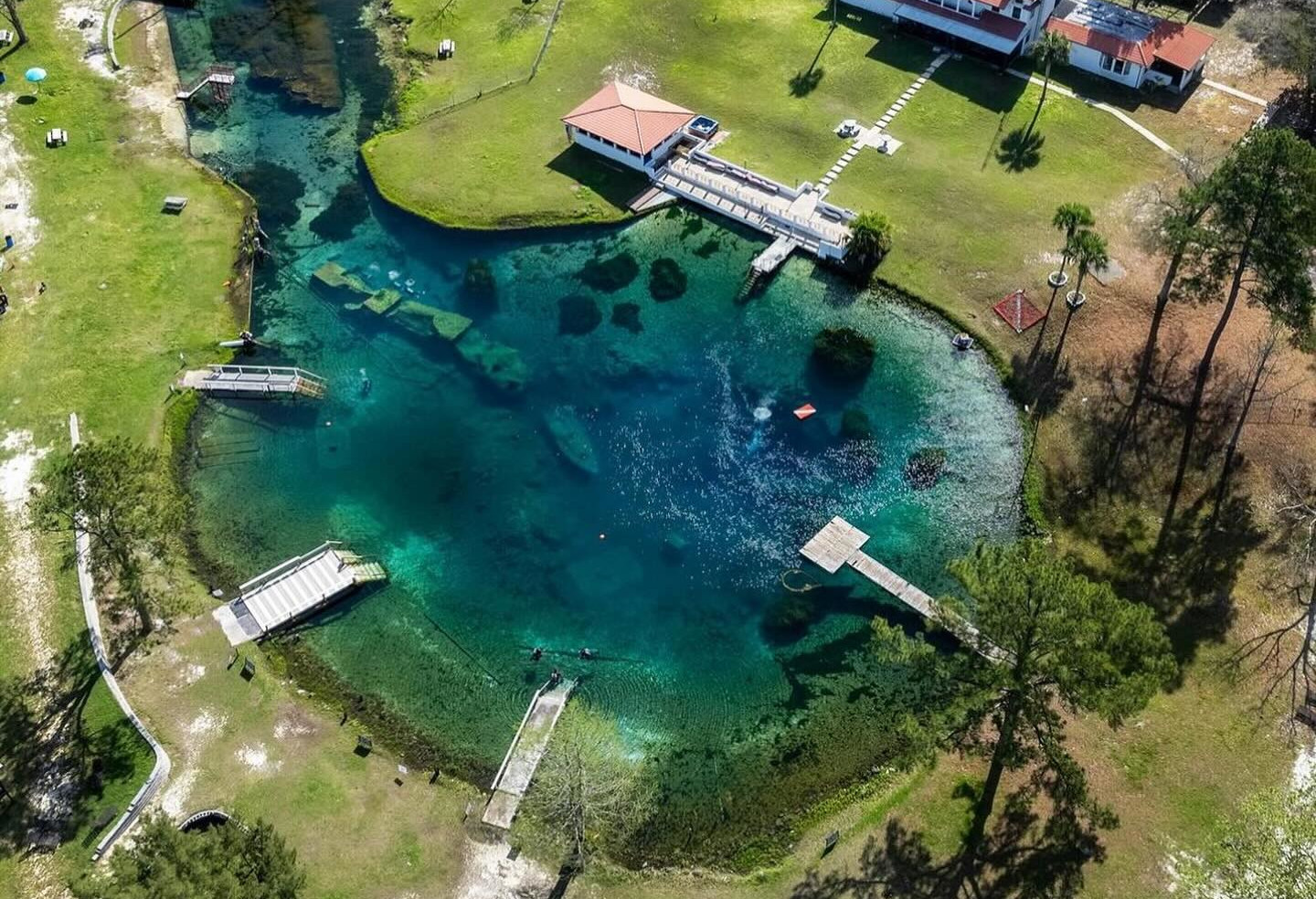
Photo Gallery
Coming soon