
Middle St. Johns River Basin
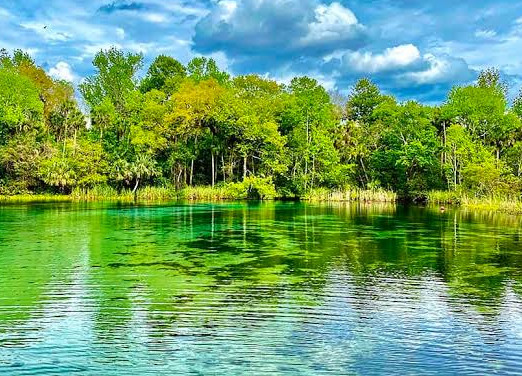
The Middle St. Johns River Basin is home to some of Florida’s most beautiful spring systems, where crystal-clear groundwater emerges from the Floridan Aquifer before flowing into one of the few major rivers in the United States that flows north. Stretching across east-central Florida, the basin includes a diverse collection of first- and second-magnitude springs surrounded by the forests, lakes, and wetlands that define this unique region.
Unlike the spring-rich basins of North Florida, where many springs discharge directly into limestone rivers, the springs of the Middle St. Johns River Basin flow into spring runs, creeks, and lakes that ultimately feed the St. Johns River. The basin offers outstanding opportunities for swimming, snorkeling, scuba diving, paddling, camping, hiking, and wildlife viewing.
About the Middle St. Johns River Basin
The Middle St. Johns River Basin occupies the central portion of the St. Johns River watershed in east-central Florida. The basin contains numerous lakes, wetlands, tributaries, and spring-fed streams that contribute to the St. Johns River as it continues its slow northward journey toward the Atlantic Ocean.
Groundwater from the Floridan Aquifer supplies many of the basin’s springs, maintaining cool, clear water throughout the year while supporting diverse aquatic ecosystems and recreational opportunities. The basin also includes portions of the Ocala National Forest, one of Florida’s largest public conservation areas.
Major Springs of the Middle St. Johns River Basin
The basin contains several outstanding springs that showcase the diversity of east-central Florida’s freshwater resources.
Located within the Ocala National Forest, Alexander Springs is one of Florida’s most popular first-magnitude springs. Its expansive 300-foot-wide basin, crystal-clear water, and sandy bottom make it ideal for swimming, snorkeling, paddling, and scuba diving. Alexander Springs is also the only spring within the Ocala National Forest where scuba diving is permitted.
Flowing into Lake George, Silver Glen Springs is renowned for its exceptionally clear water and abundant fish populations. The spring has long been a favorite destination for boaters, snorkelers, and swimmers while also preserving evidence of thousands of years of Native American history.
Salt Springs is one of Florida’s most unusual springs because its water contains naturally elevated mineral concentrations, giving it a slightly salty taste. The spring supports a unique aquatic ecosystem and serves as another popular destination within the Ocala National Forest.
Often considered one of Florida’s most picturesque springs, Juniper Springs is surrounded by lush subtropical vegetation and historic Civilian Conservation Corps structures. The spring is famous for its scenic spring run, popular canoe trail, and beautiful swimming area.
Blue Spring is one of Florida’s largest first-magnitude springs and serves as the winter refuge for hundreds of West Indian manatees each year. Located within Blue Spring State Park near Orange City, the spring is a popular destination for swimming, snorkeling, scuba diving, paddling, and wildlife viewing during the warmer months. During manatee season, the spring run is closed to water activities, allowing visitors to observe these gentle giants from boardwalks overlooking the crystal-clear water.
De Leon Springs is a historic first-magnitude spring located within De Leon Springs State Park. Known for its crystal-clear swimming area and the famous Old Spanish Sugar Mill Restaurant, visitors can enjoy swimming, kayaking, canoeing, hiking, and boat tours along Spring Garden Run. The park blends natural beauty with Florida history, making it one of the state’s most popular spring destinations.
Wekiwa Springs is a first-magnitude spring that forms the headwaters of the Wekiwa River and serves as the centerpiece of Wekiwa Springs State Park near Orlando. The spring’s emerald-green waters attract thousands of visitors each year for swimming, snorkeling, kayaking, canoeing, hiking, and wildlife viewing. Its proximity to Central Florida’s urban areas makes it one of the state’s most accessible natural springs.
Rock Springs is famous for its crystal-clear spring run, where visitors can float downstream through one of Florida’s most scenic natural lazy rivers. Located within Kelly Park in Apopka, the first-magnitude spring offers swimming, tubing, snorkeling, and paddling opportunities. The shallow, swift-flowing run and sandy bottom make it one of Central Florida’s most popular family recreation areas.
Gemini Springs is a peaceful spring park located near DeBary where two spring vents emerge to form a picturesque spring run flowing toward the St. Johns River. Although swimming is not permitted, the park offers walking trails, fishing, picnic areas, wildlife viewing, and kayaking. Its quiet setting makes it a popular destination for visitors seeking a less-crowded spring experience.
Green Springs is a small but fascinating spring located within Green Springs Park in Volusia County. The spring is best known for its distinctive emerald-green water, created by naturally occurring minerals and algae within the deep spring vent. While swimming is not permitted, visitors can enjoy boardwalks, picnic areas, interpretive exhibits, and scenic views overlooking one of Florida’s most unusual springs.
Recreation
The Middle St. Johns River Basin offers a wide variety of outdoor activities. Swimming and snorkeling are popular at many of the basin’s springs, while paddlers can explore scenic spring runs, creeks, lakes, and portions of the St. Johns River itself.
Several recreation areas provide campgrounds, hiking trails, wildlife viewing opportunities, and picnic facilities, making the basin an outstanding destination for both day trips and extended vacations.
Hydrology
The springs of the Middle St. Johns River Basin discharge millions of gallons of groundwater from the Floridan Aquifer each day. Collectively, these springs help maintain water quality, stabilize water temperatures, and support the wetlands, lakes, and tributaries that feed the St. Johns River. Because the basin includes extensive wetlands and interconnected waterways, it plays an important role in both flood control and regional water supply.
Conservation
Many of the basin’s springs are protected within state parks, the Ocala National Forest, or other public conservation lands.
Protecting groundwater recharge areas remains essential to maintaining spring flow, preserving water quality, and ensuring these natural resources continue to support both wildlife and recreation for future generations.
Current Status
The Silver River Basin remains one of Florida’s most visited spring regions. Silver Springs State Park continues to attract visitors through glass-bottom boat tours, paddling opportunities, hiking trails, wildlife viewing, and educational programs.
Ongoing research and conservation efforts continue to improve understanding of groundwater flow, spring health, and ecosystem dynamics throughout the basin. These efforts help preserve one of Florida’s most iconic spring systems for future generations.
The basin is located in east-central Florida and encompasses numerous spring-fed tributaries that flow into the middle portion of the St. Johns River.
Some of the best-known springs include Alexander Springs, Silver Glen Springs, Salt Springs, and Juniper Springs.
Yes. Many springs within the basin are open for swimming and snorkeling.
Alexander Springs is the only spring within the Ocala National Forest where recreational scuba diving is permitted.
Yes. Numerous spring runs and sections of the St. Johns River provide excellent paddling opportunities.