
Ichetucknee Springs
Location: Columbia and Suwannee Counties, Florida, United States
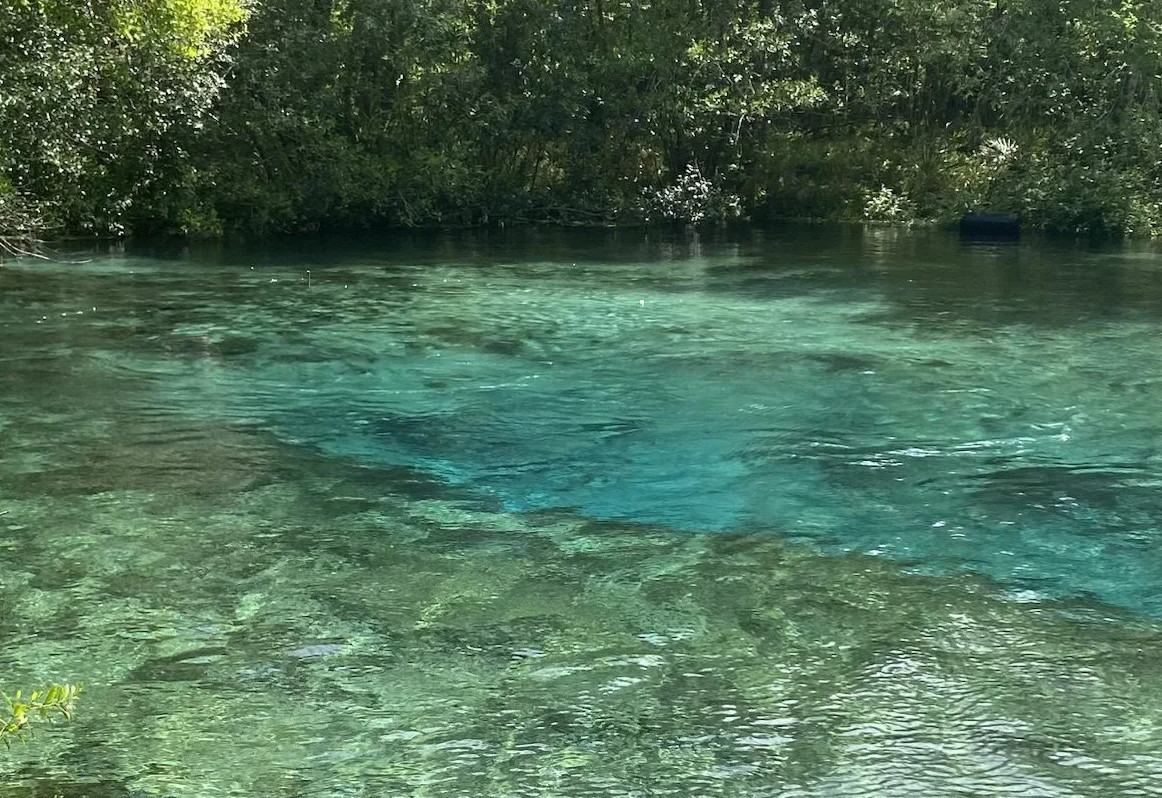
For many visitors, the Ichetucknee is synonymous with tubing. But beneath the surface is a much more complicated landscape. The Ichetucknee River is fed by a series of springs and seeps, including the large Blue Hole Spring, aka Jug Hole, where an underwater cave system begins beneath the spring basin. Other karst features within the broader Ichetucknee system include Rose Sink and McCormick Sink, where cave exploration has revealed extensive underground passages and hydrologic connections within the Ichetucknee springshed. The result is a system where the landscape visible from the surface represents only part of a much larger groundwater environment.
FREE FLORIDA SPRINGS GUIDE
Want to discover more of Florida’s hidden waterways?
Download The 25 Most Notable Springs and Cave Systems in Florida and explore some of the state’s most remarkable spring basins, underwater cave systems, and hidden natural treasures.
✓ Featured springs throughout Florida
✓ Cave systems and exploration highlights
✓ Popular destinations and hidden gems
✓ Instant download
Paddling is one of the best ways to experience the Ichetucknee beyond the busy summer tubing season. Canoes, kayaks, and stand-up paddleboards can be launched from the park’s north and south access points. The clear water provides views of the river bottom, aquatic vegetation, limestone banks, and wildlife beneath the surrounding cypress canopy. Paddlers may encounter turtles, wading birds, river otters, fish, and occasionally manatees.
The upper river is particularly well suited to paddling because the landscape remains relatively undeveloped. Moving downstream provides a changing view of the spring run environment and the individual springs that contribute to the river.
Paddling is available year-round, although access points and operating hours vary. Visitors should check current park conditions before launching.
Geological Context
Ichetucknee Springs lies within the karst landscape of north-central Florida, where groundwater moves through the limestone of the Floridan aquifer. Over time, slightly acidic groundwater has dissolved fractures and other weaknesses within the limestone, creating conduits through which groundwater can move. Where these conduits intersect the surface, springs, sinkholes, and other karst features can develop. The Ichetucknee springshed contains numerous examples of this process. The Ichetucknee Trace to the north is an ancient topographic feature associated with the former course of the river and contains sinkhole lakes and karst windows that connect to underground water conduits. These underground pathways are hydrologically connected to the Ichetucknee Springs system and help explain why the area contains both major springs and numerous smaller groundwater features.
The Upper Floridan aquifer is highly permeable in this region, with groundwater movement strongly influenced by dissolution-created conduits and karst features. Groundwater in the Ichetucknee springshed generally moves southwestward before discharging through springs and into the Ichetucknee and Santa Fe Rivers.
Tubing is the activity for which Ichetucknee Springs is best known. The river’s clear, cool water and gentle current make it a popular summer destination, but the popularity of tubing has also required careful management of the fragile spring ecosystem. The shallow northern section of the river is closed to tubing. Current tubing operations use Dampier’s Landing at the south entrance.
Visitors must remain on or in their flotation device while traveling the river as swimming in the river is prohibited. Swimming is limited to designated spring areas. The park also restricts numerous items from the river, including food, coolers, glass containers, disposable plastic items, pets, tobacco products, loudspeakers, fishing gear, and oversized inflatables. These restrictions are designed to reduce impacts on the clear spring water and sensitive aquatic ecosystem.
The Ichetucknee River
The Ichetucknee River flows approximately six miles before joining the Santa Fe River. About 3.5 miles of the upper river are protected within Ichetucknee Springs State Park. The river is fed by eight major springs along its course, along with numerous smaller seeps and groundwater inputs. The water remains approximately 72°F year-round, creating a cool, clear spring run that supports an unusually diverse aquatic ecosystem.
Under favorable conditions, sunlight penetrates the clear water and illuminates beds of eel grass and other aquatic vegetation. Turtles, fish, wading birds, river otters, and occasionally manatees can be seen along the river. The combination of clear spring water, limestone banks, cypress trees, and undeveloped forest makes the Ichetucknee one of Florida’s most recognizable spring run environments.
Swimming and snorkeling are permitted at the Headspring and Blue Hole Spring. The water remains approximately 72°F year-round.
Blue Hole should be approached with greater caution by swimmers because of its depth and strong current. The spring’s cave opening begins approximately 40 feet below the surface, and swimmers and snorkelers may be able to see into the cave from above.
The Springs of the Ichetucknee
The Ichetucknee system contains eight major springs, each contributing to the flow and character of the river.
Ichetucknee Headspring
The Headspring is the source traditionally recognized as the birthplace of the Ichetucknee River. Its clear water emerges from the limestone and immediately begins its journey downstream.
The Headspring and the upper Ichetucknee River were designated a National Natural Landmark in 1972. Today, the Headspring is one of the park’s primary swimming and snorkeling areas.
Blue Hole Spring
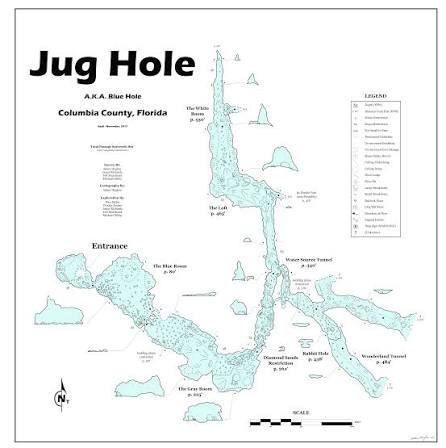
Blue Hole is the largest and most prominent aquatic karst feature within the park. The spring is also known as Jug Hole Spring within the cave diving community because of the shape of its opening. Blue Hole is a first-magnitude spring, discharging an average of approximately 67 million gallons of water per day.
The spring basin is a popular swimming and snorkeling destination, but beneath the surface is an underwater cave system beginning approximately 40 feet below the surface. The cave has been measured at nearly 600 feet of twisting passage, with sections ranging from relatively large cavernous areas to much tighter passages. Blue Hole is the only spring in Ichetucknee Springs State Park where public scuba diving is permitted.
Cedar Head Springs
Cedar Head Springs is part of the group of springs contributing to the upper Ichetucknee River. Large cedar stumps in the area provide the feature’s name and also offer evidence of the region’s logging history.
Mission Springs Complex
The Mission Springs Complex produces one of the larger contributions of groundwater to the Ichetucknee River. Its location also places it near the historic Mission de San Martin de Timucua, one of the most significant archaeological features associated with the park.
Devil’s Eye Spring
Devil’s Eye Spring is characterized by two prominent limestone vents beneath the river. Its clear blue water and surrounding vegetation make it one of the more distinctive spring features along the Ichetucknee.
Grassy Hole Spring
Grassy Hole Spring is another of the major springs contributing to the river. The surrounding landscape transitions between spring run forest and more open areas, creating a different character from the heavily shaded upper portions of the river.
Mill Pond Spring
Mill Pond Spring has an important connection to the area’s human history. A gristmill once operated here, and the spring became associated with the settlement that developed along the river.
The remains of historic phosphate mining and other human activities can still be found within the broader park landscape.
Coffee Spring
Coffee Spring is a smaller but biologically significant spring. It provides habitat for the critically imperiled Ichetucknee siltsnail, an endemic species found nowhere else in the world.
Together, these springs and numerous smaller seeps contribute more than 200 million gallons of water per day to the Ichetucknee River.
Ichetucknee Springs is often experienced as a beautiful river floating beneath a canopy of cypress and hardwoods. But beneath that river is another landscape. The springs are surface expressions of a much larger groundwater system, while Blue Hole, Rose Sink, and McCormick Sink provide glimpses into the underground conduits that move water through the limestone. Exploration of these caves has helped reveal connections that cannot be seen from the surface.
I was given the opportunity to dive one of the restricted springs within the Ichetucknee system many years ago under a permit issued by the state. The focus of the dive was to gather data on the cave fauna living in the cave. It was a rare opportunity that not many have experienced.
Video of that dive is available to view in the photo gallery at the bottom of this page.
For those interested in the relationship between Florida’s springs, caves, groundwater, and exploration, Ichetucknee is an excellent example of how the visible landscape and the hidden landscape are really part of the same system.
Read the story behind the exploration → The Hidden Rivers of Florida: DiscoveriesAmazon | Audible
Buy Direct – Signed Copies Available
Free Shipping in the US | Bundle discounts available
Structure & Underground Cave Systems
The most visible karst feature at Ichetucknee is Blue Hole Spring. The spring basin provides direct access to an underwater cave system that begins approximately 40 feet below the surface. The accessible cave has been measured at nearly 600 feet of passage. The cave contains a mixture of larger cavernous sections and tighter passage. The transition from the open spring basin into the cave demonstrates the connection between Florida’s surface springs and the underground conduits that carry groundwater through the limestone.
Blue Hole is not the only cave-bearing feature associated with the Ichetucknee system. Research and exploration have also documented caves associated with Rose Sink and McCormick Sink in the Ichetucknee Trace. These systems are hydrologically connected to the broader Ichetucknee springshed, although access to these cave entrances is restricted to permitted research activities. The underground environment therefore extends well beyond the portion of cave accessible to recreational divers at Blue Hole.
Jackson Blue Spring remains one of the most technically demanding and extensively explored freshwater cave systems in the Florida Panhandle.
Cave Exploration
The underwater caves of the Ichetucknee system have been the subject of exploration and scientific study for decades. The accessible portion of the Blue Hole cave was mapped and filmed as part of the Ichetucknee Hydrology Study. Cave diving research has also been conducted at Rose Sink and McCormick Sink.
McCormick Sink is particularly significant because exploration eventually confirmed a connection between the McCormick cave system and the downstream section of the Rose Sink cave system. The McCormick cave extends laterally for approximately 1,000 feet before reaching a maximum depth of about 145 feet. The connection demonstrated how individual karst features that appear separate at the surface can form parts of the same underground drainage network.
Research in the Ichetucknee Trace continues to contribute to understanding the relationship between sinkholes, caves, groundwater movement, and the springs downstream.
Hydrological Characteristics
The Ichetucknee is fundamentally a groundwater-fed river. Rainfall enters the karst landscape and eventually reaches the Floridan aquifer. In areas where the limestone is highly permeable and fractures have been enlarged by dissolution, groundwater can travel through underground conduits before emerging at springs.
The Ichetucknee springshed is particularly complex because surface water and groundwater interact throughout the region. Sinkholes and karst windows can provide pathways for surface water to enter the groundwater system, while underground conduits transport water toward the springs and rivers. The Ichetucknee River then carries that groundwater downstream until it joins the Santa Fe River.
This connection between the surface and underground environments is one of the defining characteristics of the Ichetucknee system.
- Check current park conditions before traveling, especially during summer weekends.
- The North Entrance provides access to the Headspring and Blue Hole.
- Blue Hole requires a half-mile walk from the ranger station; divers should plan accordingly when transporting equipment.
- Divers must register before diving and carry proof of appropriate certification.
- Cave divers should remain within the limits of their certification and dive with a minimum of two divers.
- Do not enter the cave simply because the opening is visible from the swimming area.
- Protect the aquatic vegetation and avoid disturbing wildlife.
- Tubing and swimming rules are different from paddling rules.
- Bring a mask and snorkel if exploring the spring from the surface.
- Check current river access and launch schedules before planning a paddling trip.
Wildlife
The Ichetucknee is one of Florida’s important spring-fed wildlife habitats. The clear river supports numerous species of fish and turtles, while the surrounding forest provides habitat for wading birds, wild turkey, wood ducks, limpkin, and other wildlife. River otters are commonly associated with the system, and manatees occasionally travel into the Ichetucknee from the Santa Fe River. Alligators and snakes are also present.
The river’s aquatic vegetation is an important part of the ecosystem, and visitors are expected to avoid disturbing plants and wildlife.
History
The history of Ichetucknee extends back thousands of years. Native Americans used the springs and river long before European settlement. The area later became part of the Spanish mission system, with Mission de San Martin de Timucua established in 1608. The mission served Spanish and Native American communities and became one of the important interior missions connected with the settlement of St. Augustine.
During the nineteenth century, travelers using the historic Bellamy Road stopped at Ichetucknee Springs for water. The area later developed around agriculture, timber, phosphate mining, mills, and small communities. Mill Pond Spring was associated with a gristmill and general store, while phosphate mining left pits and other visible features within the park.
During the 1950s and 1960s, the springs became increasingly popular with visitors, including large numbers of college students who came to tube the river. The growing popularity eventually placed pressure on the spring ecosystem.
In 1970, the Loncala Corporation sold the property to the State of Florida so the area could be protected as a state park.
In 1972, the Ichetucknee Spring and river were designated a National Natural Landmark.
Conservation
The Ichetucknee is a protected spring ecosystem, but protection does not eliminate the environmental pressures affecting the system. The springs depend on groundwater from the Floridan aquifer, meaning activities within the broader springshed can influence water quality and groundwater availability. Development, water use, stormwater runoff, erosion, and contamination are all important considerations in a karst environment where surface water can move rapidly into underground conduits.
The state has expanded protection into portions of the Ichetucknee Trace, including areas containing Rose Sink and McCormick Sink. These acquisitions help protect important karst features and portions of the groundwater system connected to the springs.
The Lower Santa Fe and Ichetucknee Rivers and associated priority springs are also now subject to minimum-flow and minimum-water-level protections adopted by the Florida Department of Environmental Protection, effective July 1, 2026.
Cave Data
Blue Hole is the only location within Ichetucknee Springs State Park where public scuba diving is permitted. Divers entering the cave through the spring vent must hold appropriate cavern or cave diving certification. Diving is limited to the diver’s certification level, and dive teams must consist of at least two divers.
Divers must register at the North Ranger Station before entering the water. A cart is available at the ranger station to help transport equipment along the approximately half-mile trail to Blue Hole. Dives must be completed at least one hour before sunset.
Scuba diving is not permitted in the Ichetucknee River or at the park’s other springs.
The cave environment at Blue Hole should not be confused with the recreational swimming area above it. Although swimmers and snorkelers can see into the cave from the spring basin, entering an overhead environment requires specialized training and equipment.
Current Status
Ichetucknee Springs State Park remains one of Florida’s most popular spring destinations while continuing to protect an unusually sensitive spring run ecosystem. The park encompasses approximately 2,669 acres and protects the upper 3.5 miles of the Ichetucknee River. Visitors can swim, snorkel, paddle, hike, tube, observe wildlife, and explore the surrounding karst landscape.
Blue Hole remains the park’s only public scuba diving location. Divers must meet the park’s certification and registration requirements, dive in teams of at least two, remain within their certification limits, and complete their dives at least one hour before sunset.
The park is open year-round from 8 a.m. until sunset. Current access rules and river operations can change, particularly during periods of heavy visitation or maintenance. Because Ichetucknee is both a major recreation destination and a highly sensitive groundwater system, visitors play an important role in protecting the resource.
As of October 2026, the Midpoint Tube Launch is closed for repairs. Tubing continues from Dampier’s Landing at the South Entrance, which closes at 5 p.m., with everyone required to be off the river by 6 p.m.
Frequently Asked Questions
Yes, but public cave diving within Ichetucknee Springs State Park is limited to Blue Hole Spring. Divers entering the spring vent must have appropriate cavern or cave diving certification.
The underwater cave begins approximately 40 feet below the surface. The spring basin itself is considerably shallower than the cave system beneath it.
The accessible cave system has been measured at nearly 600 feet of twisting passage.
Divers must hold appropriate cavern or cave diving certification to enter through the spring vent. Recreational divers without the required overhead-environment training should remain in the open water portion of the spring.
No. Public scuba diving is permitted at Blue Hole Spring only. Diving is not permitted in the Ichetucknee River or the park’s other springs.
The park identifies eight major springs along the Ichetucknee River, along with numerous smaller seeps.
The spring water remains approximately 72°F year-round.
Yes. Canoes, kayaks, and paddleboards can be launched from designated areas at the north and south portions of the park.
No. Swimming is restricted to designated spring areas. Visitors traveling the river must remain on or in a flotation device or vessel.
Yes. The Ichetucknee Spring and river were designated a National Natural Landmark in 1972.
Continue Exploring Florida’s Hidden Waters
If you enjoyed the information about this springs, you’ll love the free guide:
The 25 Most Notable Springs and Cave Systems in Florida
From world-famous destinations like Wakulla, Jackson Blue Spring, and Peacock Springs to lesser-known hidden gems, this guide introduces some of Florida’s most fascinating natural wonders.
Download your free copy and continue exploring beyond the surface.
Get the Free Guide →Nearby Springs
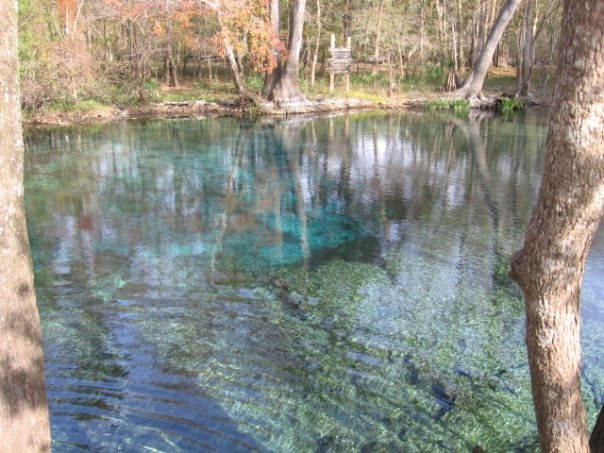
Photo Gallery
Video taken in Rose Sink in 2011.