Three Sisters Springs
Location: Citrus County, Florida, United States
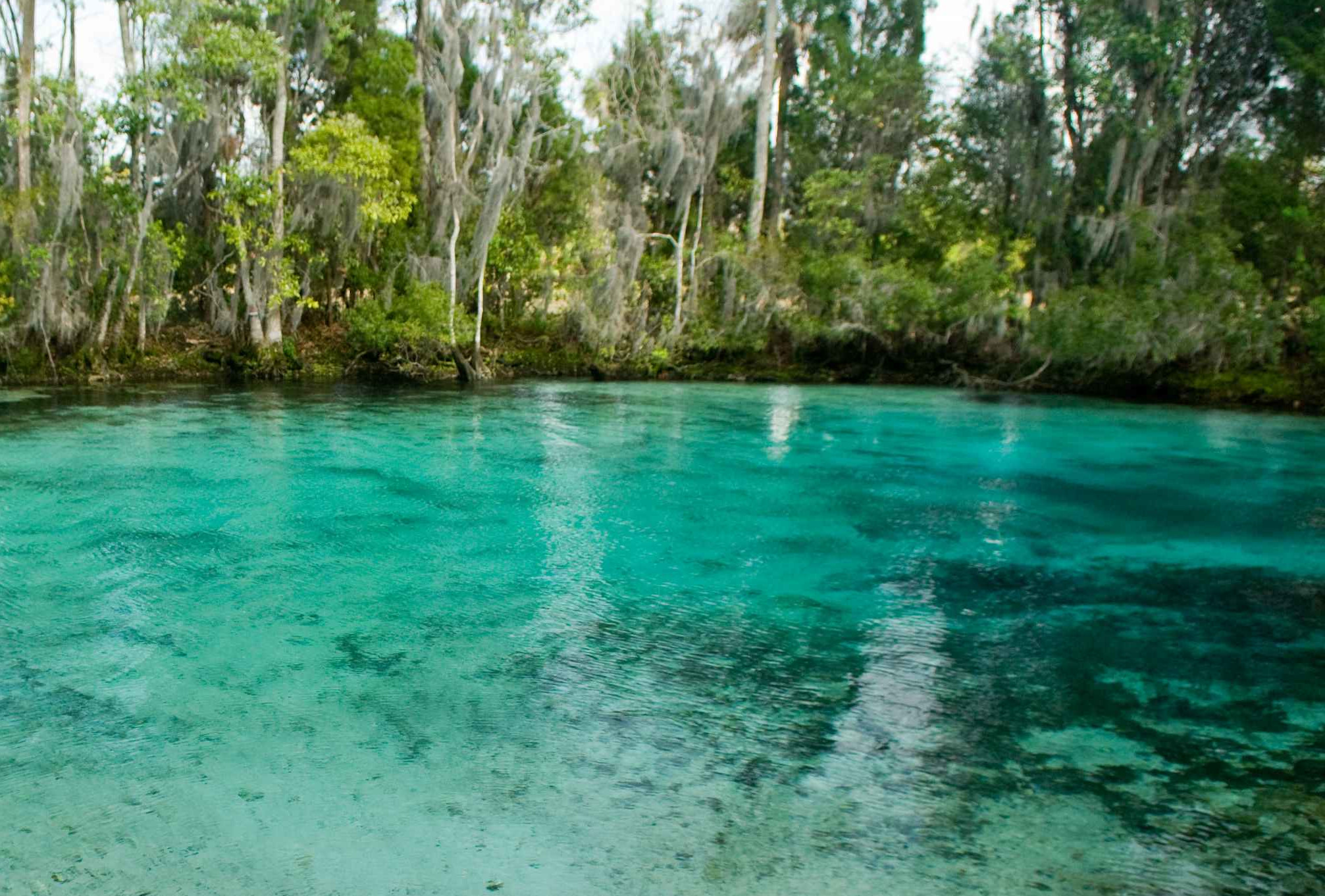
Located within Kings Bay in Crystal River, the springs provide warm groundwater that attracts manatees when temperatures in the surrounding Gulf waters decline. The three main spring openings discharge into a sheltered spring basin connected to Kings Bay by a narrow, winding spring run. Beneath the surface, the clear water reveals pale limestone, aquatic vegetation, and the contours of the spring vents. Above the water, a network of boardwalks and viewing platforms allows visitors to observe the springs and surrounding wetlands without entering the water.
Although Three Sisters Springs is best known today for manatee viewing, its story also includes the area’s natural hydrology, historic recreational use, and a significant conservation effort that prevented the property from being developed.
The springs are part of the larger Crystal River spring system, where groundwater from the Floridan aquifer emerges into Kings Bay and supports an ecosystem closely associated with Florida’s manatees.
FREE FLORIDA SPRINGS GUIDE
Want to discover more of Florida’s hidden waterways?
Download The 25 Most Notable Springs and Cave Systems in Florida and explore some of the state’s most remarkable spring basins, underwater cave systems, and hidden natural treasures.
✓ Featured springs throughout Florida
✓ Cave systems and exploration highlights
✓ Popular destinations and hidden gems
✓ Instant download
Canoes, kayaks, and other permitted paddlecraft can reach Three Sisters Springs from Kings Bay. Public launch locations include Hunter Springs Park and King’s Bay Park in Crystal River.
Paddlecraft are permitted inside the spring run from April 1 through November 14, subject to current restrictions. They are not permitted inside the springs from November 15 through March 31, during the principal manatee protection season. Motorized vessels are not permitted inside Three Sisters Springs.
Paddling offers an opportunity to experience the surrounding waters and approach the springs without the noise of a motor. Visitors must still follow wildlife-viewing rules and respect any temporary closures.
Geological Context
Three Sisters Springs lies within Florida’s west-central karst region, where groundwater moves through limestone formations of the Floridan aquifer. Rainwater absorbs carbon dioxide as it passes through the atmosphere and soil, becoming mildly acidic. Over long periods, this water dissolves limestone along fractures and other weaknesses in the rock. The resulting openings gradually enlarge, forming conduits and cavities through which groundwater can travel. Where these conduits intersect the land surface or the bottom of a water body, springs can develop.
At Three Sisters Springs, groundwater emerges through several openings into a shallow basin before flowing through the spring run toward Kings Bay. The clear water provides a visible connection between the underground aquifer and the surface environment. The springs are part of a larger network of groundwater discharges around Kings Bay. Several other major springs contribute to the bay, including nearby King Spring and additional spring vents distributed throughout the surrounding waterways.
The spring basin is also influenced by tides, water levels in Kings Bay, and the movement of water through the connected system. These conditions affect the direction and strength of water movement around the spring run and influence how manatees enter and leave the springs. Three Sisters demonstrates how a relatively small group of spring openings can support a much larger ecological system.
The Springs
Three Sisters Springs is named for its three prominent spring openings, which discharge groundwater into a sheltered basin surrounded by limestone and wetland vegetation. The openings are connected to Kings Bay by a narrow spring run. From the water, visitors can see the contrasting colors of the clear spring water, pale limestone, submerged vegetation, and darker surrounding wetlands. The three springs form part of a larger group of groundwater discharges in Kings Bay. Their sheltered setting and warm, clear water make them particularly attractive to manatees during colder weather.
The springs are also visually distinctive. During periods of high clarity, sunlight illuminates the limestone bottom and creates the blue-green appearance that has made Three Sisters a popular subject for photography. The individual openings are part of a connected groundwater environment rather than isolated pools. Water entering the basin originates in the Floridan aquifer and flows toward Kings Bay, where it mixes with water from other springs and the broader estuarine system.
Three Sisters Springs is more than a beautiful spring basin. It is a reminder that Florida’s springs are part of living groundwater systems, and that the wildlife depending on them can be affected by decisions made far beyond the water’s edge.
The effort to protect Three Sisters Springs prevented an important manatee habitat from being lost to more intensive development. Today, visitors can see the clear water, observe the manatees, and experience a landscape that remains connected to the larger groundwater system beneath Florida’s limestone.
Protecting these springs means protecting the water, the wetlands, and the wildlife that depend on them.
Read The Hidden Rivers of Florida: Discoveries
Amazon | Audible
Available on Kindle Unlimited!
Buy Direct – Signed Copies Available
Free Shipping in the US | Bundle discounts available
Structure & Hydrology
Three Sisters Springs is a surface expression of the Floridan aquifer. Groundwater rises through openings in the limestone and collects in the spring basin before flowing into Kings Bay. The spring run is a defining feature of the site. Historically, it was a long, shallow, winding channel with dense vegetation. The channel was difficult to navigate, and a canal was constructed during the 1960s to provide easier vessel access.
The spring group is part of a larger hydrologic network that includes the numerous springs of Kings Bay. Water discharged by these springs helps sustain the bay’s water levels, temperature, and ecological conditions. The water temperature is especially important for manatees. During cold weather, the groundwater discharging from Florida’s springs remains warmer than the surrounding Gulf waters. Manatees seek these warm-water habitats to conserve energy when temperatures decline.
Water levels, tides, and seasonal conditions affect access to the spring run and the distribution of manatees within Kings Bay. As a result, the number of animals visible at Three Sisters changes throughout the year.
Manatees at Three Sisters Springs
Three Sisters Springs is best known as a winter gathering place for West Indian manatees. Manatees are large aquatic mammals that depend on warm-water habitats when temperatures drop. Although they can move throughout Florida’s coastal waters, prolonged exposure to cold water can cause cold stress and become life-threatening.
The springs provide a dependable source of relatively warm groundwater. During cold fronts, manatees move into Kings Bay and its springs to conserve energy and avoid colder conditions in the Gulf of Mexico. The number of manatees using Three Sisters varies with weather, tides, water temperatures, and conditions throughout Kings Bay. On particularly cold days, the springs can hold substantial numbers of animals. During warmer periods, manatees may disperse into the surrounding waterways.
Manatees are protected wildlife. Visitors should observe them quietly and avoid actions that could disturb resting or feeding animals.
Chasing, touching, pursuing, surrounding, or attempting to ride a manatee is prohibited. Visitors entering the water should remain calm, avoid blocking the animals’ movements, and follow all posted refuge regulations.
The goal is to allow manatees to use the springs naturally while people observe from a respectful distance.
Visitors can observe manatees from the boardwalk during the winter season. The elevated viewing areas provide opportunities to watch the animals without entering the water or disturbing their behavior.
The Crystal River National Wildlife Refuge was established specifically to protect the Florida manatee. Three Sisters Springs is one of its most important features, providing habitat that supports the refuge’s conservation mission.
Conservation History
The history of Three Sisters Springs reflects the tension between development pressure and the protection of Florida’s natural resources. Historic aerial photographs from 1944 show the spring property before extensive development. At that time, the springs discharged through a long, shallow, heavily wooded spring run that connected to Kings Bay. Local residents used the area for fishing and collecting spring water. In the 1950s, a local dive shop offered glass-bottom boat tours into the springs, introducing more visitors to the clear water and underwater scenery.
During the 1960s, a canal was constructed to make the springs more accessible to boats. Later changes to the property altered portions of the original wetland landscape. By the late twentieth century, the property faced the possibility of more intensive development, including proposals for residential construction and commercial water extraction. Conservation organizations and public agencies worked to protect the springs. The Friends of the Crystal River National Wildlife Refuge Complex helped lead efforts to preserve the property, ultimately contributing to its acquisition in 2010 for approximately $10.5 million through a partnership involving public agencies and conservation interests. The property opened to the public for land-based viewing in November 2014 after improvements were made to the access road, boardwalk, and visitor facilities.
Today, the springs are managed as part of the Crystal River National Wildlife Refuge through a partnership involving the U.S. Fish and Wildlife Service, the City of Crystal River, and the Southwest Florida Water Management District. The conservation effort preserved an important spring habitat and created opportunities for visitors to experience it while protecting its ecological function.
Three Sisters Springs is protected, but its long-term health depends on conditions throughout the larger Kings Bay and Floridan aquifer systems. Groundwater withdrawals, development, nutrient pollution, stormwater runoff, and changes in aquatic vegetation can affect spring ecosystems. Because groundwater travels through a network of underground conduits, activities beyond the immediate property can influence the water that emerges at the springs.
Recreational pressure is another concern. Heavy visitation can contribute to erosion, disturbance of wildlife, and damage to aquatic vegetation if access is not carefully managed. Seasonal restrictions and designated viewing areas help balance public access with wildlife protection. Restoration projects around the property have also included removal of invasive vegetation, planting native trees, and restoring wetlands that help filter runoff.
Three Sisters Springs illustrates how protecting a spring requires a coordinated approach involving habitat management, groundwater protection, responsible tourism, and public education.
Recreation & Visitor Experience
Three Sisters Springs offers two distinct ways to experience the area: viewing the springs from land and entering the water through Kings Bay.
Boardwalk & Land Access
The Three Sisters Springs boardwalk provides elevated views of the spring basin and surrounding wetlands. Visitors can walk along designated paths and viewing platforms to observe the water, limestone formations, and wildlife. The boardwalk is especially popular during winter, when manatees gather in the springs. Visitors may also see fish, turtles, wading birds, and other wildlife throughout the year.
Land access is managed through the Three Sisters Springs Center, which provides admission and shuttle services. Visitors can also walk or bicycle in through designated access points. Public parking at the refuge property is limited, so visitors should check current access arrangements before arriving.
Land access does not provide a route into the water. Visitors who want to swim or paddle in the springs must enter through Kings Bay.
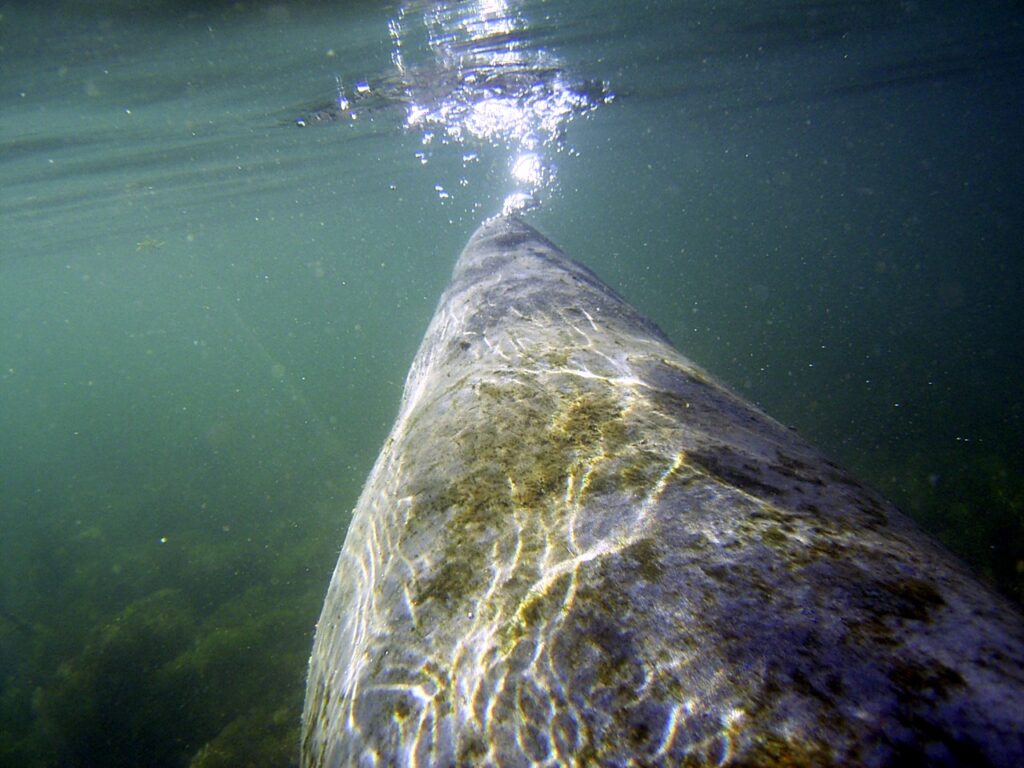
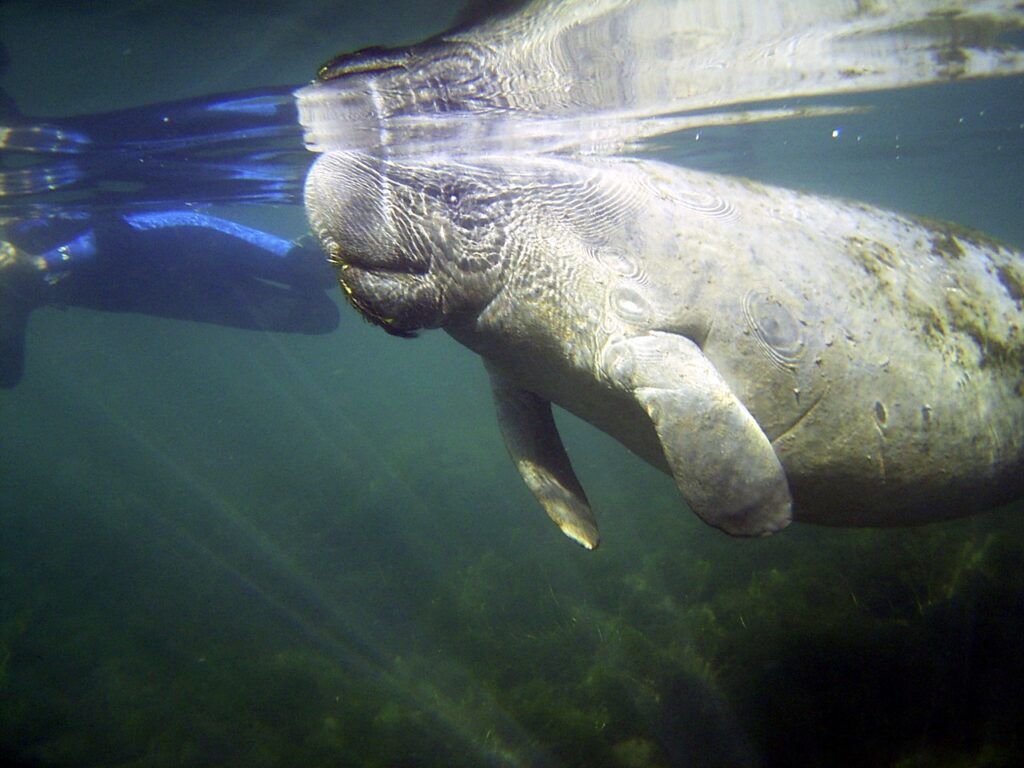
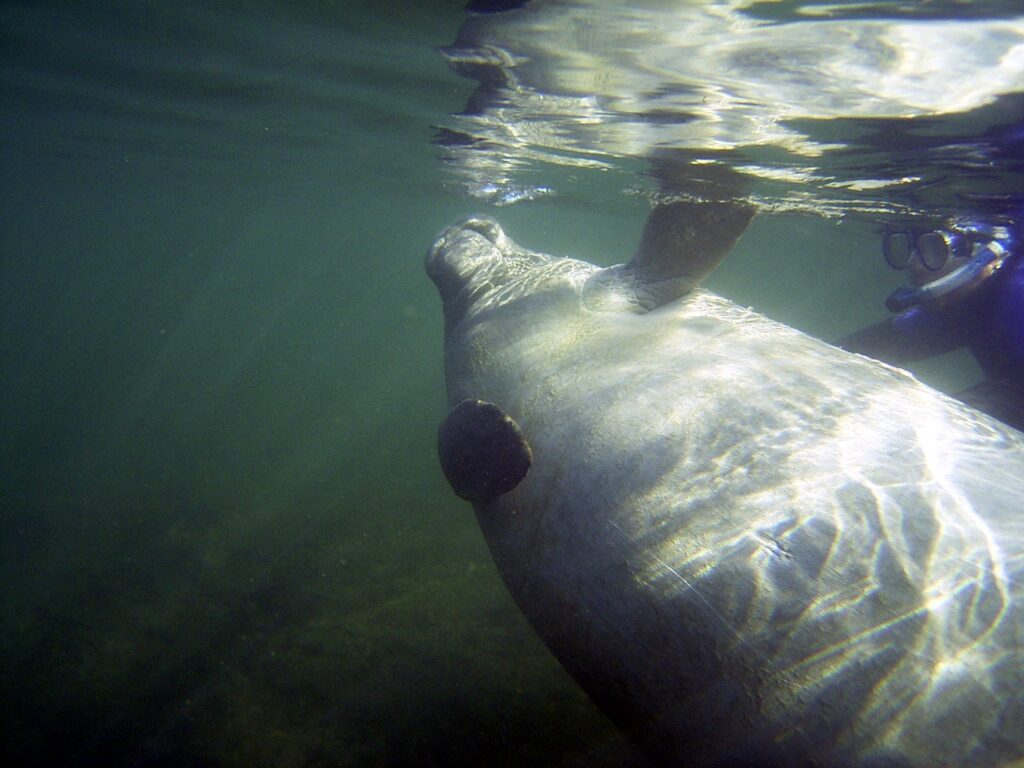
I had an opportunity to visit Three Sisters Springs a few times many years ago before the boardwalk was constructed and land access was available. My wife and I went out with a local shop to snorkel with the manatees. They took us to Three Sisters Springs each time because that’s the place you’re almost guaranteed to see them.
We had a wonderful experience. The rules state that we can’t swim after the manatees. All we can do is float in the water and take photos. If they approach us and roll sideways, we are allowed to rub their bellies.
The manatees we encountered were so friendly that we didn’t have to be concerned about swimming after them. They came to us. They wanted their bellies rubbed. They wanted to interact with us. There was a mother and calf in the spring basin together. It almost seemed as if the mother was teaching her calf how to interact with humans. It was an experience that I’ll never forget.
Swimming & Snorkeling
Swimming and snorkeling are permitted when in-water access is open. Visitors reach Three Sisters Springs by swimming or snorkeling from a vessel launched elsewhere in Kings Bay, or by joining an authorized tour. There is no public water entrance from the boardwalk property. This restriction helps prevent erosion and protects the spring banks.
In-water access is subject to seasonal regulations and temporary closures intended to protect manatees. During cold weather, the U.S. Fish and Wildlife Service may close the spring run to in-water recreation when manatees need access to the warm-water habitat. Visitors should check current refuge conditions before planning a swimming or snorkeling trip.
- Visit during colder weather for the best chance of seeing manatees, but remember that access to the water may be restricted.
- Check current boardwalk hours, admission fees, and shuttle information before arriving.
- Remember that land access and water access are separate.
- Use designated public boat ramps and kayak launches to reach the springs by water.
- Check seasonal paddlecraft restrictions before planning a trip.
- Observe manatees quietly and never chase, touch, feed, or block their movement.
- Stay on designated boardwalks and trails to protect sensitive wetland habitat.
- Do not assume in-water access is open simply because the boardwalk is open.
- Follow all posted refuge regulations and instructions from wildlife staff.
Wildlife & Natural Habitat
The springs and surrounding wetlands support a variety of aquatic and terrestrial wildlife. Manatees are the most recognizable animals associated with Three Sisters Springs, particularly during winter. The surrounding Kings Bay system also supports fish, turtles, and other aquatic species.
The wetland margins and nearby islands provide habitat for birds, including osprey, bald eagles, and wading birds. The surrounding landscape includes wetland vegetation and areas of restored native habitat.
The spring basin is also an important example of the relationship between groundwater and surface ecosystems. Changes in water quality, vegetation, and groundwater discharge can affect the habitat available to manatees and other wildlife.
Protecting Three Sisters therefore involves more than protecting the spring openings themselves. It also requires maintaining water quality, preserving the surrounding wetlands, and managing recreational access.
Current Status
Three Sisters Springs remains a major wildlife-viewing destination within the Crystal River National Wildlife Refuge. The property is protected through a partnership involving the U.S. Fish and Wildlife Service, the City of Crystal River, and the Southwest Florida Water Management District. Visitors can access the land-based boardwalk and trails through the Three Sisters Springs Center, while swimming, snorkeling, and paddling require access through Kings Bay.
In-water access is seasonal and can be restricted when water temperatures decline and manatees need the springs as a warm-water refuge. Paddlecraft are generally permitted inside the spring run from April 1 through November 14, while access is restricted during the November 15–March 31 manatee season. Temporary closures may also occur when required for manatee protection.
The boardwalk and land-based viewing areas operate separately from in-water access. Visitors should verify current hours, admission prices, shuttle arrangements, and spring restrictions before traveling.
Three Sisters remains an important example of successful spring conservation, protecting a natural groundwater discharge area while allowing visitors to experience its beauty and observe the wildlife that depends on it.
Frequently Asked Questions
Three Sisters Springs is located in Crystal River, Citrus County, Florida, within Kings Bay and the Crystal River National Wildlife Refuge.
The springs are best known for their clear water and as a winter gathering place for West Indian manatees seeking warm groundwater.
Yes, when in-water access is open. Visitors must enter from Kings Bay because there is no water access from the land-based refuge property. Seasonal and temporary closures may apply.
Yes. The elevated boardwalk provides opportunities to observe manatees from land, particularly during the colder months when they gather in the springs.
The principal winter manatee protection season at Crystal River National Wildlife Refuge runs from November 15 through March 31. Manatees may be present at other times of the year.
Paddlecraft can generally enter the spring run from April 1 through November 14, subject to current regulations. Paddlecraft are not permitted inside the springs during the November 15–March 31 manatee season.
No. Motorized vessels are not permitted inside the springs. Visitors may use permitted vessels to travel through Kings Bay to reach the spring area.
Land-based access through the Three Sisters Springs Center requires admission. Prices vary by season and visitor category, so check the official center’s current ticket information before visiting.
Yes. It is a unit of the Crystal River National Wildlife Refuge, established in 1983 to protect manatees and their habitat.
Yes. The boardwalk, viewing platforms, and trails allow visitors to experience the springs and observe wildlife without entering the water.
Continue Exploring Florida’s Hidden Waters
If you enjoyed the information about this springs, you’ll love the free guide:
The 25 Most Notable Springs and Cave Systems in Florida
From world-famous destinations like Wakulla, Jackson Blue Spring, and Peacock Springs to lesser-known hidden gems, this guide introduces some of Florida’s most fascinating natural wonders.
Download your free copy and continue exploring beyond the surface.
Get the Free Guide →Nearby Springs
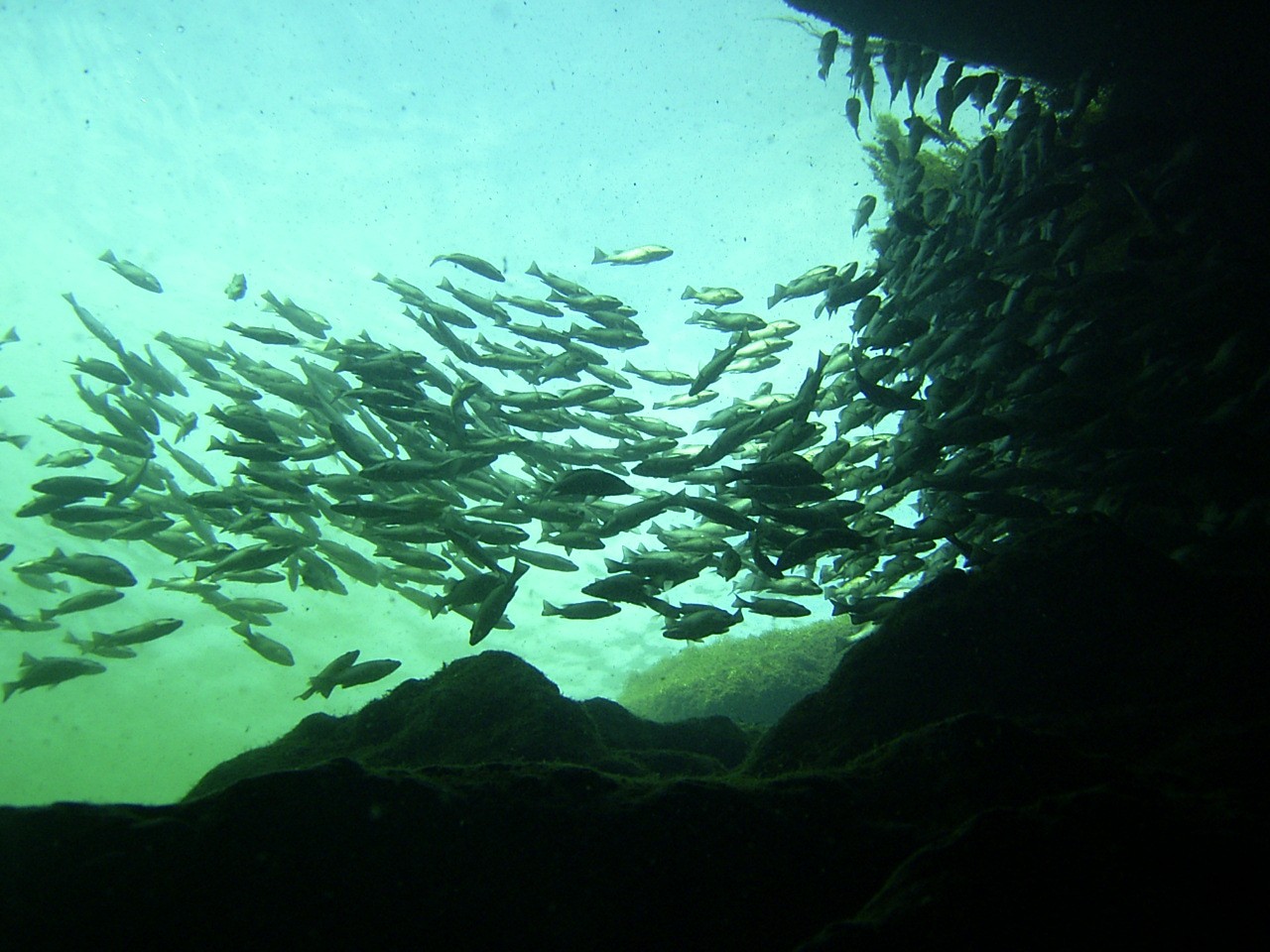
Photo Gallery