
Crystal River / Kings Bay Springs Group
Overview
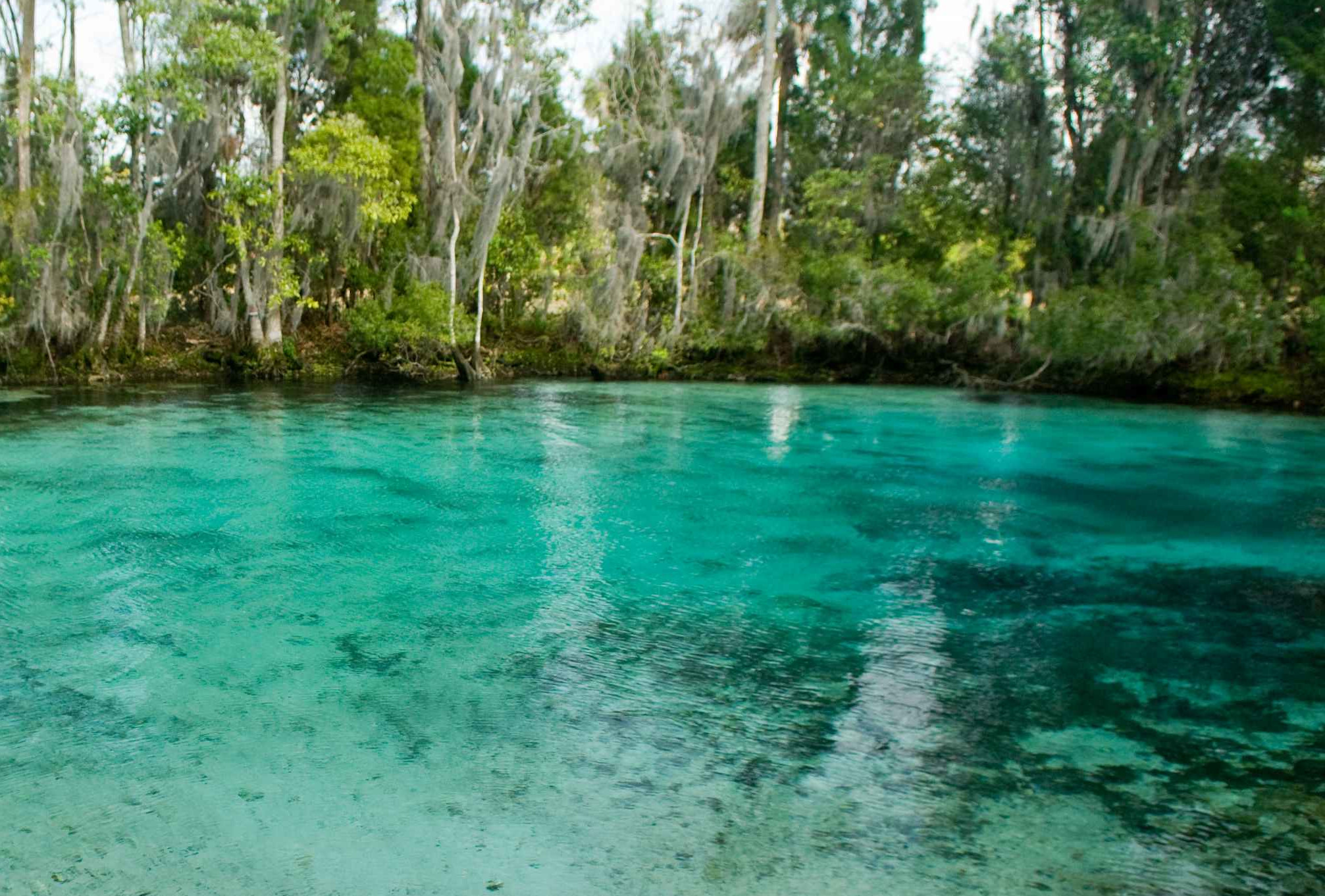
Crystal River and Kings Bay form one of Florida’s most significant coastal spring systems. Located along the Gulf Coast in Citrus County, the system contains more than 70 documented springs that discharge groundwater into Kings Bay and the Crystal River. The springs are known for their clear water, limestone formations, and importance as habitat for the Florida manatee. During colder weather, hundreds of manatees may gather around the springs, seeking the relatively warm groundwater that provides refuge from cooler Gulf waters.
Three Sisters Springs is the best known individual spring group within Kings Bay, but it is only one part of a much larger network. Hunter Spring, King Spring, Tarpon Hole, and numerous smaller vents also contribute to the system.
Crystal River/Kings Bay is unusual because its springs discharge into a tidal bay connected to the Gulf of Mexico. The system therefore combines characteristics of freshwater springs, a tidal river, and an estuary. Groundwater, tides, salinity, and water circulation all influence its behavior.
The region’s springs also reveal the effects of human activity. Dredged canals, residential development, shoreline alterations, and changes in aquatic vegetation have affected the natural circulation of Kings Bay. Conservation and restoration efforts now focus on protecting the springs, improving water quality, restoring habitat, and maintaining the area’s role as a critical manatee refuge.
Geological Context
Crystal River/Kings Bay lies within the karst landscape of west-central Florida. The underlying limestone has been dissolved over long periods by groundwater, creating fractures, conduits, cavities, and underground drainage pathways. Rainfall enters the ground throughout the surrounding springshed and replenishes the Floridan aquifer. Groundwater travels through the limestone before emerging through spring vents beneath Kings Bay and the surrounding waterways. The result is a system containing numerous spring openings rather than one dominant spring basin. Some vents discharge freshwater with relatively low salinity, while others are influenced by tidal water and the mixing of freshwater and saltwater.
The area’s proximity to the Gulf makes the hydrology more complicated than that of an inland spring. Tides can affect water levels and the direction or strength of flow at individual spring vents. Groundwater discharge and rainfall also influence the balance between freshwater and saltwater within the bay. The surrounding landscape includes wetlands, shallow coastal waters, limestone features, and modified shorelines. These features are connected through the movement of groundwater and surface water.
Kings Bay
Kings Bay is a roughly 600-acre water body at the headwaters of the Crystal River. More than 70 springs discharge into the bay, making it one of Florida’s largest spring groups. The bay supports a mixture of freshwater and saltwater species. Fish such as largemouth bass, mullet, snook, catfish, and tarpon occur in the system, while manatees use the bay throughout the year.
Kings Bay is not simply a large freshwater spring pool. Its connection to the Gulf gives it tidal and estuarine characteristics, and water conditions vary from one part of the bay to another. The bay also serves as the receiving environment for numerous spring vents, including those associated with Three Sisters Springs. Water discharged by these springs moves through Kings Bay and into the Crystal River before reaching the Gulf of Mexico.
The Floridan Aquifer
The Floridan aquifer is the primary groundwater source for many of the Nature Coast’s major springs. Rainfall enters the ground across large springsheds and moves through porous limestone and dissolution-enlarged conduits before emerging at springs. Groundwater discharge helps maintain the temperature and flow of the spring-fed rivers. These stable conditions support aquatic vegetation, fish, turtles, and other wildlife, while warm spring water provides critical winter habitat for manatees. The groundwater system also connects inland features with coastal environments. Changes in groundwater quality, rainfall, land use, and water withdrawals can affect spring discharge and the ecological condition of the rivers and bays.
Major Springs of Kings Bay
Three Sisters Springs
Three Sisters Springs is one of the most recognizable spring groups in Florida. Its three principal vents – Pretty Sister, Big Sister, and Little Sister – form a sheltered basin connected to Kings Bay by a narrow spring run. The clear water, limestone openings, and protected setting make the springs particularly attractive to manatees during cold weather. A surrounding property with boardwalks and viewing platforms allows visitors to observe the springs from land.
The springs were threatened by proposed development before a conservation partnership acquired the property in 2010. The site opened to the public for land-based viewing in 2014.
Three Sisters Springs has its own dedicated page on Hidden Rivers of Florida.
Hunter Springs
Hunter Springs is a prominent spring area along the eastern side of Kings Bay. It is associated with a public recreation area and provides access to the surrounding waters.
The spring is part of the broader network of groundwater discharges that sustain Kings Bay. Its accessibility makes it a useful starting point for visitors exploring the bay by kayak or other permitted vessels.
King Spring
King Spring is one of the major spring features within Kings Bay and an important component of the area’s manatee habitat.
The spring is associated with a federal manatee sanctuary. During the winter protection season, designated areas may be subject to restrictions intended to provide manatees with undisturbed access to warm water.
Tarpon Hole and Other Spring Vents
Tarpon Hole and numerous smaller spring openings contribute to the larger Kings Bay system. These features differ in depth, flow, water chemistry, and surrounding habitat.
The individual vents are part of a connected regional spring landscape, but water quality and salinity can vary substantially between locations.
and research within the area continue to improve understanding of the region’s underground drainage network.
Structure & Hydrology
The Crystal River/Kings Bay system receives groundwater from a springshed of approximately 310 square miles. Rainfall across this area influences groundwater levels within the Floridan aquifer, which in turn affects spring discharge. The springs also experience tidal influences because of their connection to the Gulf.
The system contains both freshwater-dominated areas and locations where tidal water mixes with groundwater. This creates a range of water conditions within a relatively compact geographic area. After discharging into Kings Bay, spring water moves through the bay and along the Crystal River toward the Gulf. The river is approximately six to seven miles long, depending on the measurement used and the route followed.
The combination of groundwater discharge, tidal circulation, and modified shorelines makes water movement in Kings Bay more complex than in an inland spring-fed river.
Manatees & Wildlife
Kings Bay is one of the most important natural winter refuges for Florida manatees. Manatees are vulnerable to cold stress when Gulf water temperatures fall. Spring water remains comparatively warm, providing a refuge where the animals can conserve energy during cold periods. Several hundred manatees may gather in Kings Bay during winter, although numbers vary with temperature and other conditions. Manatees also occur in the area during warmer months.
The bay supports a diverse mix of aquatic life, including fish, turtles, rays, and coastal bird species. Nearby islands provide nesting and roosting habitat for birds such as bald eagles and osprey. The health of this wildlife habitat depends on maintaining water quality, adequate spring flow, and suitable aquatic vegetation.
Human History & Development
Crystal River and Kings Bay have long been associated with fishing, boating, and access to freshwater springs. During the twentieth century, residential and commercial development changed portions of the bay. Between approximately 1950 and 1980, canals were dredged, seawalls installed, and shorelines modified to accommodate homes and businesses. These changes altered natural circulation and reduced portions of the original shoreline and wetland habitat.
Three Sisters Springs experienced similar development pressure. The property was altered through vegetation removal, excavation, and canal construction. Proposals for residential development and commercial water extraction eventually prompted a major conservation campaign. In 2008, the Friends of the Crystal River National Wildlife Refuge Complex began efforts to protect Three Sisters Springs. A partnership involving public agencies and conservation organizations acquired the property in 2010. The acquisition helped preserve an important manatee habitat and led to the restoration of wetlands intended to improve runoff filtration.
Conservation
Crystal River/Kings Bay is designated an Outstanding Florida Water and an Outstanding Florida Spring system. It is also a priority water body for the Southwest Florida Water Management District. Major challenges include nutrient enrichment, changes in water circulation and salinity, shoreline development, declining desirable aquatic vegetation, and potential reductions in historical spring flows.
The bay’s water quality is influenced by the larger springshed, so protecting the system requires attention to land use and groundwater conditions well beyond the immediate shoreline. Restoration projects have focused on wetlands, shoreline habitat, water quality, and aquatic vegetation. Monitoring programs measure parameters such as nitrate concentrations, salinity, spring flow, and water clarity. Protecting the springs also means maintaining the bay’s ecological role as a manatee refuge while managing public recreation and vessel access.
Recreation
Crystal River and Kings Bay offer boating, kayaking, snorkeling, wildlife viewing, fishing, and guided manatee experiences. Access rules differ by location, and some springs have specific seasonal protections. Three Sisters Springs provides boardwalk viewing from land, while visitors wishing to swim or paddle into the springs must enter from Kings Bay. There is no water access from the Three Sisters Springs refuge property itself.
Manatee protection zones and seasonal restrictions may limit vessel movement, swimming, snorkeling, or paddling in certain locations. Visitors should check current refuge regulations before entering the water.
The broader bay remains a popular destination for exploring Florida’s coastal springs, but recreation must be balanced with the protection of wildlife and sensitive spring habitats.
Current Status
Crystal River/Kings Bay remains one of Florida’s most important coastal spring systems and a major winter refuge for manatees. The system continues to receive groundwater from the Floridan aquifer, but its ecological condition depends on water quality, groundwater availability, aquatic vegetation, and the management of modified shorelines. The Southwest Florida Water Management District monitors the system and supports restoration efforts, while the Crystal River National Wildlife Refuge manages important manatee habitat and seasonal protection areas.
Public access remains available at multiple locations, although rules vary among individual springs. Visitors should verify current conditions, seasonal restrictions, and launch requirements before planning a trip.
Return to Florida Cave Systems
Frequently Asked Questions
The system contains more than 70 documented springs.
Not entirely. The bay receives freshwater from the springs but is connected to the Gulf. Tides and saltwater intrusion create a mixture of freshwater and brackish conditions.
The springs discharge relatively warm groundwater, providing refuge when Gulf water temperatures become too cold.
Yes. Three Sisters Springs is a spring group connected to Kings Bay through a spring run and canal.
In-water access is possible when permitted, but visitors must enter from Kings Bay. The refuge property does not provide water access, and seasonal manatee protections can restrict entry.
Yes. It is a first-magnitude spring group and one of Florida’s largest spring systems.
Important challenges include nutrient enrichment, shoreline modification, changes in water circulation and salinity, loss of aquatic vegetation, and potential reductions in spring flow.