
King Spring
Location: Citrus County, Florida, United States
Overview
Located near the southern side of Banana Island, the spring is a prominent feature of the Crystal River / Kings Bay Springs Group, a first-magnitude spring system containing more than 70 individual springs. The spring is known for its large basin, underwater limestone formations, and submerged opening where groundwater rises from the Floridan aquifer. The site attracts scuba divers, snorkelers, boaters, and wildlife observers. During the colder months, King Spring and nearby portions of Kings Bay are important habitat for Florida manatees seeking the relatively warm water discharged by the springs.
Unlike a spring situated inland, King Spring lies within a tidal bay. Its water conditions reflect the interaction between groundwater discharge and the larger circulation patterns of Kings Bay. Visibility can change with tides, weather, boat traffic, and sediment stirred from the bottom.
King Spring is also known among divers for its cavern. It is the only location in Kings Bay where scuba diving is permitted during manatee season. The underwater opening and surrounding limestone create an overhead environment that differs from an ordinary openwater spring dive. For divers trained in cavern environments, it offers an opportunity to experience a natural limestone formation beneath the bay.
My own connection to King Spring began before I had completed cavern diving training or earned a cavern certification. It was the first cavern dive I made, an experience that became part of my personal history as an underwater explorer. I’ll return to that experience in the personal perspective section below.
FREE FLORIDA SPRINGS GUIDE
Want to discover more of Florida’s hidden waterways?
Download The 25 Most Notable Springs and Cave Systems in Florida and explore some of the state’s most remarkable spring basins, underwater cave systems, and hidden natural treasures.
✓ Featured springs throughout Florida
✓ Cave systems and exploration highlights
✓ Popular destinations and hidden gems
✓ Instant download
Geological Context
King Spring lies within the karst terrain of Florida’s west-central Gulf Coast. The underlying limestone has been shaped over long periods by groundwater dissolving the rock along fractures, joints, and other weaknesses. Rainfall infiltrates the ground and replenishes the Floridan aquifer. As groundwater moves through the limestone, dissolution gradually enlarges existing openings and creates conduits through which water can travel. Where those conduits intersect the surface or the bottom of Kings Bay, groundwater emerges as a spring.
At King Spring, the main spring vent lies within a broad underwater basin. The surrounding bottom includes sand and limestone, while the deeper opening provides a visible expression of the groundwater pathways beneath the bay. The limestone formations are part of a much larger karst landscape extending across Florida’s Nature Coast. Numerous springs discharge groundwater into Kings Bay, and each spring can have different characteristics depending on its source, flow, and local water conditions.
The geology at King Spring is particularly interesting to divers because the spring vent creates an overhead environment. The cavern’s limestone walls and passages offer a different perspective on the rock formations that are less apparent when viewing the spring from the surface.
The Spring Basin
King Spring occupies a broad spring basin near Banana Island. The main vent lies below the surrounding bottom, and the spring’s discharge can create a visible disturbance at the surface under favorable conditions.
The basin is a popular destination for divers because it combines an open water descent with the opportunity to observe the spring’s underwater formations. The water above the basin can be less clear than the water immediately associated with the spring discharge, and visibility varies with local conditions.
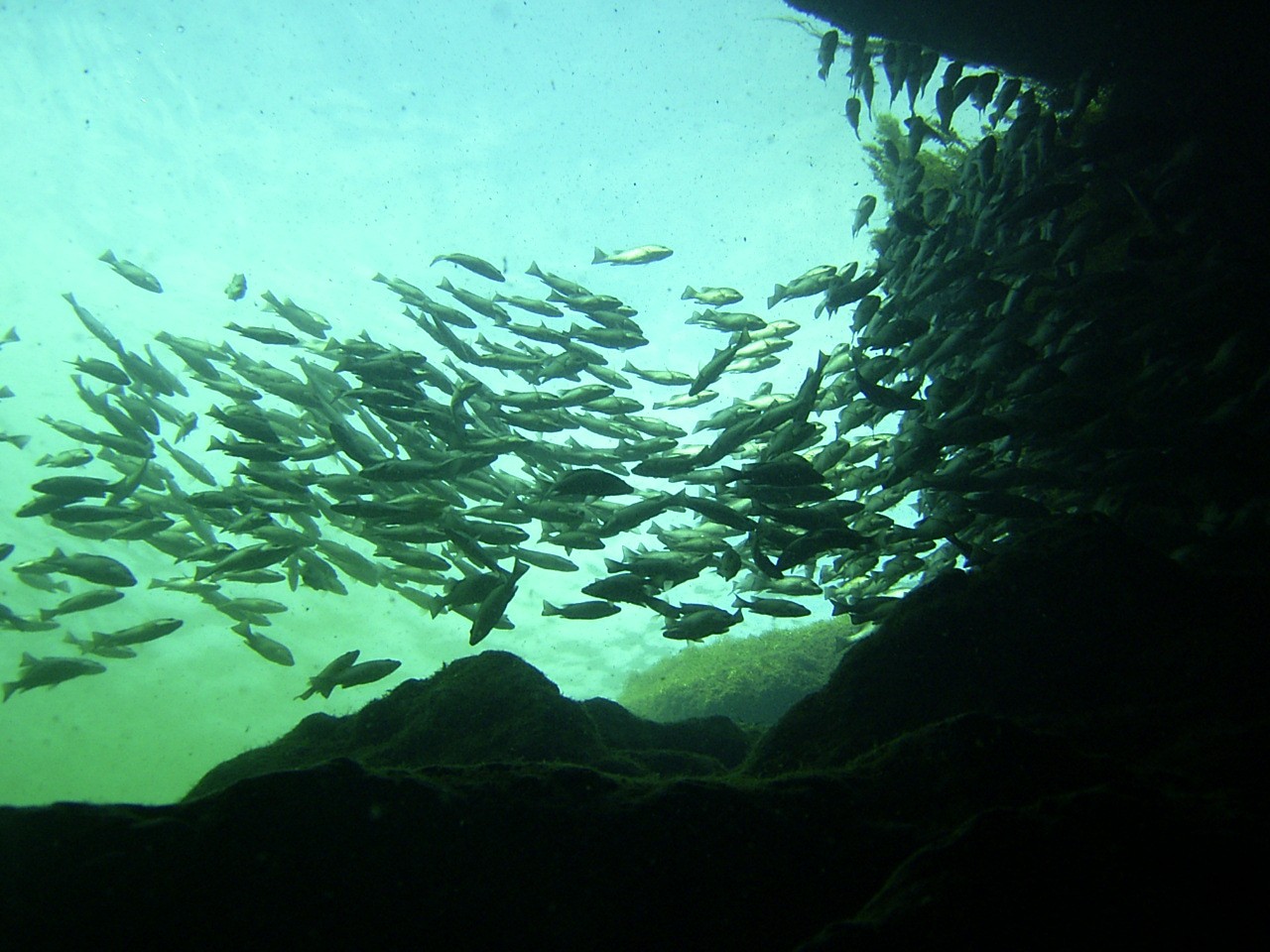
The bottom surrounding the spring consists of sand and limestone. Divers may encounter fish around the basin and near the cavern opening, while manatees frequent the broader Kings Bay area, particularly during colder weather.
King Spring is close to other spring features, including Tarpon Hole and Mullet’s Gullet. These neighboring springs are part of the wider Kings Bay springs group, but each has its own characteristics.
The King Spring Cavern
The cavern is one of the defining features of King Spring. Beneath the bay, the spring opening leads into a limestone environment where portions of the passage are overhead rather than open directly to the surface. For a diver, this changes the nature of the experience. In open water, a direct ascent to the surface is generally possible. Within an overhead environment, the ceiling prevents a direct ascent, making awareness of the exit, appropriate equipment, and suitable training essential.
The cavern is naturally illuminated near its opening, but light diminishes farther inside. Divers may use lights to see the limestone walls and formations more clearly. The spring’s depth, the geometry of the opening, and the strength of the discharge can affect how divers approach the cavern. The cavern should not be treated as an ordinary recreational swim-through. The depth of the cavern approaches 60 feet and there are areas within the cavern where daylight cannot be observed. Divers considering an overhead dive need training appropriate to the environment, along with the equipment, procedures, and judgment required to manage it safely.
King Spring has a special place in my diving history. It was the first cavern dive I made, and I did it before I had received cavern diving training or certification. At the time, I had little understanding of cavern diving beyond the idea of entering an underwater space where the ceiling became part of the dive.
I remember entering the water full of excitement. Not only was I about to experience my first cavern dive, but I was doing it in a special place. Diving in Kings Bay is restricted in certain areas because of the manatee population that seeks refuge in its relatively warm water during the winter months. We had just finished snorkeling with manatees at Three Sisters Springs, which made the day even more memorable.
Once in the water, I followed the divemaster toward King Spring Cavern. We had been briefed on the dive and told to remain in the area immediately surrounding the spring opening. Those who felt comfortable entering the overhead environment could follow the divemaster, while anyone who preferred to remain in open water could do so while the others explored the cavern.
Of course, I wanted to see the darkness.
My wife and I descended toward the opening. Near it, I noticed a plaque bearing a quote by Dr. Harvey Barnett. The plaque was covered in growth from the surrounding water. We swam past it and entered the cavern.
Inside, it felt crowded. There were six divers on the boat in addition to the divemaster, and five of us had chosen to follow him into the cavern. At the time, the space felt confining. Looking back, I realize that my impression was shaped as much by being unfamiliar with the environment as by the actual dimensions of the chamber.
We spread out inside, and I saw an opportunity to explore. I began moving away from the group, poking my head into every nook and crevice I could find. At one point, I lost sight of everyone else, including my wife.
I wasn’t concerned. I wasn’t afraid. I felt in my element.
I continued exploring, occasionally catching glimpses of the other divers’ lights. Eventually, I found a small room and ventured inside. That was when I lost sight of the daylight streaming through the opening about 40 feet above me. I didn’t know it at the time, but I had entered the only accessible cave zone within King Cavern.
Looking back, I recognize how much I didn’t understand about the environment I had entered. I had no cavern training, yet I was moving away from the group and exploring spaces where I could lose sight of both the other divers and the daylight at the entrance.
I didn’t realize it then, but I had put myself in danger, and potentially the other divers as well. If I had become lost or stuck, the consequences would not have been limited to me. The divemaster and the other divers could have been drawn into a dangerous situation while trying to help.
It wasn’t a smart decision, and I’m fortunate that I made it out without incident.
That experience didn’t discourage me from cavern diving. Quite the opposite. It made me realize that I wanted to be more than an open water scuba diver. I wanted to become a cavern diver. The difference was that I now had a reason to pursue the training and knowledge needed to explore these environments more responsibly.
King Spring remains more than a familiar dive site to me. It marks an early moment in my development as an underwater explorer, a dive I remember with excitement, but also one that taught me a lesson about the difference between feeling comfortable and being prepared.
King Spring offers a view of Florida’s underwater landscape that is easy to miss from the surface. Its spring vent, limestone cavern, and connection to Kings Bay reveal how groundwater shapes the places where people dive, explore, and observe wildlife.
For more stories about Florida’s springs, underwater exploration, and the discoveries made beneath the surface, read The Hidden Rivers of Florida: Discoveries.
Explore The Hidden Rivers of Florida: Discoveries
Amazon | Audible
Available on Kindle Unlimited!
Buy Direct – Signed Copies Available
Free Shipping in the US | Bundle discounts available
Structure & Hydrology
King Spring is part of the Crystal River / Kings Bay Springs Group, which is supplied by groundwater moving through the Floridan aquifer. The broader springshed covers a substantial area of Citrus County, and rainfall across that region influences groundwater levels and the amount of water discharged from the springs. Kings Bay is a tidal water body connected to the Crystal River and, ultimately, the Gulf. Because of this connection, spring flow and water conditions are influenced by both groundwater and tides.
The water chemistry varies across Kings Bay. Some springs discharge predominantly fresh water, while springs in other parts of the bay can be influenced by more brackish conditions. The location of a spring, the source of its groundwater, and local circulation patterns all contribute to these differences.
At King Spring, groundwater rises through the limestone vent and enters the surrounding bay. The discharge contributes to the overall freshwater supply of the system, while the bay’s circulation carries water toward the Crystal River. This combination of groundwater discharge and tidal influence makes King Spring different from many inland Florida springs, where surface-water conditions are less directly affected by the Gulf.
Wildlife & Habitat
King Spring lies within the Crystal River National Wildlife Refuge, an area established specifically to protect the Florida manatee. The refuge and surrounding waters provide critical winter habitat for manatees that move into the springs when Gulf temperatures become too cold.
Manatees are among the best known animals associated with Kings Bay. They may gather around spring areas during cold weather, when relatively warm groundwater offers refuge from cooler coastal waters. Their presence varies with season, water temperature, and local conditions.
Kings Bay also supports a mixture of freshwater and saltwater fish. Species found in the broader system include largemouth bass, catfish, mullet, snook, and tarpon. Other wildlife, including birds and stingrays, can be observed in the bay. The spring and its surroundings are part of a dynamic ecosystem in which groundwater discharge, tidal circulation, vegetation, and wildlife interact. Protecting the system means maintaining water quality and preserving the conditions that allow manatees and other species to use the bay.
Divers and snorkelers should observe wildlife without pursuing, touching, or blocking its path. During manatee season, specific areas are subject to refuge rules and sanctuary restrictions.
- Plan to reach the spring by boat or another permitted watercraft.
- Check current refuge regulations before diving or snorkeling.
- During manatee season, follow all sanctuary boundaries and keyhole restrictions.
- Do not touch, chase, feed, or block the movement of manatees.
- Expect visibility to change with tides, weather, and boat activity.
- Use appropriate cavern training before entering the overhead environment.
- Do not enter the cavern simply because the opening appears accessible.
- Avoid stirring up sediment or damaging aquatic vegetation.
- Check local conditions before planning a dive.
Conservation
The Crystal River / Kings Bay Springs Group is an important natural resource, but it has experienced substantial changes from development and alterations to the bay. Dredged canals, seawalls, shoreline construction, and changes in surrounding land use have affected water circulation and natural habitat. Elevated nutrient levels, changes in salinity, potential reductions in historical spring flow, and losses of desirable aquatic vegetation are among the ongoing concerns identified by the Southwest Florida Water Management District.
The quality of water emerging at King Spring depends partly on conditions across the springshed. Groundwater protection therefore extends beyond the immediate spring basin to the lands where rainfall enters the aquifer. The bay’s tidal connection to the Gulf adds another layer of complexity. Tides affect circulation and water chemistry, while long-term environmental changes can influence salinity and coastal habitat.
Conservation efforts include monitoring water quality, protecting manatee habitat, restoring native aquatic vegetation, and managing access to sensitive areas. These efforts are important for maintaining the spring system’s ecological value and the recreational opportunities it supports.
History & Regional Significance
King Spring has long been associated with diving and wildlife observation in the Crystal River area. Its underwater cavern and the presence of manatees make it one of the more recognizable individual springs in Kings Bay. The broader region became nationally significant for manatee protection with the establishment of the Crystal River National Wildlife Refuge in 1983. The refuge was created specifically to protect the Florida manatee and its winter habitat.
King Spring’s popularity as a dive site reflects the unusual combination of a large spring basin, an underwater cavern, and the wider wildlife habitat of Kings Bay. The spring offers divers a look at a limestone environment beneath the bay, while visitors at the surface experience the larger spring-fed and tidal landscape.
For me, the site’s significance is also personal. It was the location of my first cavern dive, before I had completed cavern training. That early experience became one point in a much longer relationship with underwater exploration.
Current Status
King Spring remains a well-known diving and recreation site within Kings Bay. Access is by water, and visitors must follow applicable Crystal River National Wildlife Refuge rules and local regulations. Scuba diving is permitted at King Spring year-round, but restrictions apply around designated manatee sanctuaries. From November 15 through March 31, divers must remain within the marked “keyhole” area or outside sanctuary boundaries where diving is allowed. Regulations and temporary restrictions should be checked before a visit. Visibility can change with tides, weather, and boat activity. Divers should plan for the actual conditions rather than assume that the spring will always be clear.
The site also remains part of a spring system facing water quality and habitat challenges. Responsible diving and boating, respect for wildlife, and compliance with refuge rules help protect the spring and the broader Kings Bay ecosystem.
Frequently Asked Questions
King Spring is in Kings Bay near Crystal River, Citrus County, Florida, close to the south side of Banana Island.
Yes. King Spring is part of the Crystal River / Kings Bay Springs Group, a first-magnitude spring system containing more than 70 springs.
Yes. Scuba diving is permitted at King Spring, subject to current regulations and wildlife protection restrictions. During manatee season, divers must remain outside closed sanctuaries or within the designated keyhole area.
Yes. King Spring is known for its submerged limestone cavern. Because it is an overhead environment, divers should have appropriate training and equipment before entering it.
Divers should not enter an overhead environment without the training and preparation appropriate to that environment. An open water certification alone does not provide the skills needed to manage a cavern dive safely.
Reported depths vary by source and by the exact location being measured. The spring basin is relatively shallow around its perimeter, while the vent and cavern extend to approximately 55 feet of depth. Depth varies with tidal influences. Divers should consult current, reliable site information rather than rely on a single depth estimate.
Yes. Manatees use the broader Kings Bay system, especially during colder weather. Visitors must observe all refuge rules and avoid disturbing or pursuing them.
There is no direct land access to the spring basin. Visitors generally reach it by boat or other permitted watercraft.
Both are part of the Crystal River / Kings Bay Springs Group, but they offer different experiences. King Spring is a popular boat-accessed dive site with an underwater cavern, while Three Sisters Springs is known for its three prominent spring openings and designated land-based viewing area.
Continue Exploring Florida’s Hidden Waters
If you enjoyed the information about this springs, you’ll love the free guide:
The 25 Most Notable Springs and Cave Systems in Florida
From world-famous destinations like Wakulla, Jackson Blue Spring, and Peacock Springs to lesser-known hidden gems, this guide introduces some of Florida’s most fascinating natural wonders.
Download your free copy and continue exploring beyond the surface.
Get the Free Guide →Nearby Springs
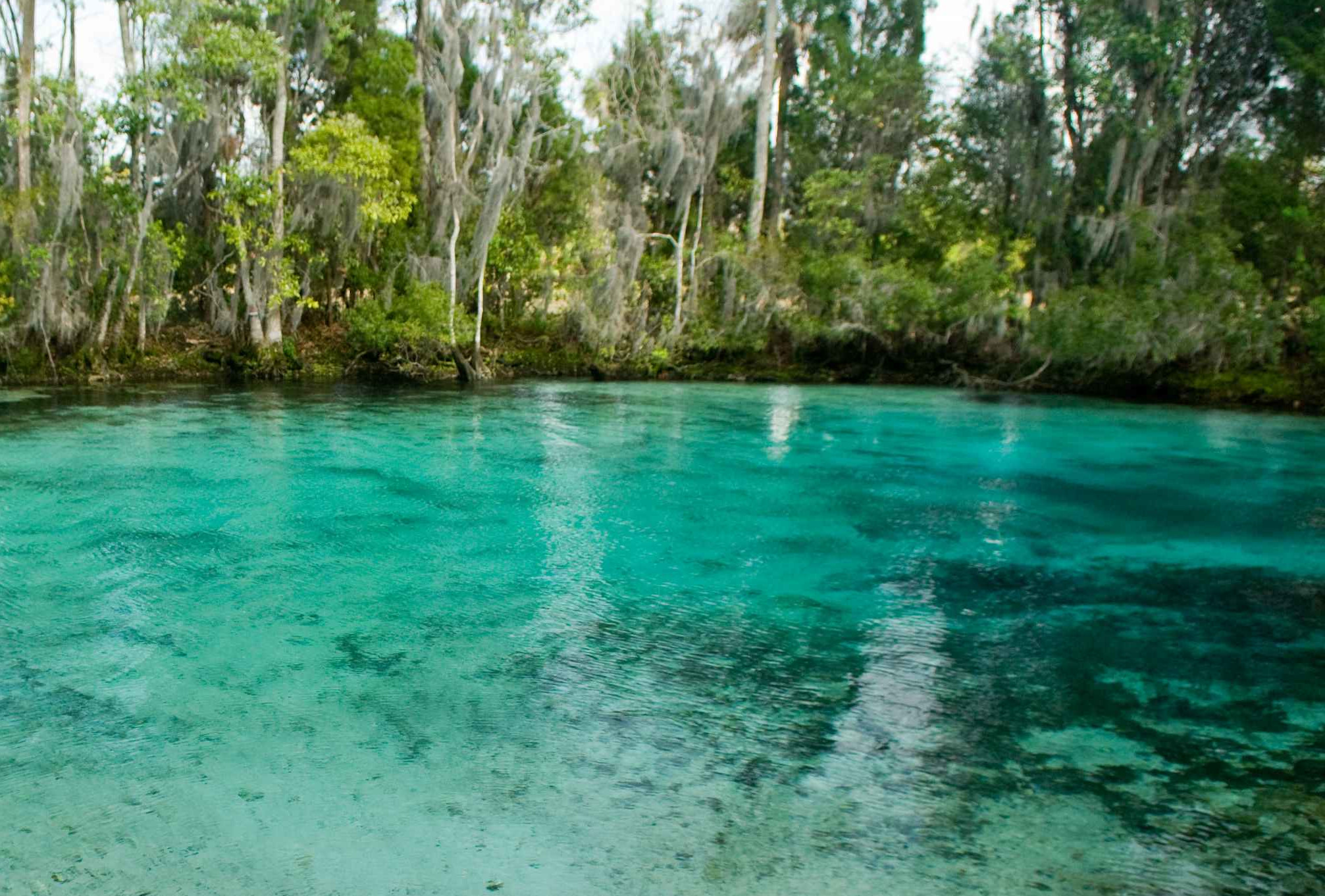
Photo Gallery
Coming soon