
Rock Springs at Kelly Park
Location: Apopka, Orange County, Florida, United States
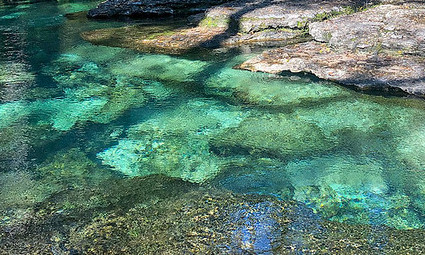
Rock Springs emerges from a partly submerged cavern at the base of a limestone and sand bluff, sending clear, cool water into Rock Springs Run. The run travels through a wooded landscape before joining the Wekiva River and ultimately flowing into the St. Johns River.
Unlike springs that emerge into a large, clearly defined pool, Rock Springs discharges directly into a narrow spring run. The water moves quickly over limestone and sand, creating a distinctive setting of rocky ledges, ferns, moss, and shaded vegetation.
The spring is best known as the centerpiece of Kelly Park, a popular Orange County recreation area where visitors swim, float downstream on inner tubes, picnic, hike, and camp. The spring maintains a year-round temperature of approximately 68°F, making it refreshing during Florida’s hot summers.
Rock Springs is also significant from a conservation perspective. It is designated an Outstanding Florida Spring, and its flow contributes to the Wekiva River system, a protected network of waterways and natural areas in Central Florida.
Although the swimming area is the most familiar feature to many visitors, the spring itself is a geological opening where groundwater from the Floridan aquifer emerges at the surface. The surrounding landscape provides an opportunity to see how groundwater, limestone, and flowing water shape Florida’s natural environments.
FREE FLORIDA SPRINGS GUIDE
Want to discover more of Florida’s hidden waterways?
Download The 25 Most Notable Springs and Cave Systems in Florida and explore some of the state’s most remarkable spring basins, underwater cave systems, and hidden natural treasures.
✓ Featured springs throughout Florida
✓ Cave systems and exploration highlights
✓ Popular destinations and hidden gems
✓ Instant download
Geological Context
Rock Springs lies within Florida’s karst landscape, where groundwater gradually dissolves limestone and creates underground openings, fractures, and conduits. Rainfall infiltrates the ground and replenishes the Floridan aquifer. As groundwater moves through limestone, it dissolves the rock along fractures and other weaknesses, enlarging existing openings over time. Where these pathways intersect the land surface, groundwater emerges through a spring.
At Rock Springs, the principal discharge emerges from a partly submerged cavern at the base of a limestone and sand bluff. The opening narrows inward, concentrating the flow before it enters the spring run. Additional groundwater also emerges from a submerged opening in the channel downstream.
The local geology includes limestone associated with the Hawthorn Formation, which contains layers of clay and marl that can restrict groundwater movement. These layers help influence how groundwater moves through the area and where it reaches the surface.
The spring’s exposed limestone, sand, and fossil-bearing formations provide a visible record of the region’s geological history. The bluff and the surrounding terrain have been shaped by groundwater discharge, erosion, and the movement of water through the spring run.
Rock Springs demonstrates how a relatively small surface opening can connect to a much larger underground groundwater system.
The Spring Opening
The principal spring opening lies at the base of a partly submerged bluff. Rather than forming a broad, deep pool at its source, Rock Springs discharges directly into the narrow channel of Rock Springs Run. The opening is approximately five feet across at its mouth and narrows inward. Water emerges with enough force to create turbulence and carry sand and small particles downstream, gradually shaping the limestone and sandy bottom. Limestone ledges extend along the banks below the opening. Ferns and moss grow in the shaded environment, while the surrounding uplands support a mixture of native vegetation characteristic of Central Florida.
A second discharge point occurs beneath the water farther downstream. Together, the spring openings contribute to the flow that sustains Rock Springs Run.
A boardwalk crosses the run downstream of the spring opening, providing visitors with a view of the flowing water and the surrounding vegetation. The natural spring source and the developed swimming area are separate features, even though both are part of the same spring-fed waterway.
Kelly Park’s swimming and tubing area is one of the best known recreational destinations in the region. Several hundred feet downstream from the natural spring opening, part of the spring flow is diverted into a designated swimming area bounded largely by concrete retaining walls.
The swimming area allows visitors to enjoy the spring water in a more controlled setting. Water continues through the area before overflowing through a weir and rejoining the natural run.
Tubing is particularly popular during warm weather. Visitors float with the current through the designated section of the spring run and return along the park’s paths to repeat the experience when conditions and park rules permit.
The water remains cool throughout the year, with a temperature commonly reported at about 68°F. The combination of cool water, flowing current, and shaded surroundings makes the park especially popular during summer.
The swimming area should not be confused with the natural spring opening. Although they are connected by the same flow, they differ in shape, setting, and management.
Visitors should follow posted rules, stay within designated swimming areas, and check current park information before planning a visit.
Rock Springs Run
Rock Springs Run carries the spring’s water away from Kelly Park through a winding natural channel. The run travels approximately 8.6 miles before joining the Wekiva River, which eventually flows into the St. Johns River. The waterway passes through a landscape of wooded banks, wetlands, and natural areas. Its clear water and shaded surroundings make it an important part of the Wekiva River system.
Rock Springs Run also provides habitat for aquatic plants, fish, turtles, and other wildlife. The surrounding vegetation helps stabilize the banks, provide shade, and support the ecological functions of the waterway. The run is part of a larger protected landscape that includes Wekiwa Springs State Park, Rock Springs Run State Reserve, and other conservation lands. These areas help preserve the natural character of the river corridor.
The spring’s discharge is important beyond Kelly Park itself. Water entering Rock Springs Run contributes to the downstream Wekiva River and, ultimately, the St. Johns River watershed.
- Check Kelly Park’s current hours, admission rules, and capacity restrictions before visiting.
- Arrive early during busy periods, particularly in warm weather.
- Follow posted rules for swimming and tubing.
- Use the designated swimming area rather than entering the natural spring opening.
- Bring suitable footwear for park paths and surrounding recreation areas.
- Respect wildlife and avoid disturbing vegetation.
- Pack out trash and leave the spring area clean.
- Check current information before planning a camping or tubing trip.
- Dogs are strictly prohibited throughout the entire park and campground.
Structure & Hydrology
Rock Springs is supplied by groundwater from the Floridan aquifer. Rainfall across the surrounding recharge area replenishes the aquifer, and groundwater travels through the underlying geological formations before emerging at the spring. The spring is classified as a second-magnitude spring, meaning its average discharge falls within the second-magnitude range used to classify Florida springs. The spring’s flow is relatively consistent compared with many surface water streams, and its temperature remains close to 68°F throughout the year. However, groundwater levels and discharge can change over time in response to rainfall, aquifer conditions, and water use.
After emerging from the spring opening, the water flows through Rock Springs Run. The run travels northward before turning and continuing toward the Wekiva River. The Wekiva River system eventually joins the St. Johns River, connecting Rock Springs to a much larger watershed. This relationship means that the spring’s ecological importance extends beyond the immediate park.
Groundwater quality is also important. Nutrients and other contaminants entering the aquifer can affect spring water, while declining groundwater levels can reduce spring discharge. Protecting Rock Springs therefore requires attention to the surrounding land and the groundwater system that feeds it.
Cave Features & Exploration
Rock Springs emerges from a partly submerged cavern at the base of the limestone bluff. The opening is an important geological feature because it provides a visible connection between the underground groundwater system and the surface spring run. The spring’s principal opening narrows inward, and the water emerges with considerable turbulence. The surrounding limestone and sand have been shaped by groundwater discharge and erosion over time.
Although the spring originates from a cavern, Rock Springs is primarily known as a swimming, tubing, and nature destination rather than as a recreational cave diving site. The presence of an underwater opening does not mean that it is suitable for entry. The narrow opening, flowing water, and overhead environment can present serious hazards. Visitors should not attempt to enter the spring vent.
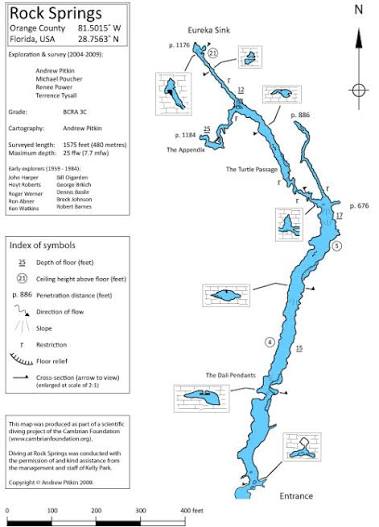
There is a cave beyond the opening that extends approximately 1200 feet at Eureka Sink. The opening is small and considered a no mount entry. The current through the restriction can be difficult to move against. Cave diving is only permitted for specialized scientific or research organizations and not for recreational purposes.
Wildlife & Natural Habitat
Rock Springs and its surrounding parkland support a mixture of aquatic and terrestrial habitats. The spring run provides habitat for fish, turtles, aquatic invertebrates, and other freshwater species. Aquatic vegetation and natural bottom features offer shelter and feeding areas, while the flowing water helps maintain the character of the spring ecosystem.
The surrounding banks and uplands contain a mixture of native vegetation. Ferns and moss grow in the shaded, moist environment near the spring, while trees and other plants provide habitat for birds and terrestrial wildlife. Farther downstream, Rock Springs Run passes through wetlands and wooded conservation lands. These habitats form part of the broader Wekiva River system, which is recognized for its ecological value.
Maintaining the health of the spring depends on more than protecting the visible opening. Water quality, groundwater levels, natural vegetation, and the condition of the downstream run all influence the environment. Visitors can help protect the area by staying within designated recreation spaces, avoiding damage to vegetation, and disposing of trash properly.
Conservation
Rock Springs is designated an Outstanding Florida Spring and is part of the Wekiva River system, an important conservation landscape in Central Florida. Despite its popularity, the spring faces environmental pressures associated with groundwater quality, development, and recreational use. Elevated nitrate concentrations have been documented in the broader spring system, raising concerns about nutrient pollution and its effects on water quality. Nutrients can enter groundwater through fertilizer use, wastewater, stormwater runoff, and other land-use activities. Because the spring depends on the Floridan aquifer, activities across the recharge area can affect the water emerging at Kelly Park.
Groundwater quantity is another concern. Water withdrawals and changes in aquifer levels can influence spring discharge. Maintaining adequate flow is important for the spring itself and for the downstream habitats sustained by Rock Springs Run.
Recreation must also be managed carefully. Large numbers of swimmers and tubers can affect vegetation, water clarity, and the surrounding landscape if use is not properly controlled. Kelly Park’s managed swimming area concentrates much of the recreational activity into a designated location. Conservation of the broader spring system also depends on protecting the natural run, surrounding vegetation, and groundwater recharge areas.
Long-term protection requires water quality monitoring, responsible land management, and continued attention to the health of the Wekiva River system.
History
The area around Rock Springs has a long history of human use, including agriculture, milling, logging, and later recreation. In 1855, Florida awarded land near Rock Springs to William S. Delk, a veteran of the Second Seminole War. Delk later operated a large plantation and used the flow of Rock Springs Run to power a grist mill, sawmill, and cotton gin. After the property passed to later owners, the land was sold to lumber companies. Logging became an important industry in the surrounding region during the late nineteenth and early twentieth centuries.
In 1910, Dr. Howard A. Kelly visited Rock Springs. Kelly was a prominent physician, one of the founders of Johns Hopkins Hospital, and an avid naturalist. He was drawn to the spring and its natural surroundings. Kelly purchased land around Rock Springs in 1921 to establish a wildlife preserve and bird sanctuary. In 1927, he and his wife donated the property to Orange County with the understanding that it would remain a public park. The county named the property Dr. Howard A. Kelly Park in his honor. Over time, additional land was acquired, and the park developed into a popular destination for swimming, tubing, camping, and nature study. The donation helped preserve the spring and surrounding landscape for public use rather than allowing the property to be lost to other forms of development.
Current Status
Rock Springs remains a popular spring destination in Orange County and an important source of water for Rock Springs Run and the Wekiva River system. Kelly Park offers swimming, tubing, picnicking, camping, and nature trails. Because the park can reach capacity during busy periods, visitors should check current admission procedures, operating hours, and restrictions before traveling.
The natural spring opening is distinct from the designated swimming area downstream. Visitors should remain within permitted recreation areas and should not attempt to enter the submerged spring vent. Rock Springs also remains a conservation priority because of its importance to the Wekiva River system and the groundwater resources that sustain it. Protecting the spring requires attention to water quality, aquifer conditions, and the natural habitats along the spring run.
The park’s combination of natural spring features and developed recreation facilities makes it one of Central Florida’s most recognizable spring destinations.
Frequently Asked Questions
Rock Springs is located within Dr. Howard A. Kelly Park in Apopka, Orange County, Florida.
No. Rock Springs is classified as a second-magnitude spring. It is also designated an Outstanding Florida Spring.
The water temperature is commonly reported at approximately 68°F year-round, although actual measurements can vary.
Yes. Swimming is available in the designated swimming area at Kelly Park. Visitors should follow current park rules and posted restrictions.
Yes. Tubing is a popular activity at Kelly Park. The current route, operating conditions, and any restrictions should be checked with Orange County before visiting.
No. Rock Springs does not have a large, well-defined pool at its source. The natural spring emerges from a partly submerged cavern, and part of its flow is diverted downstream into a managed swimming area.
Diving is not permitted at Rock Springs except under permit. The spring originates from a submerged cavern, but the narrow opening and flowing water can be hazardous.
Rock Springs feeds Rock Springs Run, which joins the Wekiva River. The Wekiva River ultimately flows into the St. Johns River.
Dr. Howard A. Kelly was a prominent physician and one of the founders of Johns Hopkins Hospital. He purchased land around Rock Springs in 1921 and donated it to Orange County in 1927 to preserve it as a public park and natural area.
Rock Springs supplies water to Rock Springs Run and the Wekiva River system. It also provides habitat for wildlife, supports recreation, and offers a visible example of groundwater discharge through Florida’s limestone geology.
Continue Exploring Florida’s Hidden Waters
If you enjoyed the information about this springs, you’ll love the free guide:
The 25 Most Notable Springs and Cave Systems in Florida
From world-famous destinations like Wakulla, Jackson Blue Spring, and Peacock Springs to lesser-known hidden gems, this guide introduces some of Florida’s most fascinating natural wonders.
Download your free copy and continue exploring beyond the surface.
Get the Free Guide →Nearby Springs
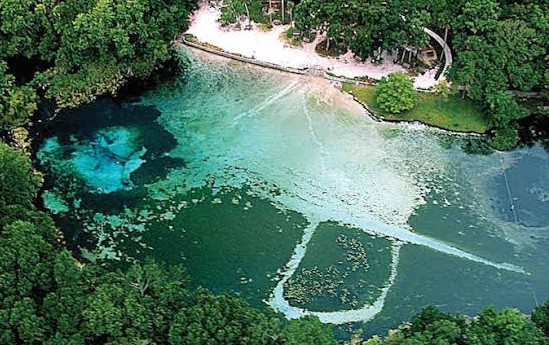
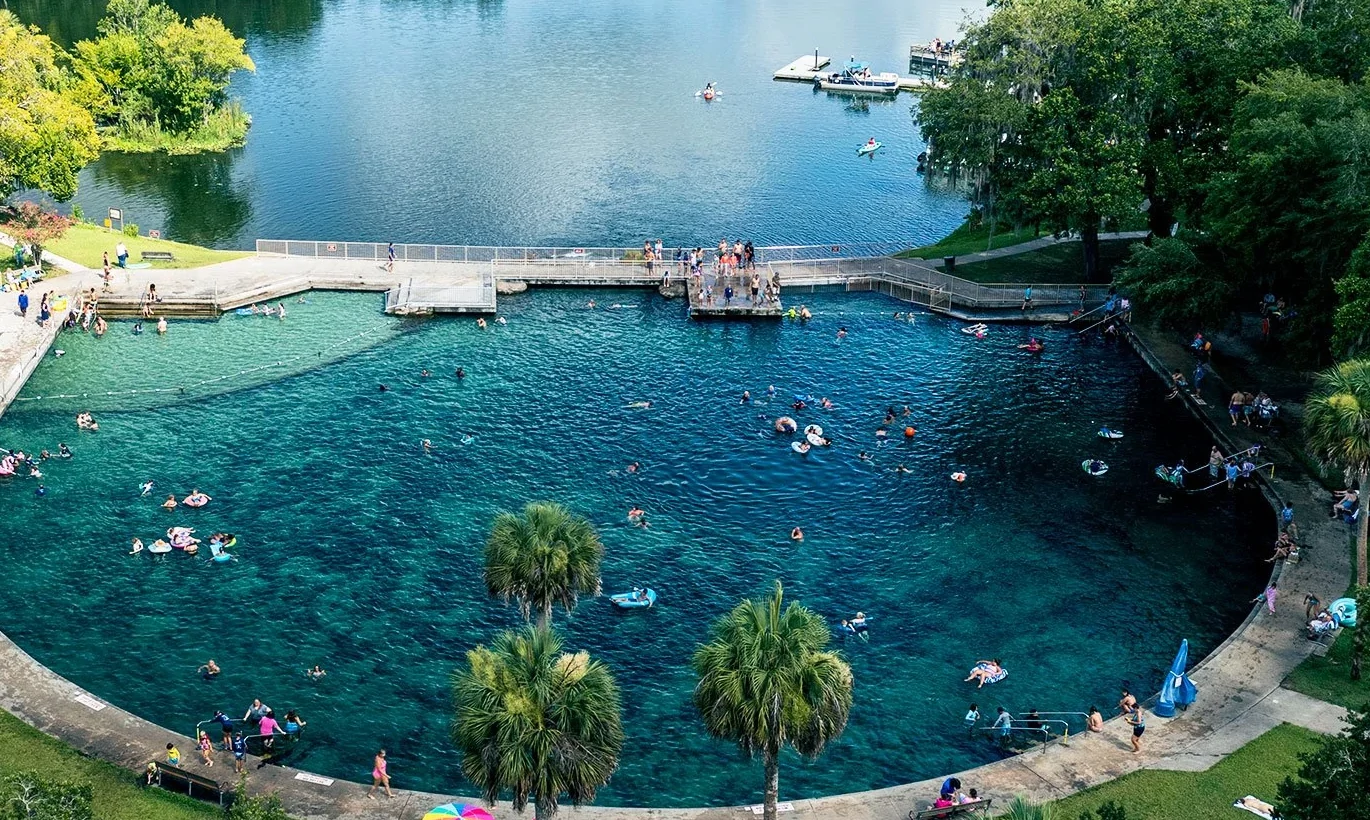
Photo Gallery
Coming soon