Ponce de León’s Fountain of Youth Archaeological Park
Location: St. Johns County, Florida, United States
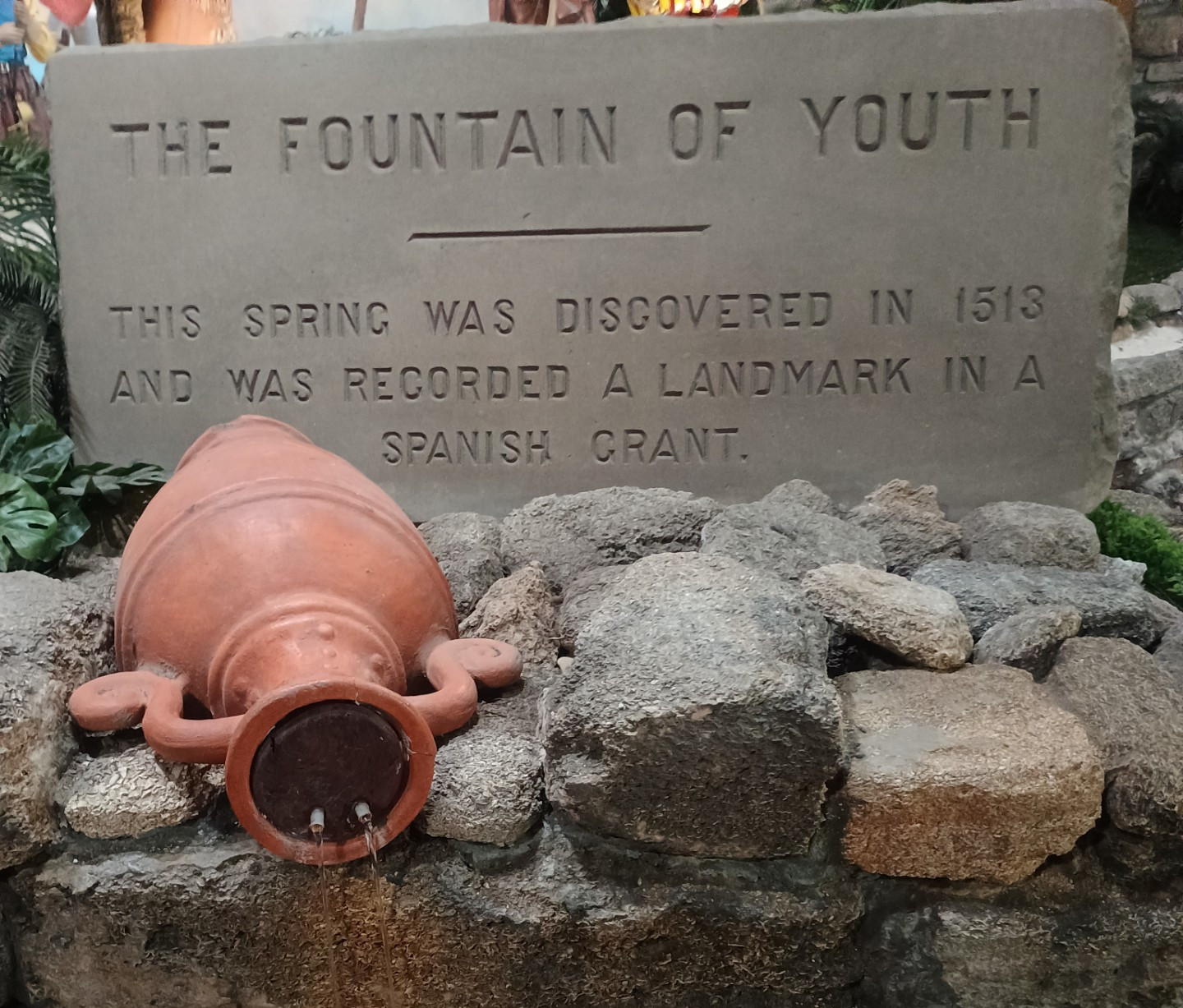
Few springs in Florida are as closely tied to legend as the Fountain of Youth in St. Augustine. Here, visitors can sample water from a natural spring while exploring a property associated with the Timucua people, the earliest years of Spanish colonial settlement, and centuries of stories surrounding the search for eternal youth.
Ponce de Leon’s Fountain of Youth Archaeological Park is more than a roadside attraction built around a famous legend. The waterfront property contains archaeological evidence of a long-established Indigenous community and the early Spanish settlement that became St. Augustine. Exhibits, reconstructed structures, historical demonstrations, and walking paths bring these different periods of Florida’s history together.
The spring itself is the feature that draws many visitors, but the site’s deeper significance lies in the people who lived here long before the attraction opened and the historical events that unfolded along this part of Florida’s Atlantic coast. The Fountain of Youth is not a large spring run or an extensive spring cave system. Instead, it is a small natural water feature within a historic site whose cultural and archaeological importance extends well beyond the spring.
FREE FLORIDA SPRINGS GUIDE
Want to discover more of Florida’s hidden waterways?
Download The 25 Most Notable Springs and Cave Systems in Florida and explore some of the state’s most remarkable spring basins, underwater cave systems, and hidden natural treasures.
✓ Featured springs throughout Florida
✓ Cave systems and exploration highlights
✓ Popular destinations and hidden gems
✓ Instant download
The Fountain of Youth Legend
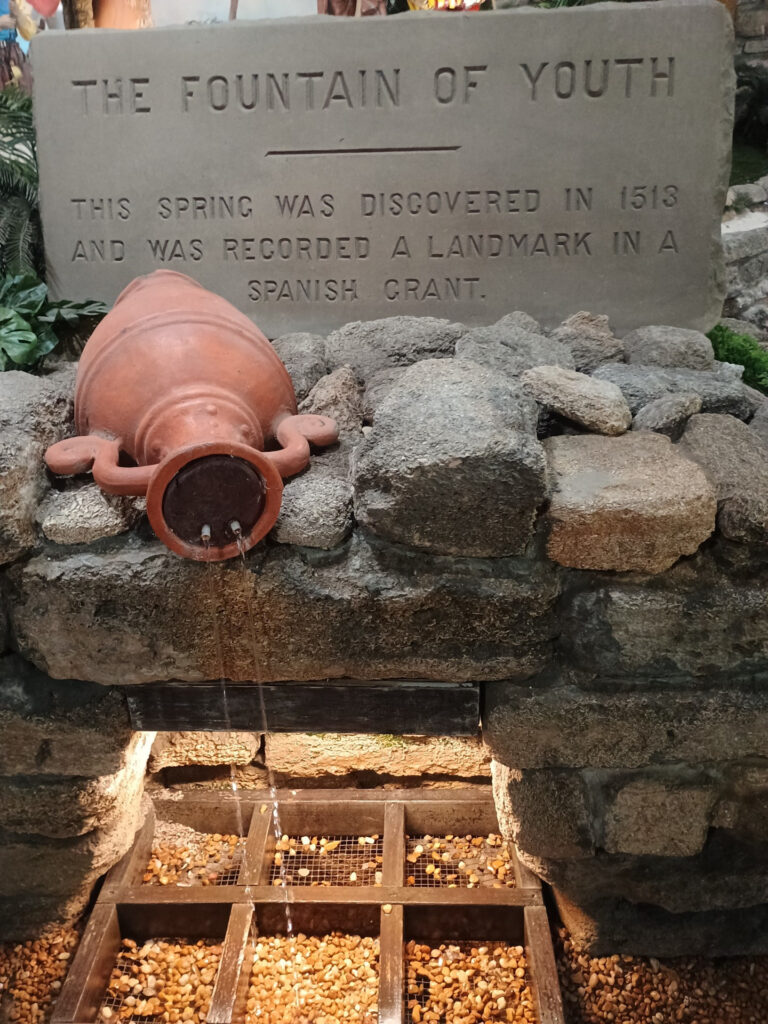
The legend of the Fountain of Youth is most famously associated with Spanish explorer Juan Ponce de León, who reached Florida in 1513. Popular accounts connected his exploration with a search for water that could restore youth, but historians have found no reliable evidence that he came to Florida specifically to find such a spring or that he visited the spring now displayed at this attraction.
Over time, the story became an enduring part of Florida folklore. The promise of rejuvenation helped turn the spring into a destination for travelers interested in the state’s Spanish history and its more imaginative traditions. The St. Augustine attraction developed around this association, inviting visitors to drink from the spring and decide for themselves whether its legendary reputation has any appeal.
The legend is best understood as a blend of historical exploration, later storytelling, and tourism rather than a verified account of Ponce de León’s activities at this particular location.
The Natural Spring
The park’s Spring House shelters the water feature promoted as the Fountain of Youth. Visitors can sample the spring water as part of the attraction.
Unlike Florida’s large first-magnitude springs, which can discharge millions of gallons of groundwater daily and create substantial spring runs, this is a relatively modest spring feature presented within a historical setting. Its importance to visitors comes primarily from its cultural associations rather than its size or role in a major river system.
The water is part of the broader groundwater environment of northeast Florida, where rainfall infiltrates sandy soils and can move through underlying permeable sediments. The region’s groundwater supplies springs, wetlands, rivers, and communities, although the attraction’s spring should not be assumed to represent the full scale or behavior of the surrounding aquifer system.
The Fountain of Youth is a useful reminder that springs have significance beyond their hydrology. Across Florida, springs have served as sources of water, gathering places, landmarks, and subjects of stories for generations.
One of the most noticeable features of the Fountain of Youth spring is the strong sulfur smell of its water. That odor offers a connection to a broader chapter in Florida’s history, when mineral springs attracted visitors who believed their waters could restore health and relieve ailments.
Across Florida, springs containing sulfur and other dissolved minerals became destinations for people seeking the supposed benefits of drinking or bathing in the water. White Sulphur Springs, now associated with White Springs in North Florida, developed into a prominent health resort, with visitors arriving to experience its mineral waters. Similar beliefs helped shape the history of mineral springs elsewhere in the state.
It is tempting to connect these traditions directly to the Fountain of Youth legend at St. Augustine. However, there is no established evidence that the sulfur content of this particular spring gave rise to the legend or that Ponce de León visited it in search of rejuvenating water. The connection is better understood as an intersection of folklore, the longstanding appeal of mineral waters, and the later development of the site as a tourist attraction.
A Timucua Community Before St. Augustine
Long before Spanish colonists arrived, the area around the present-day park was part of the homeland of the Timucua people. Archaeological evidence demonstrates that people occupied this property over thousands of years, with particularly substantial Indigenous occupation during the centuries immediately preceding European colonization.
In 1565, the area was associated with the Timucua town of Seloy, led by a chief of the same name. The settlement was an established community, not an unoccupied landscape awaiting European arrival. Archaeological investigations have documented evidence of Indigenous buildings, shell deposits, and other material remains. These discoveries provide a physical record of life in northeast Florida before and during the first sustained period of Spanish colonization.
The Timucua relied on a combination of fishing, hunting, gathering, and agriculture. They maintained communities, developed distinctive material cultures, and adapted to the coastal and riverine environments of the region. Their history is essential to understanding this site. The Fountain of Youth story is only one part of its identity; the archaeological record also reveals a much older human relationship with this landscape and its water resources.
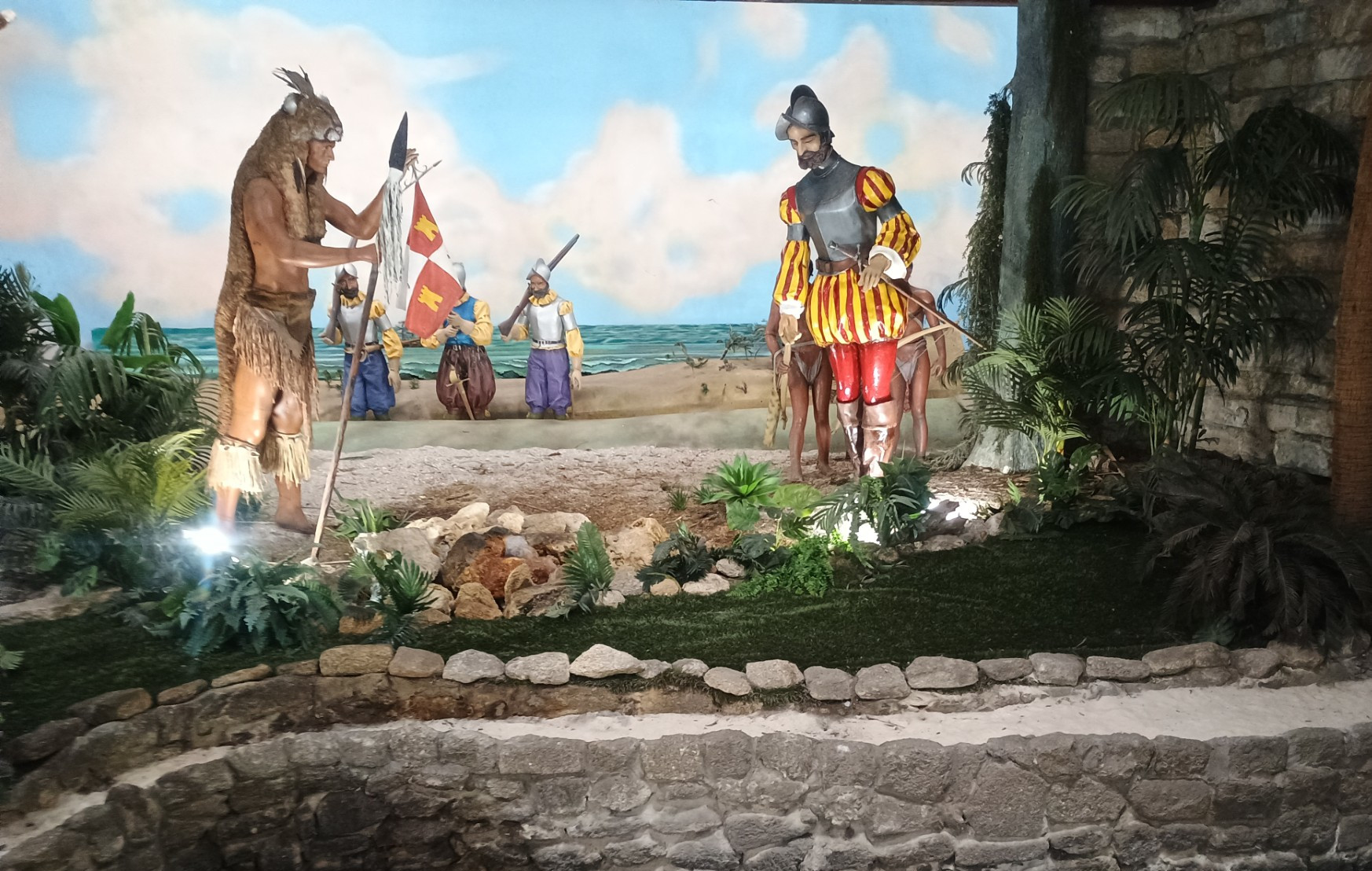
The First Spanish Settlement of St. Augustine
In 1565, Pedro Menéndez de Avilés established the Spanish settlement that became St. Augustine. Archaeological investigations at the Fountain of Youth Park have identified evidence associated with this early settlement, making the property an important location for understanding the city’s beginnings. Excavations have uncovered features interpreted as remains of sixteenth-century Spanish buildings, wells, and other occupation areas. Researchers have also found evidence of the Indigenous settlement that preceded the Spanish arrival.
Some details about the earliest settlement remain uncertain. Flooding, erosion, and later land use have affected the archaeological record, and not every feature can be assigned an exact purpose with confidence. Archaeologists continue to interpret the evidence alongside historical documents. The site’s importance is therefore not based solely on the legend of Ponce de León. It is also a place where material evidence helps researchers reconstruct the first years of Spanish St. Augustine and the interactions between Spanish colonists and the Indigenous population. The nearby Mission Nombre de Dios is closely connected to this history. The mission and its associated religious sites reflect the Spanish effort to establish a lasting colonial presence and convert Indigenous communities to Christianity.
Archaeology and Historical Preservation
Archaeological work at the Fountain of Youth property has been conducted over many decades. Investigations have revealed evidence from several periods, including early Indigenous occupation, the sixteenth-century Spanish settlement, and later historical land use. These discoveries are valuable because written accounts of early St. Augustine are incomplete. Artifacts, postholes, structural traces, wells, and other features can help establish where people lived and how the settlement was organized.
The archaeological evidence also requires careful interpretation. Researchers distinguish between what has been physically documented and what remains a plausible explanation. For example, some features have been associated with early defensive structures, but their exact configuration and function are not always certain.
The site illustrates how archaeological research can refine historical understanding over time. Rather than simply confirming a familiar story, excavations can reveal a more complex picture of Indigenous life, European colonization, and the development of one of Florida’s most historically significant cities.
Exploring the Park
The attraction combines the spring with exhibits and outdoor areas designed to introduce visitors to the history and legends of early Florida.
- The Spring House: The place where visitors can sample the water associated with the Fountain of Youth legend.
- Timucuan Village exhibits: Interpretive displays and reconstructed structures illustrating aspects of Indigenous life.
- Spanish colonial history: Exhibits and demonstrations focused on the early settlement and Spanish exploration.
- Discovery Globe and planetarium: Attractions presenting the history of exploration and the wider world known to early European navigators.
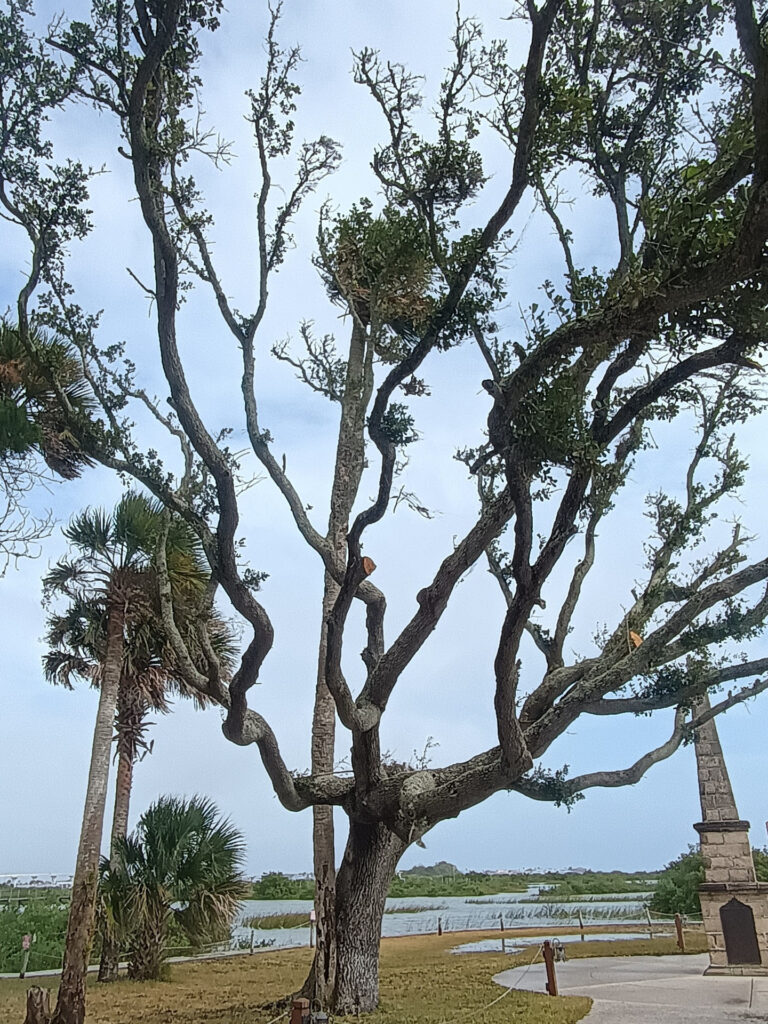
- Waterfront walking areas: Paths and viewing locations overlooking the surrounding coastal waterways.
- Historical demonstrations: Programs that bring selected aspects of the colonial period to life.
Individual attractions, presentations, and operating schedules may change, so visitors should check the park’s official website before planning their visit.
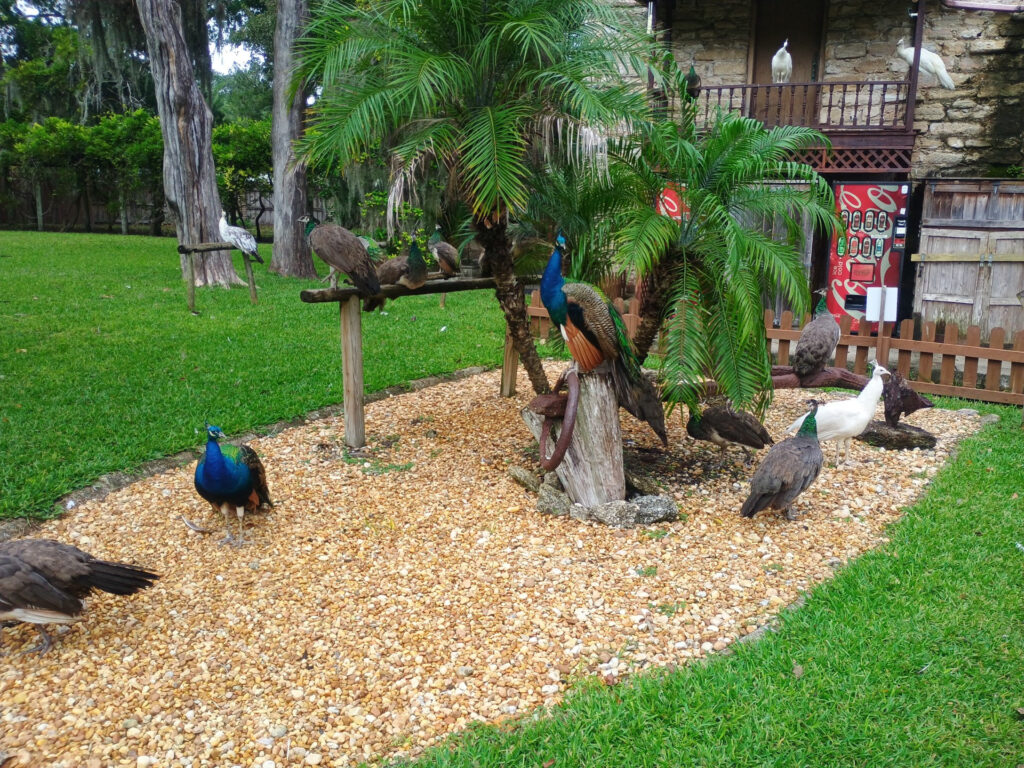
The grounds also provide an opportunity to enjoy the landscape around the historic site. The combination of shaded paths, water views, exhibits, and the spring makes the park suitable for visitors who want to explore St. Augustine’s history at a relaxed pace.
The Spring and Florida’s Water Heritage
Although the Fountain of Youth is best known through legend, it belongs to a much larger Florida story: the relationship between people and groundwater. Florida’s springs emerge where groundwater reaches the surface through openings in the underlying geology. Some create large pools and rivers, while others are smaller features associated with wetlands, coastal settings, or historic properties.
For Indigenous communities, reliable water sources were fundamental to settlement and daily life. For later Spanish colonists, access to freshwater was also an important consideration when establishing communities along an unfamiliar coastline. The Fountain of Youth property provides a setting in which these themes intersect. Its spring is a modest feature, but the surrounding archaeological record demonstrates that the broader landscape supported human communities long before the modern attraction developed.
The site’s historical importance should not be confused with proof that the spring was a major water source for every community that occupied the area. The archaeological and hydrological evidence must be considered separately from the later legend.
Conservation and Cultural Significance
The Fountain of Youth property contains archaeological resources that cannot be replaced once destroyed. Protecting these deposits allows researchers to continue investigating the early history of the region and preserves evidence that helps explain the lives of both Indigenous people and European colonists. Archaeological sites are especially vulnerable to construction, erosion, flooding, and disturbance of buried features. Careful management and interpretation help balance public access with the need to protect the historical record.
The Indigenous history of the site also deserves particular attention. The Timucua were not simply a background to Spanish exploration. They were the established inhabitants of this region, with their own communities, political structures, traditions, and relationships with the land. Recognizing that history provides a more complete understanding of the Fountain of Youth property. It is simultaneously a spring attraction, an archaeological site, and a place associated with some of the most consequential cultural encounters in Florida’s past.
The park is located at 11 Magnolia Avenue in St. Augustine, Florida, north of the historic downtown district. The attraction is privately operated and generally offers a combination of outdoor exploration, exhibits, and scheduled demonstrations. Allow enough time to visit the spring, explore the grounds, and see the historical displays rather than treating it as a quick stop to drink the water.
Before visiting, confirm current admission prices, hours, available exhibits, and special programs directly with the attraction. Weather can affect outdoor comfort, particularly during Florida’s hot and humid months.
One nice feature about this attraction is that dogs are allowed throughout the entire park. They are not only allowed on the grounds, but they are also allowed in the Fountain of Youth building and the gift shop. There are also a few Fountain of Pooch watering stations set up around the grounds for those hot days when your pooch needs a drink.
The park is also close to other significant St. Augustine historical sites, including Mission Nombre de Dios and the historic downtown district, making it possible to combine the visit with a broader exploration of the city’s history.
Frequently Asked Questions
The spring is associated with the Ponce de León legend, but there is no conclusive historical evidence that he visited this particular spring or that his Florida expedition was specifically a search for rejuvenating water.
Visitors have traditionally been able to sample the water at the Spring House. Follow the site’s current guidance regarding water sampling and any posted advisories.
No. It is a relatively modest spring feature within a historic attraction, rather than a major spring system producing a large spring run.
Archaeological investigations have identified evidence of a substantial Indigenous presence, the Timucua town associated with Seloy, and the early Spanish settlement established in 1565. The property provides important information about the beginnings of St. Augustine.
Yes. The archaeological record documents Indigenous occupation extending back thousands of years. The area was part of the Timucua homeland before the Spanish established St. Augustine.
The time required depends on interest in the exhibits and demonstrations. Visitors who want to explore the spring, walking areas, and historical displays should allow more than a brief stop. Check the current program schedule when planning.
The attraction’s spring is not generally treated as one of Florida’s major spring groups. Its principal significance is the combination of a natural water feature, an enduring legend, and an important archaeological landscape.
Yes. This is one of the most dog friendly attractions in Florida. Not only are dogs allowed on the outdoor grounds, but they are also allowed in the Fountain of Youth building and the gift shop. There are even Fountain of Pooch watering stations throughout the park.
Continue Exploring Florida’s Hidden Waters
If you enjoyed the information about this springs, you’ll love the free guide:
The 25 Most Notable Springs and Cave Systems in Florida
From world-famous destinations like Wakulla, Jackson Blue Spring, and Peacock Springs to lesser-known hidden gems, this guide introduces some of Florida’s most fascinating natural wonders.
Download your free copy and continue exploring beyond the surface.
Get the Free Guide →Nearby Springs
Photo Gallery