
Rainbow Springs
Location: Marion County, Florida, United States
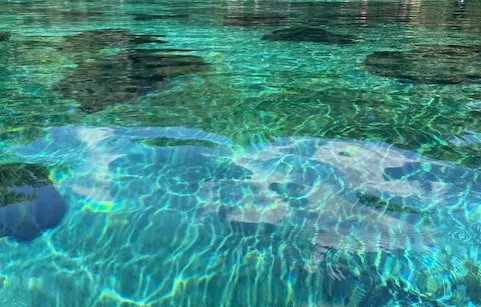
Rainbow Springs’ clear, blue-green water emerges from the Floridan aquifer, forming a spring pool that flows into a broad, spring-fed river. The combination of abundant groundwater discharge, underwater vegetation, and lush surroundings has made Rainbow Springs one of the state’s most recognizable freshwater destinations.
The springs are protected within Rainbow Springs State Park, where visitors can explore the headsprings area, swim in designated waters, walk through historic gardens, and access trails. Downstream, the Rainbow River attracts paddlers, snorkelers, and tubers who experience the spring water as it moves through a long, clear river corridor.
Rainbow Springs is significant for more than its scenic beauty. It is a first-magnitude spring system, meaning it discharges at least 100 cubic feet of water per second on average. Its flow reflects the scale of the groundwater system that supplies it and the connection between the land above the aquifer and the water emerging at the spring.
FREE FLORIDA SPRINGS GUIDE
Want to discover more of Florida’s hidden waterways?
Download The 25 Most Notable Springs and Cave Systems in Florida and explore some of the state’s most remarkable spring basins, underwater cave systems, and hidden natural treasures.
✓ Featured springs throughout Florida
✓ Cave systems and exploration highlights
✓ Popular destinations and hidden gems
✓ Instant download
The Rainbow Springs System
Rainbow Springs is a collection of spring vents that discharge groundwater into a shared headsprings area. The water gathers and flows away from the spring pool to form the Rainbow River, which eventually joins the Withlacoochee River. Rainbow Springs has been identified as having the fourth-highest spring flow in Florida. Its groundwater supply comes from a broad area, with the state park describing a contributing area of approximately 770 square miles. Rainwater infiltrates the ground and moves through soil and rock before traveling through underground openings and emerging at the springs. Florida State Parks
The size of this contributing area is an important reminder that the spring’s health depends on conditions across a much larger landscape than the visible spring pool. Activities far from the headsprings can influence the groundwater that eventually reaches the surface.
Rainbow Springs State Park has separate access points for the headsprings, campground, and tubing area. They are not interchangeable, so visitors should plan around the activity they want to do.
- Headsprings entrance: Located at 19158 S.W. 81st Place Road, Dunnellon, Florida. Provides access to the spring pool, swimming area, historic attraction walk, gardens, and hiking trails.
- Tubing entrance: Located at 10830 S.W. 180th Avenue Road. Provides access to seasonal tubing on the Rainbow River.
- Camping entrance: Serves registered campground guests.
- Paddling: Canoe and kayak access and rentals are available through designated facilities, subject to operating conditions and current arrangements.
As of the current Florida State Parks information, day-use reservations are required for entry. Tubing is seasonal and operates on a separate schedule from the headsprings area. Verify access, reservations, and hours before visiting.
Dogs are permitted on the park trails, gardens, and picnic areas, as well as in the park campground. Dogs are prohibited from entering the water.
The Headsprings
The headsprings are the focal point of Rainbow Springs State Park. Clear water rises from the ground into a broad pool, where submerged vegetation and aquatic wildlife can be seen beneath the surface. Water temperature averages approximately 72°F year-round, and the designated swimming area typically ranges from about 10 to 18 feet deep.
The spring pool is not simply a swimming hole. It is the visible expression of groundwater moving through the limestone beneath the region. The spring vents provide a direct connection between the aquifer and the surface environment, making Rainbow Springs an excellent place to appreciate Florida’s karst geology.
Swimming is allowed in designated areas, but the headsprings have specific restrictions intended to protect the habitat. Tubing and scuba diving are not permitted in the headsprings day-use area. Tubing takes place at a separate access point farther downstream along the Rainbow River.
Rainbow River
The water flowing from Rainbow Springs forms the Rainbow River, a clear waterway known for its submerged aquatic vegetation and relatively steady spring-fed flow. As the river moves downstream, its aquatic habitat supports fish, turtles, and other freshwater wildlife.
The underwater grasses are a defining feature of the river. They provide habitat and food, help stabilize the riverbed, and contribute to the clear water ecosystem. Their condition also reflects the health of the river: nutrient enrichment and changes in water quality can encourage algae growth and affect aquatic vegetation.
The river continues toward Dunnellon, where it joins the Withlacoochee River. This connection makes Rainbow Springs part of a larger river network, linking groundwater discharge to surface water flow and ultimately to the broader drainage system.
My first drift dives in Rainbow River took place in the early 2000s, a year or so before I became a cave diver. We entered the water near the far end of the river, where boat traffic is permitted, and let the current carry us downstream toward the boat ramp.
Those dives introduced us to the underwater world of Rainbow River. Along the way, we encountered several spring seeps where groundwater emerged through the riverbed. Some were subtle, while others were more pronounced. One spring opening was large enough for us to enter, although the passage only extended about ten feet before becoming too small to continue.
About ten years later, we returned to Rainbow River. What we found was disappointing. The river we remembered, where we could freely drift downstream without encountering significant obstacles, had changed considerably. Eelgrass and other aquatic vegetation had spread throughout the river, becoming so dense in places that moving through the water was difficult.
This time, rather than simply entering the river and drifting downstream, we brought underwater scooters so we could travel upriver and let the current carry us back. We struggled to make progress through the thick vegetation. What had once been an open route through the water had become a challenging underwater passage.
The contrast between those two visits was striking. The vegetation was part of the river’s natural ecosystem, but its extensive growth had changed the character of the underwater experience. It was a firsthand reminder that Florida’s spring systems are not static landscapes. They change over time, and those changes can be dramatic.
Geology and Groundwater
Rainbow Springs is a classic example of a Florida karst spring. The region’s limestone bedrock has been dissolved over geological time by water moving through fractures and other openings. Rainwater seeps through the ground and replenishes the Floridan aquifer, where it travels through a network of permeable rock and underground conduits. Where groundwater finds a route to the surface, spring discharge occurs. At Rainbow Springs, the volume of water emerging is large enough to sustain a substantial river with a strong spring-fed character.
The groundwater contributing area extends well beyond the state park. This means the spring is influenced by the wider landscape, including how land is developed and managed, how nutrients are applied, and how much rainfall reaches the aquifer. The relationship between rainfall, groundwater recharge, and spring discharge is central to understanding Rainbow Springs. The water seen at the headsprings may have traveled underground before emerging, making the spring a visible endpoint of a much larger hydrologic process.
A Long History of Human Use
People have been drawn to Rainbow Springs for thousands of years. Archaeological evidence, including pottery and tools, indicates that Indigenous people visited the area more than 10,000 years ago. The spring’s reliable freshwater supply and rich natural environment would have made it an important place within the landscape.
The springs later became a commercial tourist attraction. Landscaped gardens, constructed waterfalls, and other ornamental features remain visible reminders of that period. The property also experienced phosphate mining, reflecting the broader history of mineral extraction in this part of Florida.
Today, Rainbow Springs State Park preserves both the natural spring environment and elements of its more recent tourist history. The contrast between the natural spring vents, the river’s aquatic habitat, and the landscaped gardens adds another layer to the site’s story.
Wildlife and Aquatic Habitat
The clear water of Rainbow Springs and the Rainbow River makes it possible to observe a variety of aquatic life. Fish and turtles move through the spring pool and river, while submerged plants provide cover, feeding areas, and habitat for smaller organisms.
The surrounding park also supports wildlife associated with Florida’s forests and wetlands. Walking trails pass through natural areas and restored habitats, offering opportunities to observe birds and other animals away from the river.
Maintaining the ecological balance of the system requires protecting both the water and the land around it. Clear water alone does not guarantee a healthy spring; aquatic vegetation, wildlife, flow, and water chemistry are all important parts of the picture.
One of my earliest memorable wildlife encounters in Florida’s springs happened right here in Rainbow River. This was the first place we encountered the Florida gar. With its long, narrow snout, armored-looking scales, and prehistoric appearance, it was unlike any freshwater fish I had seen before. There is something particularly impressive about watching one glide through the clear water. The Florida gar is an ancient looking and majestic fish, a reminder of how much life exists beneath the surface of these spring-fed rivers.
Conservation and Water Quality
Rainbow Springs depends on groundwater from a large contributing area. Nutrients entering the groundwater system can reach the springs and river, potentially contributing to algae growth and changes in aquatic vegetation. Because groundwater can move over substantial distances before discharging, protecting the spring requires attention to land use throughout the recharge area, not only within the park.
Conservation efforts include habitat restoration, invasive plant management, and protection of the aquatic environment. Visitors can help by following designated access rules, avoiding damage to aquatic vegetation, and keeping pollutants and litter out of the water.
The long-term health of Rainbow Springs depends on maintaining groundwater quality and adequate flow. Preserving the spring means protecting the natural systems that supply it.
Frequently Asked Questions
Rainbow Springs is located near Dunnellon in Marion County, Florida, within Rainbow Springs State Park.
Yes. Rainbow Springs is a first-magnitude spring system, with average discharge of at least 100 cubic feet per second.
The springs form the Rainbow River, which flows downstream and joins the Withlacoochee River.
Yes. Swimming is permitted in the designated headsprings swimming area, subject to current park rules. Tubing and scuba diving are not allowed in that area.
Yes, but tubing takes place at a separate entrance downstream and operates seasonally. Check the park’s current schedule before planning a visit.
The water temperature averages about 72°F throughout the year.
Groundwater is filtered as it moves through soil and rock before emerging from the limestone aquifer. The spring fed flow and local conditions help maintain the water’s clarity.
Yes, dogs are permitted along the trails, picnic areas, and campground. Dogs are not permitted in the headspring or the river.
Continue Exploring Florida’s Hidden Waters
If you enjoyed the information about this springs, you’ll love the free guide:
The 25 Most Notable Springs and Cave Systems in Florida
From world-famous destinations like Wakulla, Jackson Blue Spring, and Peacock Springs to lesser-known hidden gems, this guide introduces some of Florida’s most fascinating natural wonders.
Download your free copy and continue exploring beyond the surface.
Get the Free Guide →Nearby Springs
Photo Gallery
Coming soon