
St. Andrew Bay Watershed Springs | Econfina Creek Springs
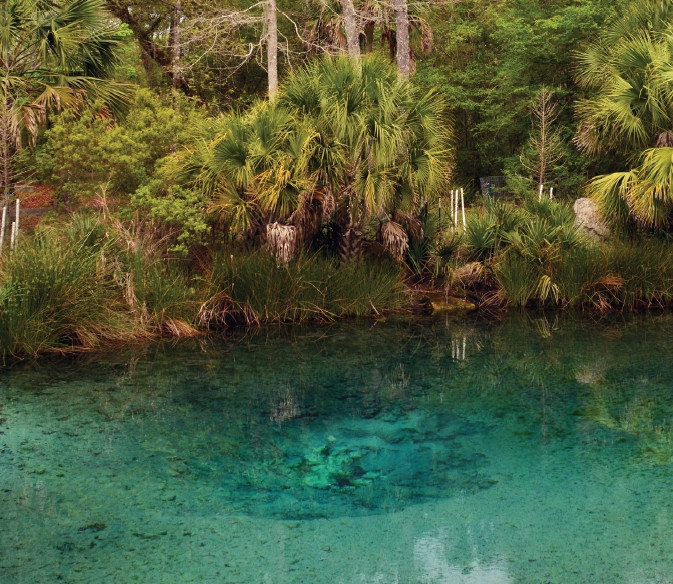
Florida’s Emerald Spring Corridor
The St. Andrew Bay Watershed is home to one of Florida’s most beautiful collections of freshwater springs. Better known as the Econfina Creek Springs, this network of more than 40 emerald-blue spring vents flows into the clear waters of Econfina Creek, creating one of the Florida Panhandle’s premier destinations for swimming, paddling, hiking, and snorkeling.
Located approximately 45 minutes north of Panama City Beach, these springs are protected by the Northwest Florida Water Management District and provide an important source of drinking water for Bay County. Unlike many of Florida’s famous first-magnitude springs, the Econfina Creek Springs are spread across numerous spring groups, each with its own unique character while collectively feeding one of the state’s most scenic blackwater streams.
For paddlers, hikers, and nature lovers, few places in Florida offer such a remarkable concentration of accessible springs within a single watershed.
Geological Context
- Tannic surface water mixing
- Strong, focused discharge points
- Small, concealed entrances
- Sediment-sensitive passage
About the St. Andrew Bay Watershed
The St. Andrew Bay Watershed is unique among Northwest Florida’s major river basins because it lies entirely within the state of Florida. Rather than flowing into neighboring Alabama or Georgia, every stream within the watershed eventually drains into St. Andrew Bay before reaching the Gulf of Mexico.
Econfina Creek forms the heart of the watershed, collecting groundwater from dozens of springs that emerge from the Floridan Aquifer along its limestone banks.
Although cave divers often associate these springs with nearby Holmes Creek due to their similar limestone geology and numerous underwater caves, the Econfina Creek Springs are part of their own distinct watershed and hydrologic system.
Explore the Springs
More than forty individual spring vents have been identified throughout the Econfina Creek corridor. These springs are organized into eleven distinct spring groups, each contributing crystal-clear groundwater to the creek.
Several have become favorite destinations for visitors.
Pitt and Sylvan Springs
Pitt and Sylvan Springs form one of the most developed recreational areas along Econfina Creek. Located just off State Road 20, the park features elevated boardwalks, scenic overlooks, picnic pavilions, and a stairway leading directly into an approximately 11-foot-deep spring basin. The crystal-clear water and easy accessibility make these springs among the most visited in the watershed.
Williford Spring
Located approximately one mile downstream from Pitt Spring by trail or paddle, Williford Spring is a beautiful second-magnitude spring known for its broad swimming area and extensive boardwalk system. The spring’s clear water and peaceful setting make it one of the most popular swimming and snorkeling destinations along Econfina Creek.
Econfina Blue Spring
Econfina Blue Spring consists of three distinct spring vents emerging laterally from a limestone bluff. Unlike many Florida springs that boil vertically upward from the bottom, the water here flows horizontally through openings in the limestone, creating an unusually beautiful display of clear blue water entering the creek. The vivid emerald and sapphire colors make this one of the most photographed springs in the watershed.
Gainer Springs Group
The Gainer Springs Group is among the largest and most pristine spring complexes along Econfina Creek. It is the only first magnitude spring in Econfina Creek. Located farther downstream, the group consists of numerous springs that discharge directly into the creek. Portions of the surrounding property remain privately owned, but paddlers passing through can appreciate the remarkable clarity and beauty of these springs. For many canoeists and kayakers, Gainer Springs represents one of the highlights of an Econfina Creek trip.
Devil’s Hole Sink
Located approximately 130 feet west of Econfina Creek, Devil’s Hole is a scenic water-filled sink that is part of the Northwest Florida Water Management District’s recreation area. Although separated from the creek by a narrow strip of forest, it is believed to be hydrologically connected and may contribute groundwater to Econfina Creek through an underground conduit. Beneath the surface lies a small underwater cave system upstream away from Econfina Creek. It contains less than 500 feet of explored passage. The downstream side of the sink nearest the creek is filled with trees and inaccessible, adding to the mystery surrounding its connection to Econfina Creek.
Devil’s Hole Spring
Located south of Devil’s Hole and north of Walsingham Bridge on the west bank beneath a limestone ledge, the opening is about 11 feet deep. This spring is believed to be the downstream section of Devil’s Hole Sink. The current is strong, and the opening is small. This cave has been nicknamed Weed Whacker Cave because traditional cave line does not last long and weed whacker line is used to maintain a continuous guideline to the surface. It is also known as Seashell Spring due to its proximity to Seashell Beach.
Additional Econfina Creek Springs
Barking Spring
Located up a short run on the east side of the creek about 3 miles north of Highway 20, the spring pool is roughly 12 feet in diameter and 1 foot deep.
Bathtub Spring
Located at the end of a short run on the west bank about 3.5 miles north of Highway 20, the spring pool is roughly 5 feet in diameter and 3 feet deep at the vent.
Bluff Spring
Located at the end of a run on the west bank about .75 miles north of Highway 20 beneath a 25 foot high limestone bluff.
Fenceline Spring
Located at the end of a 75 foot run on the west bank about 0.4 miles south of Highway 20, the pool is 30 feet in diameter. The vent is more of a large sand boil than a single vent.
Glowing Spring
Located on the west bank 3.5 miles north of highway 20, the spring is a crack in the limestone about 13 feet deep in the creek bottom.
Palm Spring
Located at the a 175 foot long run about 3.3 miles north of Highway 20, the pool is 20 feet in diameter and 5 feet deep. A small vent that is about 2 feet in diameter is located in the center of the spring basin.
Strickland Springs
Used as the put-in for Econfina Canoe Livery north of highway 20, spring #1 is located at the end of the run in a 15 foot diameter pool beneath a 7 foot limestone bluff. The depth of the spring basin is 10 inches. Spring #2 is located in a 30 foot diamter pool about 250 feet up the run. The depth of this pool at the vent is about 3.5 feet.
Recreation
The Econfina Creek Springs offer some of the most diverse outdoor recreation opportunities in Northwest Florida.
Swimming is popular at several designated spring areas, while the creek itself attracts paddlers from across the Southeast.
Paddling
Econfina Creek is widely considered one of Florida’s finest canoe and kayak destinations. The designated canoe trail features the steepest gradient of any officially recognized paddling trail in Florida, creating swift currents, limestone ledges, and occasional Class I rapids rarely encountered elsewhere in the state.
The combination of spring-fed water, shaded hardwood forests, and dramatic limestone outcrops makes each trip unique.
Hiking
The Florida Trail passes directly through portions of the spring system, connecting Pitt Spring, Sylvan Spring, and Williford Spring.
Several additional trails provide access to overlooks, swimming areas, and scenic sections of Econfina Creek.
Swimming and Snorkeling
Several springs are open for swimming, allowing visitors to experience the crystal-clear water firsthand.
Snorkelers can observe aquatic vegetation, fish, turtles, and the limestone formations that characterize many of the spring vents.
Tubing
During warmer months, portions of Econfina Creek also become popular for tubing, offering a relaxing way to enjoy the spring-fed waters.
- Arrive early during summer weekends, as popular swimming areas fill quickly.
- Bring a mask and snorkel to enjoy the exceptional water clarity.
- If paddling, check current water levels before launching, as flow conditions can change after heavy rainfall.
- The Florida Trail provides an excellent way to combine hiking with visits to several of the watershed’s most beautiful springs.
Hydrology
The springs of Econfina Creek are supplied by the Floridan Aquifer through numerous limestone vents distributed along the creek valley. Collectively, these springs provide a substantial volume of groundwater that maintains cool water temperatures and consistent flow throughout much of the year.
Because Bay County relies upon this watershed for much of its drinking water, protecting groundwater quality throughout the recharge basin remains an important conservation priority.
Cave Diving
Although the Econfina Creek Springs are best known for recreation, several springs contain underwater cave systems that have attracted exploration by Florida cave divers. Within the diving community, these springs are frequently grouped with the nearby Holmes Creek cave systems because of their similar limestone geology and exploration history. Despite these similarities, the Econfina Creek Springs belong to the independent St. Andrew Bay Watershed and represent a separate hydrologic system from the Holmes Creek Basin. Many underwater caves within the watershed remain on protected or private property, limiting access to qualified exploration teams.
Current Status
The Econfina Creek Springs are managed primarily by the Northwest Florida Water Management District in cooperation with other state and local agencies. Many of the springs remain open for public recreation, while others are protected because of private ownership or environmental sensitivity. Visitors are encouraged to remain on designated trails, respect posted property boundaries, and help preserve one of Northwest Florida’s most important freshwater resources.
See also: Maps of Cave Systems in the Florida Panhandle
Return to Florida Cave Systems
Frequently Asked Questions
The springs are located approximately 45 minutes north of Panama City Beach in Bay and Washington counties within the St. Andrew Bay Watershed.
More than 40 individual spring vents have been identified, organized into 11 distinct spring groups.
Pitt Spring, Sylvan Spring, and Williford Spring are among the most popular public swimming areas.
Yes. Econfina Creek is one of Florida’s premier canoe and kayak destinations and features the state’s steepest-gradient designated paddling trail.
Yes. Three of the springs contain known underwater cave systems that are accessible by diver. The caves that are a part of the Econfina Creek Springs are considered advanced sidemount caves. Only experienced sidemount cave divers should attempt to dive these springs. Many of the springs are located on protected or private property and diving is prohibited in some.
No. While cave divers often discuss the two regions together because of their similar geology, the Econfina Creek Springs belong to the independent St. Andrew Bay Watershed.