
Salt Springs
Location: Marion County, Florida, United States
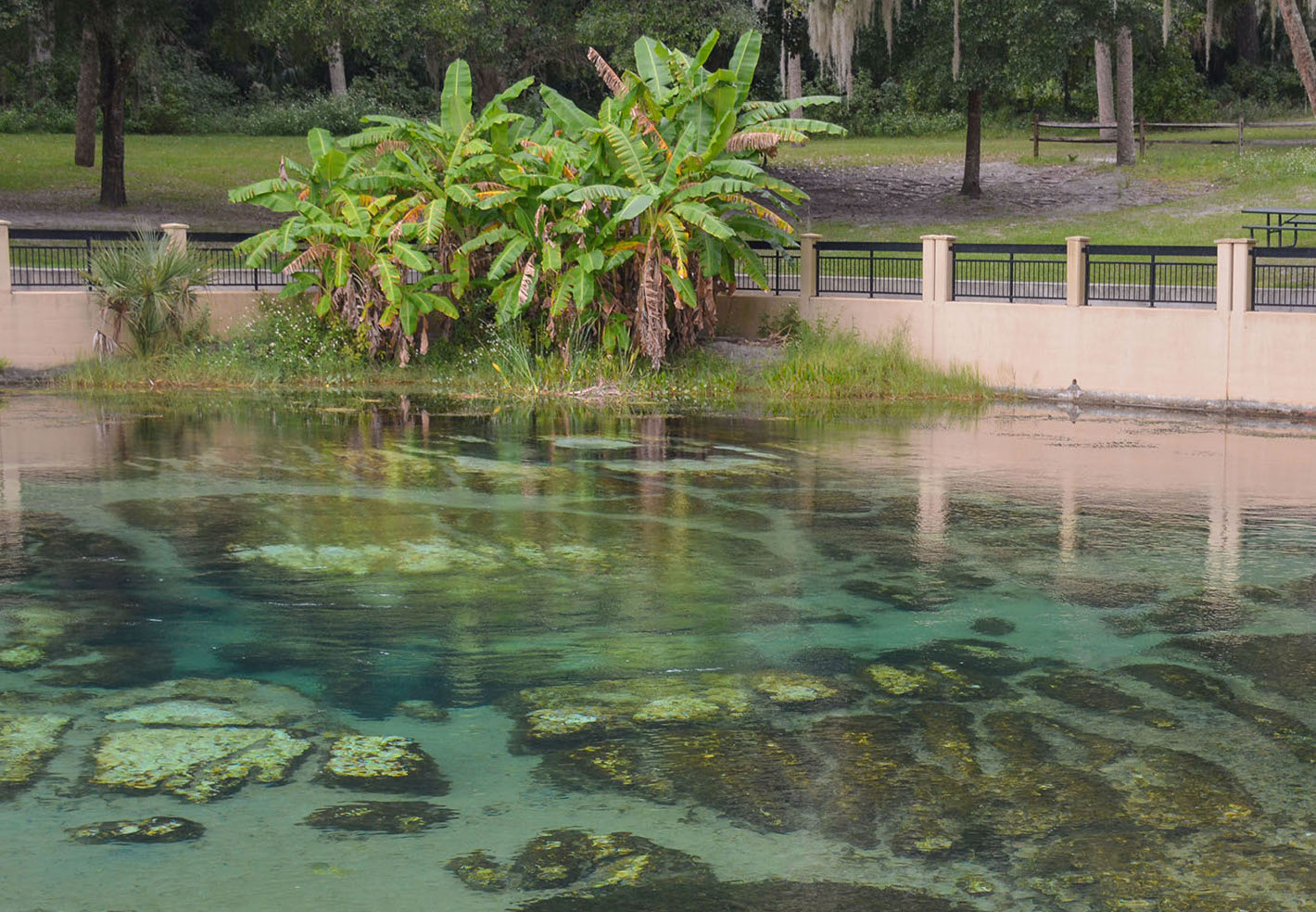
Unlike many of Florida’s freshwater springs, the water of Salt Springs contains naturally occurring dissolved minerals that give it a slightly salty character. This unusual mineral content is responsible for the spring’s name and distinguishes it from nearby springs such as Alexander Springs, Juniper Springs, and Silver Glen Springs. The spring emerges through several vents in a broad, roughly rectangular basin surrounded by a developed recreation area. Gentle boils can often be seen where groundwater rises through the limestone floor, providing a visible indication of the water moving upward from the underlying aquifer.
Salt Springs is a second-magnitude spring, with water flowing from the basin into Salt Springs Run. The run travels approximately four miles before reaching Lake George, connecting the spring to one of the major waterways of the St. Johns River system.
Located within the Ocala National Forest, Salt Springs combines an unusual geological feature with a long history of human use and a popular destination for swimming, snorkeling, fishing, boating, and camping.
FREE FLORIDA SPRINGS GUIDE
Want to discover more of Florida’s hidden waterways?
Download The 25 Most Notable Springs and Cave Systems in Florida and explore some of the state’s most remarkable spring basins, underwater cave systems, and hidden natural treasures.
✓ Featured springs throughout Florida
✓ Cave systems and exploration highlights
✓ Popular destinations and hidden gems
✓ Instant download
Geological Context
Salt Springs is part of the karst landscape of Central Florida, where groundwater moves through limestone formations beneath the surface. Over geological time, slightly acidic rainwater has dissolved portions of the limestone, creating fractures, cavities, and underground pathways through which groundwater can travel.
The water emerging at Salt Springs comes from the Floridan aquifer system. As it moves through underground geological formations, it acquires dissolved minerals. The presence of sodium, potassium, and magnesium salts contributes to the water’s slightly saline character. This mineral content makes Salt Springs different from the more familiar freshwater springs found throughout Florida. Although the water has a noticeable mineral character, Salt Springs is not a seawater spring. Its unusual chemistry is a result of the groundwater’s interaction with the surrounding geological formations.
- Arrive early: Salt Springs is a popular recreation area, particularly during weekends and holidays. Arriving early gives you a better chance of finding parking and enjoying the spring before the busiest periods.
- Bring a mask and snorkel: The spring basin’s clear water and bubbling vents make snorkeling a good way to observe the underwater features.
- Watch for the spring vents: Look for the areas where groundwater rises through the limestone floor. These bubbling areas are among the most interesting features of Salt Springs.
- Expect mineral-rich water: Salt Springs has a naturally occurring mineral content that gives the water a slightly salty character. This is what makes it different from many other Florida springs.
- Explore beyond the swimming area: Salt Springs Run extends approximately four miles toward Lake George. Consider bringing a kayak or canoe to experience more of the spring-fed waterway.
- Bring binoculars: The surrounding Ocala National Forest provides opportunities to observe birds and other wildlife, particularly along the forest edges and waterways.
- Consider an overnight stay: The recreation area has a campground, making it possible to spend more time exploring Salt Springs and other nearby springs in the Ocala National Forest.
- Check boating and fishing regulations: Rules differ between the designated swimming area and Salt Springs Run. Review current restrictions before bringing a boat or fishing equipment.
- Protect the spring environment: Avoid disturbing aquatic vegetation, stirring up sediment, or touching the spring vents. Pack out everything you bring into the recreation area.
- Check current access information: Facilities, fees, swimming conditions, and campground availability can change. Consult the U.S. Forest Service or Recreation.gov before your visit.
The Spring
Salt Springs emerges into a large spring pool measuring approximately 190 feet long by 130 feet wide. The spring water rises through four principal vents in the limestone floor, where gentle boils can often be observed at the surface.
The spring basin has a combination of limestone and sand near the vents, while much of the remaining bottom is covered with aquatic vegetation. A concrete retaining wall borders portions of the pool, separating the natural spring basin from the developed recreation area. The visible spring boils provide an opportunity to observe groundwater discharge directly. Unlike a spring where water emerges from one clearly defined opening, Salt Springs has multiple vents contributing to the flow.
The slightly saline water is the spring’s most recognizable characteristic. The dissolved minerals distinguish it from the other major springs within the Ocala National Forest and provide a reminder that groundwater chemistry can vary considerably from one spring system to another.
The Salt Springs Recreation Area offers one of the largest developed campgrounds in the Ocala National Forest. Located within a shaded landscape of pine trees and palms, the campground provides a convenient base for exploring Salt Springs, nearby Lake George, and the surrounding springs and waterways.
One of its biggest advantages is its proximity to the spring. Campers can enjoy swimming, snorkeling, boating, fishing, and hiking without having to travel far from their campsite.
Hydrological Characteristics
Salt Springs is classified as a second-magnitude spring. Second-magnitude springs discharge between 10 and 100 cubic feet of water per second on average. The spring’s water emerges through several vents and collects in the basin before flowing southeast into Salt Springs Run. The run travels approximately four miles through the surrounding landscape before entering the northwest portion of Lake George. Lake George is part of the St. Johns River system, making Salt Springs an important groundwater contribution to the larger surface-water network.
The spring’s mineral composition is another important part of its hydrology. Sodium, potassium, and magnesium salts contribute to its slightly saline water. This natural chemistry is the defining characteristic of Salt Springs and explains why it differs from many other springs in the region.
Salt Springs Run provides a connection between the spring basin and Lake George. Beyond the swimming area, the run offers opportunities for boating, paddling, and fishing.
The transition from the developed spring basin into the surrounding forest and wetland landscape offers a different perspective on the system. Rather than ending at the edge of the swimming area, the spring’s water continues downstream, supporting an aquatic corridor before reaching Lake George.
Recreation
Salt Springs Recreation Area is one of the principal outdoor destinations in the northern portion of the Ocala National Forest. The spring basin is the focal point of the recreation area, attracting visitors interested in swimming and snorkeling.
Popular activities include:
- Swimming: The large spring pool provides a designated swimming area where visitors can enjoy the cool mineral-rich water.
- Snorkeling: The clear water and visible spring vents offer opportunities to observe the spring basin and its aquatic environment.
- Boating: Salt Springs Run connects the spring area with Lake George, providing access for boats and other watercraft.
- Fishing: The run and nearby Lake George are popular fishing destinations. Fishing is not permitted within the designated swimming area.
- Paddling: Canoeing and kayaking offer opportunities to explore Salt Springs Run and the surrounding waterways.
- Camping: The recreation area includes a large campground with sites for tents and recreational vehicles.
The surrounding Ocala National Forest also offers hiking opportunities, including access to the Bear Swamp Trail and portions of the Florida National Scenic Trail.
Wildlife
The spring basin and Salt Springs Run support aquatic habitats typical of Florida’s freshwater systems. Fish, turtles, and other aquatic animals use the spring and its outflow, while submerged vegetation provides shelter and feeding areas.
Beyond the water, the surrounding Ocala National Forest contains a diverse range of habitats. The forest supports white-tailed deer, Florida black bears, river otters, wild turkeys, wading birds, and numerous other native species. The nearby sand pine scrub habitat is particularly important for Florida wildlife. This specialized ecosystem supports species adapted to the dry, sandy conditions of the Ocala National Forest, including the Florida scrub-jay.
The combination of spring-fed aquatic habitat, wetlands, and surrounding forest makes Salt Springs part of a much larger ecological landscape.
History and Archaeological Significance
Salt Springs has a long history of human use, extending back thousands of years. The reliable freshwater supply and surrounding natural resources made the area attractive to Indigenous communities long before the establishment of the modern recreation area. Archaeological investigations have documented significant deposits near the spring, including shell-bearing deposits associated with the Mount Taylor archaeological period. These deposits provide evidence of early human occupation and the importance of Florida’s springs and waterways to prehistoric communities.
The archaeological significance of the site became particularly apparent during repair work on the spring’s retaining walls. In 2008, the public swimming area was closed temporarily while the U.S. Forest Service addressed erosion and structural issues. The work exposed archaeological deposits, leading to additional investigations by researchers from the University of Florida and other agencies. These discoveries demonstrate that Salt Springs is more than a recreational destination. Its spring basin and surrounding landscape preserve evidence of a much longer relationship between people and Florida’s freshwater resources.
Current Status
Salt Springs is managed by the U.S. Forest Service as part of the Ocala National Forest. The Salt Springs Recreation Area provides access to the spring basin, campground, boat launch, and other recreational facilities.
The spring remains a popular destination for swimming, snorkeling, boating, fishing, and camping. Access to the swimming area is managed separately from activities on Salt Springs Run, and visitors should observe posted restrictions.
The recreation area is located at:
Salt Springs Recreation Area
13851 North Highway 19
Salt Springs, Florida 32134
For current information about facilities, access, and campground availability, consult the official Salt Springs Recreation Area information.
The Hidden Rivers of Florida documents the springs, rivers, sinkholes, caves, and groundwater systems that shape Florida’s landscape. Through exploration, photography, research, and firsthand observation, the project seeks to connect visitors with the hidden waterways flowing beneath the state.
Frequently Asked Questions
Salt Springs is located in the Ocala National Forest in Marion County, Florida, within the Salt Springs Recreation Area.
The spring contains naturally occurring dissolved minerals, including sodium, potassium, and magnesium salts. These minerals give the water a slightly saline character.
No. Salt Springs is classified as a second-magnitude spring, with an average discharge between 10 and 100 cubic feet per second.
The spring has four principal vents in the limestone floor of its basin.
Yes. Water from the spring flows through Salt Springs Run for approximately four miles before entering Lake George.
Yes. Swimming is permitted in the designated spring basin within the Salt Springs Recreation Area.
Yes. Snorkeling is one of the recreational activities available at the spring.
Fishing is permitted in designated areas along Salt Springs Run and nearby waterways, but not within the swimming area. Applicable fishing regulations and permits should be followed.
Yes. Salt Springs Recreation Area has a large campground with sites for tents and recreational vehicles.
Salt Springs is not recognized as an established cave diving destination. Its principal features are the spring basin and multiple discharge vents. Visitors should follow posted restrictions and should not enter submerged openings.
Dogs are only permitted for registered guests in the Salt Springs Campground. They are not allowed in day-use areas, swimming zones, or picnic spots. Dogs are permitted on kayaks and canoes, but only if launched outside the day-use area.
Nearby Springs
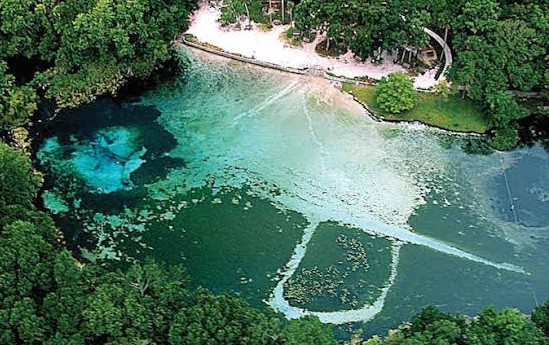
Photo Gallery
Coming soon